脑机智能

Search documents
聚全球智慧 筑类脑生态
Xin Lang Cai Jing· 2025-12-12 14:13
Group 1 - The "2025 Smart Connection·Future" Brain-Computer Interface International Conference and the Second China Brain-Intelligence Conference opened in Yuhang, Hangzhou [1][2] - A collaboration between Zhejiang University and Springer Nature Group initiated the writing of the "Global Brain-Intelligence Technology and Industry Trend Report," providing authoritative strategic guidance for global research and industry [1][2] - An international standard initiation ceremony for brain-computer interfaces was held under ISO/IEC JTC 1/SC 43, promoting healthy and orderly development in the field [1][2] Group 2 - The Zhejiang Province launched a major scientific and technological project and innovation consortium for brain-computer interfaces, aiming to gather multiple forces from industry, academia, and research to create a competitive brain-computer interface industry cluster [1][2] - Eight brain-intelligence companies, including Kewai Life Science, signed agreements to settle in Yuhang, enhancing the local industrial ecosystem and attracting global high-end talent [1][2] - Yuhang has established leading brain-computer research institutions, such as the Nanhu Brain-Computer Interdisciplinary Research Institute and the Qizhen Brain-Intelligence Industrialization Base, forming a complete ecosystem from top-level design to industrial implementation [1][2]
经济大省挑大梁|上海高质量孵化器再扩容,至今共启动建设18家
Xin Lang Cai Jing· 2025-12-11 09:21
Core Insights - Shanghai has expanded its list of high-quality incubators, adding six new entities, bringing the total to 18 by the end of 2024, focusing on emerging industries such as large models, quantum optics, intelligent sensing, humanoid robots, synthetic biology, and cell and gene therapy [1] Group 1: New Incubators - The newly added incubators include Nest Shanghai Innovation Incubator, Sinan Brain-Machine Intelligence Incubator, Shanghai Aimi Sanjiang New Materials Industry Innovation Center, "Shutong Chain Valley" Blockchain Application Innovation Incubator, "D Zero Bay" Sci-Tech Innovation Incubator, and Zhangjiang High-Tech 895 Incubator [1] - The expansion aligns with Shanghai's implementation plan for cultivating high-quality incubators, which was released in June 2023 [1] Group 2: Focus on New Materials - Shanghai Aimi Sanjiang New Materials Industry Innovation Center is the only high-quality incubator in the city focusing on the new materials sector, emphasizing membrane materials, carbon-based materials, and special alloys [4] - The center aims to create a closed-loop innovation ecosystem for the new materials industry by providing technical empowerment, market connections, and capital support [4] Group 3: Specialized Incubator Models - The core incubation model of the Shanghai Aimi Sanjiang New Materials Industry Innovation Center includes project co-creation, equity incubation, industry acceleration, and precise empowerment, enhancing the success rate and feasibility of projects [4] - The center is also focusing on hardware materials related to artificial intelligence and embodied intelligence industries, such as lightweight materials for humanoid robot joints and flexible sensing materials for robot skin [5] Group 4: Other Incubator Focus Areas - Nest Shanghai Innovation Incubator focuses on the biopharmaceutical industry, particularly synthetic biology and cell and gene therapy, providing comprehensive support for project transformation [7] - Sinan Brain-Machine Intelligence Incubator targets brain-machine interfaces and cognitive disorder interventions, establishing a collaborative model with academic and medical institutions for accelerated development [9] - "Shutong Chain Valley" Blockchain Application Innovation Incubator emphasizes core blockchain technology and application scenarios, integrating various resources to support startups [11] - "D Zero Bay" Sci-Tech Innovation Incubator focuses on electronic information and advanced equipment, promoting technology transfer and entrepreneurship [13] - Zhangjiang High-Tech 895 Incubator specializes in integrated circuits, creating a comprehensive incubation system that connects talent, services, and applications [15]

上海高质量孵化器增至18家
Jie Fang Ri Bao· 2025-12-11 05:27
Core Insights - Shanghai has added 6 new high-quality incubators, bringing the total to 18, focusing on emerging industries such as synthetic biology, brain-machine intelligence, and integrated circuits [1][2]. Group 1: New Incubators - The newly added incubators include: - Nest Shanghai Innovation Incubator, focusing on synthetic biology and gene therapy [1] - Sinan Brain-Machine Intelligence Incubator, concentrating on brain-machine interfaces and cognitive disorder interventions [2] - Shanghai Aimi Sanjiang New Materials Innovation Center, targeting new materials and membrane materials [2] - "Shutong Chain Valley" Blockchain Application Innovation Incubator, focusing on blockchain core technologies [2] - "Zero Bay" Science and Technology Innovation Incubator, emphasizing electronic information and advanced equipment [2] - Zhangjiang Gaoke 895 Incubator, serving the integrated circuit design industry [3] Group 2: Focus Areas and Objectives - The high-quality incubators aim to accelerate the construction of local technology enterprises and nurture future industries, with a focus on areas such as large models, quantum optics, intelligent sensing, humanoid robots, and cell and gene therapy [1]. - The Nest Shanghai Innovation Incubator aims to support the biopharmaceutical industry by exploring disruptive life science technologies and establishing a mechanism for technology transfer [1]. - The Sinan Brain-Machine Intelligence Incubator collaborates with academic and medical institutions to create a comprehensive incubation model [2]. - The Shanghai Aimi Sanjiang New Materials Innovation Center has established a full-cycle incubation chain for technology commercialization [2]. - The "Shutong Chain Valley" incubator integrates various application scenarios for blockchain technology to empower startups [2]. - The "Zero Bay" incubator focuses on identifying commercially valuable technologies and projects through collaboration with universities [2].
脑机接口能否复制AI成功路径?MIND项目构建全球最大脑机交互数据集
Huan Qiu Wang· 2025-07-30 08:05
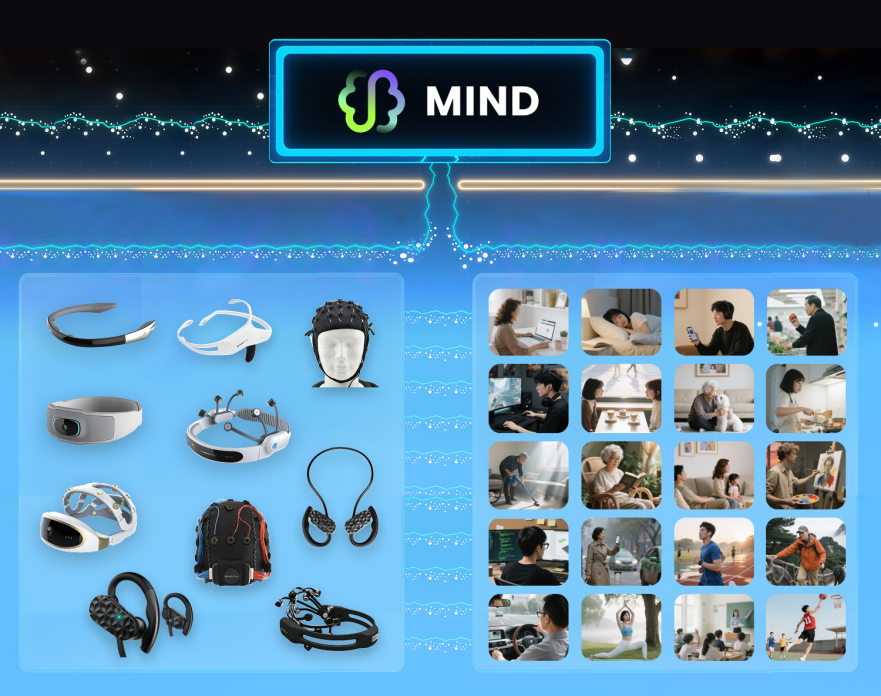
Core Insights - The CIFAR datasets (CIFAR-10 and CIFAR-100) have significantly contributed to the advancement of convolutional neural networks (CNNs) and deep learning applications in computer vision, marking a new phase in artificial intelligence technology [1][2] - MaschineRobot has launched the MIND project to create the world's largest brain-computer interaction dataset, aiming to transition human-computer interaction from traditional physical methods to advanced thought-based interactions [1][2] Group 1: MIND Project Overview - The MIND project plans to collect data from over 100,000 participants across more than 100 different brain-computer interaction tasks over the next five years, creating an unprecedented and detailed data repository [2][3] - The dataset will be open for sharing in the fields of neuroscience, machine learning, and human-computer interaction research, providing a strong impetus for the industrial application of brain-computer interface technology [2][3] Group 2: Core Data Categories - The MIND dataset will include five core categories: 1. State Task Dataset: Focused on recording and analyzing brain activity patterns in different states [3] 2. Interaction Task Dataset: Collecting EEG signals from users performing specific tasks [3] 3. Neurobiological Feedback Dataset: Studying brain responses to specific stimuli and their feedback mechanisms [3] 4. Multimodal Interaction Dataset: Combining various sensory inputs and outputs to support more complex interaction scenarios [3] 5. Mental and Neural Health Dataset: Aiming to improve and monitor mental and neural health conditions through brain-computer interface technology [3] - The project supports various types of brain-computer interface devices for data collection and aims for high precision in data labeling and granularity to ensure data quality and usability [3]