行政事业

Search documents
“国资版闲鱼”平台像个大超市
Xin Hua Ri Bao· 2025-12-29 08:02
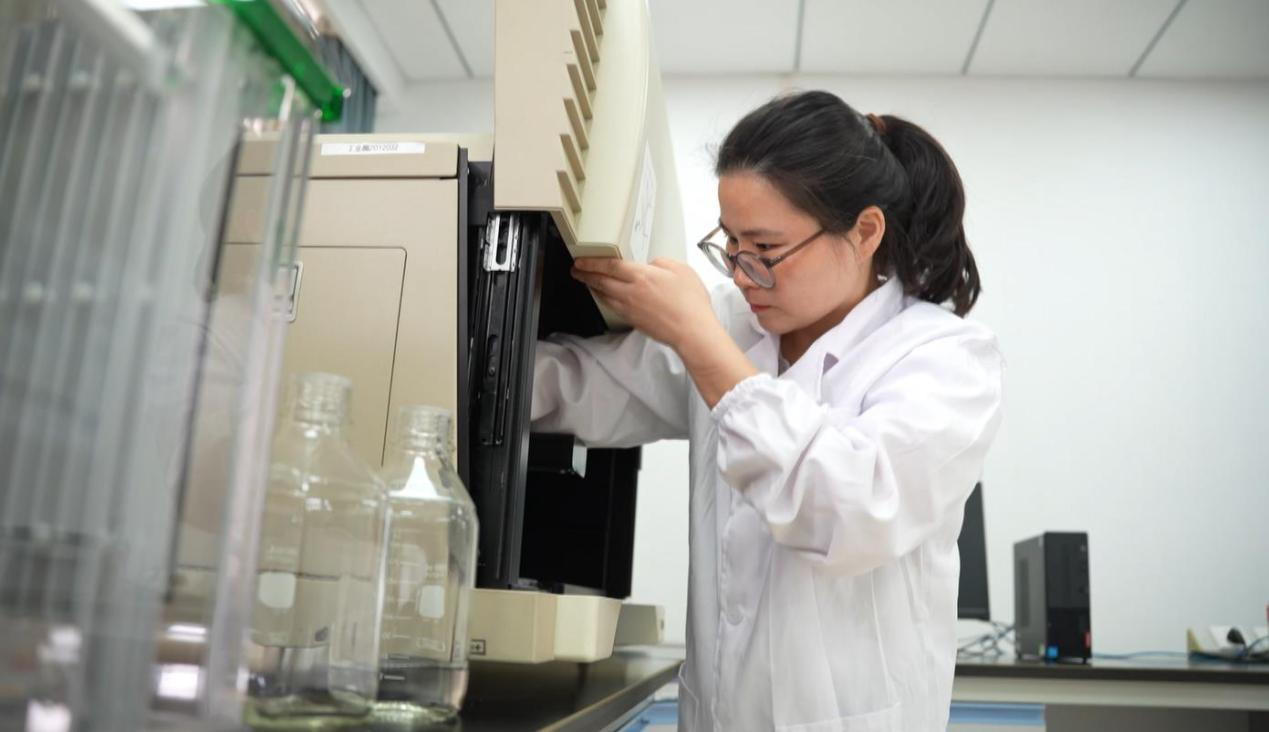
Core Insights - The article highlights the successful revitalization of a Grove crane at Jiangsu Provincial Traffic Technician College, which has become a symbol of industrial charm and a practical training resource for students [1] - The crane, originally imported in 1995, was repurposed through a state asset sharing platform, reflecting Jiangsu's commitment to resource efficiency and asset management [1] Group 1: Asset Sharing Platform - The Jiangsu provincial government has established a unified asset sharing platform for state-owned assets, addressing the issue of underutilized resources across administrative units [1][3] - The platform allows for efficient asset transfer, breaking down barriers between departments and regions, thus enabling the flow of dormant state assets [1][3] - As of now, over 21,000 assets have been transferred through the platform, saving more than 38 million yuan in fiscal funds, with a total asset value of 662 million yuan [3] Group 2: Impact on Research and Development - The Jiangsu Ocean and Fisheries Research Institute has successfully utilized the platform to acquire 20 assets valued at approximately 3 million yuan, significantly enhancing its research capabilities [2] - Newly acquired equipment, such as automated nucleic acid extraction instruments, has doubled the daily sample testing capacity, improving disease monitoring in aquatic animals [2] Group 3: Policy and Management - The Jiangsu Provincial Finance Department has issued management guidelines for the asset sharing platform, categorizing seven types of assets for inclusion and encouraging proactive participation from all units [3] - The initiative promotes a shift in management philosophy from "using new over old" to a more sustainable approach, enhancing awareness of resource conservation and efficiency [3]
人大常委会丨守好“家底” 深化改革——国有资产管理晒出“成绩单”
Xin Hua Wang· 2025-10-27 01:13
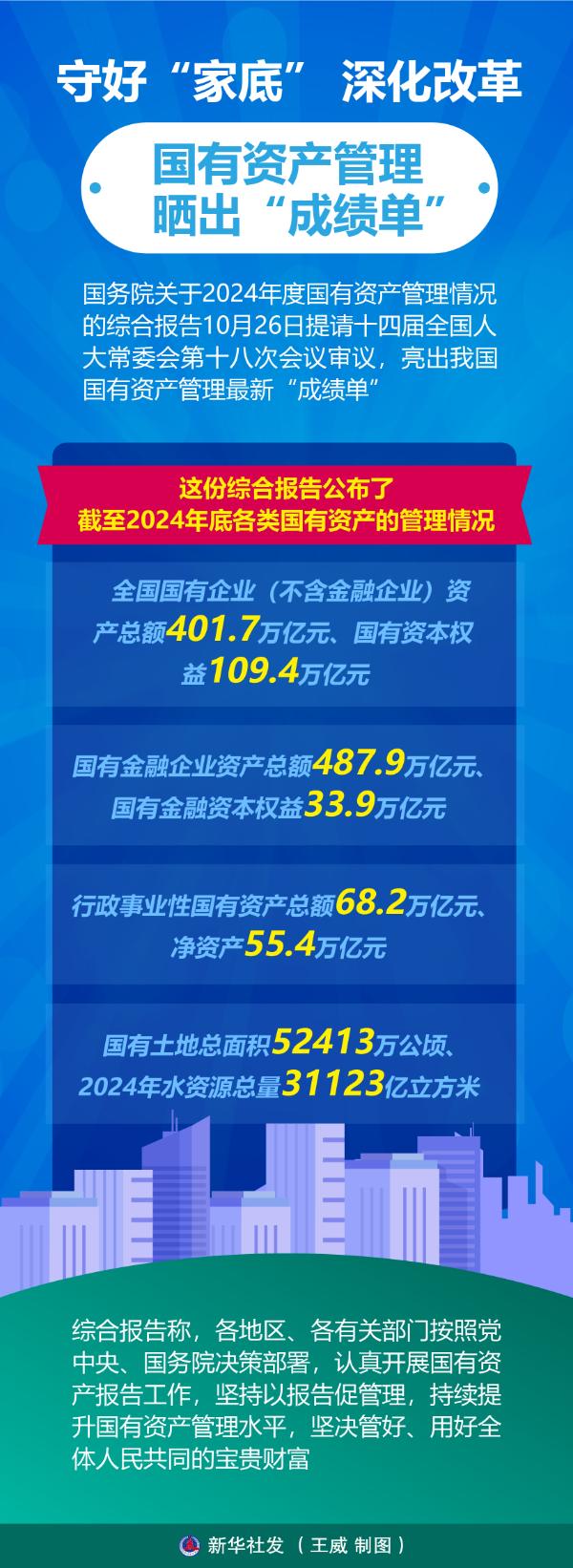
Group 1 - The core report presented the management status of state-owned assets in China as of the end of 2024, highlighting total assets of state-owned enterprises (excluding financial enterprises) at 401.7 trillion yuan and state-owned capital equity at 109.4 trillion yuan [1][4] - State-owned financial enterprises reported total assets of 487.9 trillion yuan and state-owned financial capital equity of 33.9 trillion yuan [1][4] - Administrative and public service state-owned assets totaled 68.2 trillion yuan, with net assets amounting to 55.4 trillion yuan [1][4] - The total area of state-owned land reached 52,413 million hectares, and the total water resources for 2024 were reported at 31,123 billion cubic meters [1][4] Group 2 - The report indicated a positive trend in asset management and reform, emphasizing the establishment of a supervisory system for state-owned assets and enterprises, and the enhancement of the modern enterprise system with Chinese characteristics [2] - Future plans include deepening the reform of state-owned enterprises, optimizing the structure of state-owned economy, and enhancing the management of natural resource assets [2] - The report stressed the importance of managing state-owned assets effectively as they are considered a common wealth for all people, aiming to improve asset management efficiency and governance [2]

人大常委会|守好“家底” 深化改革——国有资产管理晒出“成绩单”
Xin Hua She· 2025-10-26 13:48
Core Insights - The report highlights the latest achievements in the management of state-owned assets in China, emphasizing the importance of safeguarding and effectively utilizing these assets for the benefit of the public [1][3]. Group 1: State-Owned Asset Management Overview - As of the end of 2024, the total assets of state-owned enterprises (excluding financial enterprises) amount to 401.7 trillion yuan, with state capital equity at 109.4 trillion yuan [1]. - The total assets of state-owned financial enterprises reach 487.9 trillion yuan, with state financial capital equity at 33.9 trillion yuan [1]. - Administrative and public service state-owned assets total 68.2 trillion yuan, with net assets of 55.4 trillion yuan [1]. - The total area of state-owned land is 52,413 million hectares, and the total water resources for 2024 are projected at 31,123 billion cubic meters [1]. Group 2: Growth Metrics - Over the past five years, the total assets of state-owned enterprises, total liabilities, and total state capital equity have grown at average annual rates of 11.4%, 11.7%, and 11.0%, respectively, while maintaining a debt-to-asset ratio below 65% [2]. Group 3: Management and Reform Initiatives - The report outlines new trends in asset management and reform, including the establishment of a robust supervision system for state-owned assets and enterprises, and the enhancement of the modern enterprise system with Chinese characteristics [3]. - There is a focus on strengthening the management of state financial capital and improving financial services for the real economy [3]. - Future initiatives include deepening reforms of state-owned enterprises, optimizing the structure of state-owned economy, and enhancing the management of natural resource assets [3].
中国改革现场丨唤醒“沉睡”的家底:全国资产调剂共享平台如何破解“闲”“缺”困局?
Yang Guang Wang· 2025-06-23 06:25
Core Viewpoint - The establishment of a national asset adjustment and sharing platform aims to enhance the efficiency of resource allocation and utilization of idle assets within government institutions, addressing the issue of information barriers that hinder effective asset sharing [2][21][26]. Group 1: Asset Management and Sharing Platform - The national asset adjustment and sharing platform has gathered over 200,000 asset adjustment and demand information, saving more than 400 million yuan in fiscal funds [13][21]. - The platform allows various government institutions to publish information about idle assets and their needs, facilitating a more efficient matching process compared to traditional methods [18][21]. - The platform has successfully adjusted 33 assets worth over 3 million yuan in Anhui province alone within two months of operation [20]. Group 2: Case Studies of Asset Utilization - Research instruments were transferred from the Tianjin Institute of Industrial Biotechnology to Anhui's Wuxi College, saving 2.8 million yuan and significantly reducing asset allocation time [8][6]. - The use of shared tablets in health clinics has improved efficiency in patient follow-ups, allowing for quicker data entry and better service delivery [10][12]. Group 3: Challenges and Solutions - The platform addresses the common issues of asset idleness and shortages by providing a centralized system for asset management, which was previously hampered by information asymmetry [21][22]. - The platform's integration with the national budget management system allows for real-time tracking and management of assets, enhancing the overall efficiency of public resource utilization [23][24]. Group 4: Future Prospects - The ongoing development of the platform is expected to further activate idle assets, contributing to improved public service efficiency and the establishment of a resource-saving society [26].