
国有资产调剂共享

Search documents
31省份部署政府过紧日子,有何看点?
Di Yi Cai Jing· 2026-02-27 02:21
Core Viewpoint - Local governments across China are implementing strict budgetary measures to reduce general expenditures, including administrative costs and non-essential spending, in order to allocate more resources for economic development and improving people's livelihoods [1][2]. Group 1: Budgetary Measures - All 31 provinces have reported their budget execution for 2025 and draft budgets for 2026, emphasizing the need for government agencies to live frugally [1][2]. - The term "living frugally" refers to the reduction of administrative expenses, unnecessary expenditures, and the "three public expenditures" (official overseas trips, official receptions, and official vehicle expenses) [2][3]. - For instance, Tianjin plans to cut non-essential expenditures by 5.87 billion yuan in 2025, while Jiangxi reported a 21% decrease in "three public expenditures" and significant reductions in other spending categories [2][3]. Group 2: Challenges and Compliance - Some provinces have acknowledged challenges in fully implementing frugality measures, citing issues like excessive spending without budget approval and non-compliance with fiscal discipline [3]. - The central government has reiterated the importance of strict financial discipline and adherence to frugality in its economic policy meetings [3]. Group 3: Future Budget Plans - For 2026, local governments are continuing to prioritize the reduction of general expenditures, with specific targets such as a 5.5% decrease in office expenses and a 13.7% decrease in printing costs in Jiangxi [4]. - Some regions are shifting from a strict reduction approach to controlling expenditures to ensure stability in government operations [4]. - Provinces are also focusing on managing government procurement and new asset allocations, linking them to existing asset evaluations to optimize resource use [6]. Group 4: Asset Management and Oversight - The establishment of a national asset adjustment and sharing platform aims to enhance the efficiency of public asset management across administrative units [5]. - Local governments are encouraged to conduct financial capacity assessments for major projects to avoid overextending fiscal resources [6]. - There is an emphasis on strengthening oversight of frugality measures, with evaluations tied to budget allocations to ensure compliance [6].
唤醒“沉睡”的资产!贵州公物调剂节约近8.5亿元
Xin Lang Cai Jing· 2026-02-02 09:46
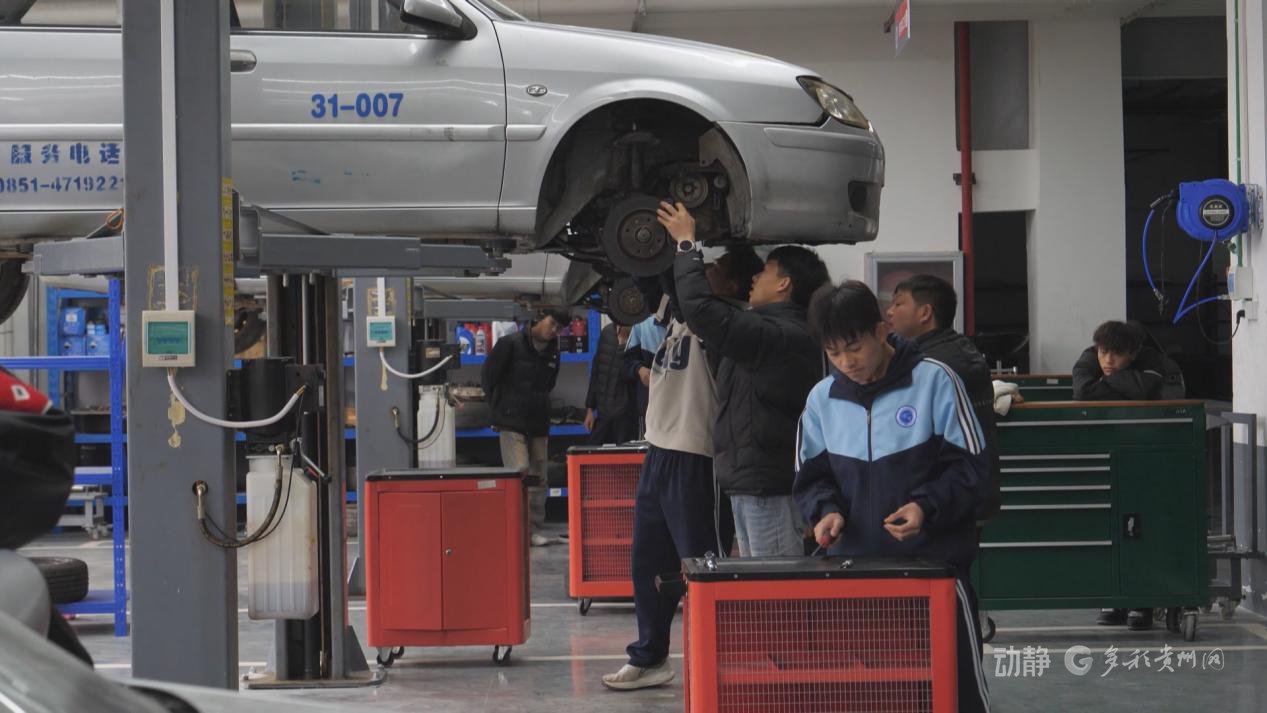
Core Viewpoint - The establishment of an online asset adjustment and sharing platform by the Guizhou Provincial Finance Department has effectively mobilized idle state-owned assets worth approximately 850 million yuan, enhancing their utility and efficiency in public service [1][12]. Group 1: Asset Sharing Platform - The online platform has facilitated cross-departmental, cross-regional, and cross-level asset adjustments, allowing for the circulation of idle assets valued at nearly 850 million yuan over the past two years [1]. - As of June 2024, the platform has aggregated over 20,000 assets worth 1.4 billion yuan and received 216,000 sharing information requests valued at 256.3 billion yuan [12]. - The platform has achieved an asset adjustment completion rate of over 80% within the province, saving approximately 850 million yuan for asset-demanding units [12]. Group 2: Impact on Education - The sharing model has significantly alleviated the financial burden on vocational schools, allowing them to acquire necessary equipment without incurring costs, as demonstrated by the case of the vocational school in Qiandongnan, which received vehicles worth over 400,000 yuan at no cost [7][9]. - The collaboration between Guizhou Transportation Vocational University and the vocational school has resulted in the provision of 8 vehicles to meet the practical training needs of 583 students [3][5]. - This model not only addresses immediate equipment shortages but also fosters long-term resource sharing among educational institutions, enhancing the quality of vocational education in county areas [9].

“国资版闲鱼”平台像个大超市
Xin Hua Ri Bao· 2025-12-29 08:02
Core Insights - The article highlights the successful revitalization of a Grove crane at Jiangsu Provincial Traffic Technician College, which has become a symbol of industrial charm and a practical training resource for students [1] - The crane, originally imported in 1995, was repurposed through a state asset sharing platform, reflecting Jiangsu's commitment to resource efficiency and asset management [1] Group 1: Asset Sharing Platform - The Jiangsu provincial government has established a unified asset sharing platform for state-owned assets, addressing the issue of underutilized resources across administrative units [1][3] - The platform allows for efficient asset transfer, breaking down barriers between departments and regions, thus enabling the flow of dormant state assets [1][3] - As of now, over 21,000 assets have been transferred through the platform, saving more than 38 million yuan in fiscal funds, with a total asset value of 662 million yuan [3] Group 2: Impact on Research and Development - The Jiangsu Ocean and Fisheries Research Institute has successfully utilized the platform to acquire 20 assets valued at approximately 3 million yuan, significantly enhancing its research capabilities [2] - Newly acquired equipment, such as automated nucleic acid extraction instruments, has doubled the daily sample testing capacity, improving disease monitoring in aquatic animals [2] Group 3: Policy and Management - The Jiangsu Provincial Finance Department has issued management guidelines for the asset sharing platform, categorizing seven types of assets for inclusion and encouraging proactive participation from all units [3] - The initiative promotes a shift in management philosophy from "using new over old" to a more sustainable approach, enhancing awareness of resource conservation and efficiency [3]
江苏搭建全省统一的行政事业单位国有资产调剂共享平台
Xin Hua Ri Bao· 2025-12-28 23:32
Core Insights - The article highlights the successful revitalization of a Grove crane at Jiangsu Vocational College of Transportation, which has become a symbol of industrial charm and a practical training resource for students [1] - The crane, originally imported in 1995, was repurposed through a state asset sharing platform, reflecting Jiangsu's commitment to resource efficiency and asset management [1] Group 1: Asset Sharing Platform - The Jiangsu provincial government has established a unified asset sharing platform for state-owned assets, addressing the issue of underutilized resources across administrative units [1][3] - The platform allows for efficient asset transfer, enabling institutions to share idle assets and meet their operational needs without incurring significant new expenses [2][3] - As of now, over 21,000 assets have been transferred through the platform, saving approximately 38 million yuan in public funds, with a total asset value of 662 million yuan [3] Group 2: Impact on Research and Development - The Jiangsu Ocean and Fisheries Research Institute exemplifies the platform's effectiveness, acquiring 20 assets valued at around 3 million yuan, significantly enhancing their research capabilities [2] - Newly acquired equipment has doubled the daily testing capacity for aquatic animal disease monitoring, showcasing the platform's role in improving public health and research efficiency [2] Group 3: Policy and Management - The Jiangsu Provincial Finance Department has issued guidelines to ensure the platform's effective operation, categorizing seven types of assets for management and encouraging proactive participation from asset holders [3] - The initiative aims to shift the mindset from "using new over old" to a more sustainable approach, enhancing awareness of resource conservation among various units [3]
全国资产调剂共享平台覆盖所有行政事业单位 物尽其用,唤醒“沉睡”资产(大数据观察)
Ren Min Ri Bao· 2025-06-17 21:42
Core Points - The establishment of a national asset adjustment and sharing platform has enabled the effective utilization of idle assets across various administrative and public institutions, leading to significant savings in fiscal funds and meeting the needs of grassroots units [1][2][3]. Group 1: Platform Overview - The national asset adjustment sharing platform, launched by the Ministry of Finance in January 2025, has covered all administrative and public institutions in the country, completing over 200 asset adjustments and saving more than 40 million yuan in fiscal funds [1][3]. - The platform utilizes a budget management integration system that includes features for asset adjustment, sharing, and demand, facilitating efficient communication between supply and demand parties [3][5]. Group 2: Efficiency and Impact - The platform has demonstrated high efficiency in asset adjustment by intelligently matching supply and demand information, which helps to enhance the utilization of state-owned assets and reduce operational costs [6][7]. - The sharing of scientific research instruments, such as electronic microscopes and nuclear magnetic resonance spectrometers, has fostered collaboration among research teams and supported significant research outcomes [6][7]. Group 3: Future Directions - The Ministry of Finance plans to strengthen coordination and improve the efficiency of asset matching by enhancing data review mechanisms and integrating asset adjustment sharing into the performance evaluation of administrative public asset management [7][8]. - Recommendations include leveraging big data to make the platform more user-friendly and intelligent, transitioning from a demand-driven approach to a proactive demand-pushing model [8].
共享平台激活“沉睡”资产
Jing Ji Ri Bao· 2025-05-07 22:14
Core Viewpoint - The establishment of a national asset adjustment and sharing platform by the Ministry of Finance aims to enhance the efficiency of state-owned asset utilization and promote the sharing of resources across various administrative and public institutions [1][3]. Group 1: Platform Overview - The national asset adjustment sharing platform has covered all administrative and public institutions in the country, gathering nearly 200,000 pieces of asset adjustment sharing and demand information [1]. - The platform utilizes the integrated budget management system to facilitate the sharing of asset adjustment information, featuring functions such as adjustment square, sharing square, and demand square [1]. - Each department and its affiliated units are responsible for inventorying adjustable shared assets and pushing supply and demand information, while local finance departments aggregate information from their regions [1]. Group 2: Implementation and Impact - Regions like Anhui and Hebei have initiated efforts to improve the platform, register information, and match assets, leading to successful asset transfers among various departments [2]. - The case of the Tianjin Institute of Industrial Biotechnology illustrates how idle research instruments were successfully matched with a university's needs, resulting in a cost saving of 2.8 million yuan [2]. - The platform has also addressed equipment shortages in local offices, demonstrating its effectiveness in enhancing the utilization of state-owned assets and saving fiscal funds [3]. Group 3: Future Directions - The Ministry of Finance emphasizes the importance of utilizing the platform to strengthen asset adjustment sharing, urging departments to adopt a frugal and performance-oriented mindset [3]. - Central and local finance departments are currently inventorying idle and inefficient assets to push timely adjustment sharing and demand information to the platform [3].
这一共享平台盘活“沉睡”的国有资产
Xin Hua She· 2025-04-23 11:46
Core Viewpoint - The establishment of a national asset adjustment and sharing platform for administrative and public institutions in China aims to optimize the utilization of state-owned assets, reduce inefficiencies, and enhance resource allocation efficiency [1][3]. Group 1: Platform Functionality - The platform covers all administrative and public institutions nationwide, featuring functions such as adjustment square, sharing square, and demand square to effectively match supply and demand for assets [2]. - It operates like a "second-hand platform" for administrative assets, allowing institutions to publish idle asset information and view requests for shared assets from other units [2]. - The platform leverages an existing integrated system, eliminating the need for additional construction and operational costs, thus enhancing asset utilization at minimal expense [3]. Group 2: Impact and Benefits - The platform has gathered nearly 200,000 pieces of asset adjustment and sharing information, facilitating cross-departmental and cross-regional asset sharing [3]. - By optimizing asset management and sharing, the platform aims to convert "sleeping" assets into active resources, thereby saving financial resources and enhancing the effectiveness of public institutions [2][3]. - The initiative aligns with the central government's directive to improve resource allocation efficiency and address issues of asset redundancy and waste [3][4].