财务科技

Search documents
AI重构财务,我们离“无需报销”还有多远?丨ToB产业观察 | 巴伦精选
Tai Mei Ti A P P· 2025-10-17 02:41
Core Insights - The financial sector is undergoing a transformation driven by AI, moving from manual processes to automated and intelligent decision-making [2][4][5] - The adoption of AI in finance has been limited until recently due to high costs, but advancements like DeepSeek have significantly reduced these costs, making AI applications viable [4][5] - Despite the potential benefits, challenges such as AI hallucinations and the need for explainability remain significant barriers to widespread adoption in finance [2][12] Cost Reduction and Demand Surge - The financial industry has only recently begun to embrace AI, transitioning from process automation to intelligent decision-making, with a notable starting point being the launch of DeepSeek [4] - Prior to DeepSeek, the cost of using AI for tasks like expense report auditing was significantly higher than manual processes, deterring many companies from adopting AI solutions [4] - After the introduction of DeepSeek, the cost of AI auditing for receipts dropped from 9-10 RMB to 0.6-0.7 RMB, making it more cost-effective than manual auditing [4][5] AI Applications in Finance - AI has begun to empower various financial scenarios, including receipt auditing and expense management, which were previously reliant on manual verification [6][8] - The introduction of AI has enabled companies to handle complex tasks, such as recognizing receipts in multiple languages, which was a challenge for finance personnel [8] - The financial control capabilities of companies are currently at levels L3-L4, with the integration of AI being crucial for advancing to level L5 [8] Intent Recognition and Dynamic Decision-Making - AI has transformed the interaction in finance from manual data entry to natural language processing, allowing for more intuitive user experiences [9] - AI's ability to make dynamic decisions based on various data points represents a significant advancement over previous static rules [9][10] - The shift from task-oriented roles to decision-making roles is a key evolution in the finance sector, as AI takes over repetitive tasks [10] Challenges of AI Implementation - The phenomenon of AI hallucinations poses a major challenge, particularly in finance where accuracy is critical [12] - Hallucinations can arise from outdated data, unreliable online information, and imbalanced data distributions, necessitating robust solutions to mitigate these issues [12][13] - Organizations must overcome cognitive biases and structural inertia to fully leverage AI capabilities in finance [14][15] Organizational Evolution - The successful integration of AI in finance requires a rethinking of organizational structures and roles, moving away from traditional task-based divisions [15] - Financial shared service centers with empowered leadership can effectively implement AI strategies to optimize costs and improve decision-making [15][16]


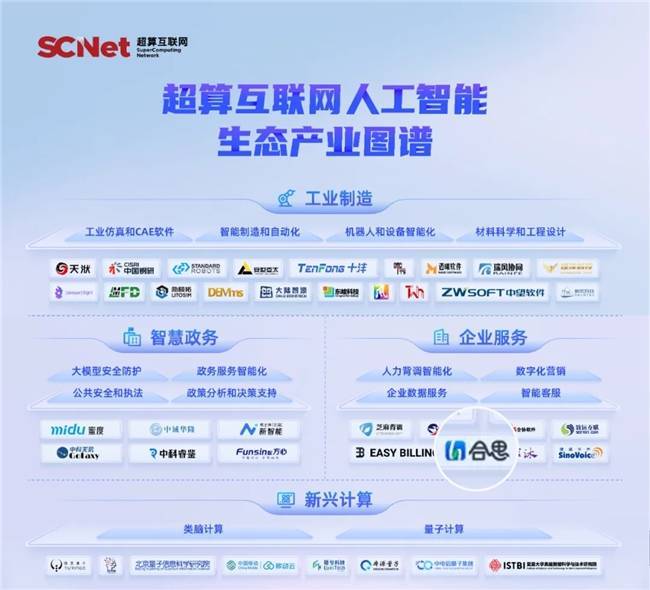
合思入选超算互联网《人工智能生态产业图谱》 获AI能力认可赋能财务数智化
Sou Hu Cai Jing· 2025-09-06 08:56
Core Insights - The National Supercomputing Internet Platform has launched the "Artificial Intelligence Ecological Industry Map," recognizing HeSi's innovations in financial digitalization, marking a significant achievement in the "AI + Finance" sector [1] - HeSi's inclusion in the map highlights its role in driving AI industry innovation through financial digitalization, providing new pathways for profit growth for enterprises [1] Group 1 - The National Supercomputing Internet Platform aims to create an ecosystem that promotes innovation-driven applications and feedback loops, enhancing its pivotal role in the national AI industry chain [1] - HeSi offers a comprehensive suite of services in financial management, leveraging its ecological connectivity and dual-driven model to provide solutions that include travel aggregation, expense control, payment management, financial analysis, and electronic accounting [1] - The collaboration between HeSi and the supercomputing platform exemplifies the practice of "ecological collaborative innovation," optimizing AI algorithm training and inference efficiency through access to national-level computing resources [1] Group 2 - HeSi plans to deepen the integration of AI technology with financial management scenarios, collaborating with the National Supercomputing Internet Platform and other partners to drive cost reduction and efficiency enhancement for various industries [3] - The company aims to explore advanced scenarios such as intelligent expense control and risk warning in conjunction with CFOs and industry experts, building a more agile intelligent financial system [3] - HeSi's initiatives are focused on upgrading management from automation to intelligence, further unlocking profit growth potential for enterprises [3]
AI“变革”财务会计生态
Jing Ji Guan Cha Wang· 2025-07-30 12:49
Core Insights - Artificial intelligence (AI) is significantly transforming accounting and financial management, impacting accounting functions, management decision-making, and business integration [1][3][4] Group 1: Impact on Accounting Functions - AI enables automation of accounting tasks such as transaction processing, report generation, and anomaly detection, allowing accountants to shift from transactional roles to managerial and leadership roles [1][4] - The integration of AI in financial processes is leading to a reduction in routine accounting workloads, enhancing the analytical capabilities of finance professionals [5][10] Group 2: Management Decision-Making - AI's data analysis capabilities allow for precise forecasting of financial conditions and operational outcomes, providing robust support for management decisions [1][4] - Companies are increasingly utilizing AI tools for dynamic budget management and cash flow adjustments based on project progress [10][11] Group 3: Business Integration - AI facilitates real-time analysis of business and financial data, promoting deeper integration between finance and operations [1][2] - The development of customized AI solutions is helping companies address specific challenges in data integration and financial analysis [8][9] Group 4: Challenges in AI Adoption - Companies face challenges such as the uncertainty of AI solutions, integration with existing systems, data privacy concerns, and regulatory issues [5][7] - The need for effective data governance and security measures is critical for successful AI implementation in finance [11] Group 5: Future Trends - The application of generative AI in finance is expanding, with potential uses in financial modeling, risk assessment, and automated reporting [4][6] - The evolution of AI in finance is expected to continue moving towards comprehensive, intelligent systems that enhance decision-making and operational efficiency [7][10]
“未来财务 新智变革” 峰会圆满落幕 400 余家企业共绘财务数字化新图景
Sou Hu Wang· 2025-07-14 13:03
Core Insights - The financial industry is undergoing unprecedented transformation driven by digitalization, with strong support from national policies [1][3] - The "Future Finance New Intelligent Transformation" summit highlighted the importance of AI and digital accounting frameworks for the future of finance [1][12] Group 1: Summit Overview - The summit attracted over 400 CFOs and financial managers from medium to large enterprises to discuss the future direction of the financial industry [1][3] - Keynote speeches included insights from industry leaders on the integration of AI in financial management and the evolution of digital accounting [1][3][12] Group 2: Digital Accounting Framework - The evolution of accounting from traditional methods to modern digital practices was discussed, emphasizing the potential for China to become the first country to eliminate paper in accounting [8][11] - Future accounting development will focus on real-time accounting and the integration of AI technologies to enhance decision-making capabilities [11][12] Group 3: AI in Finance - AI is expected to revolutionize financial processes through various application modes, including Embedding, Copilot, and Agent models [14][15] - The implementation of AI will enhance data processing capabilities and promote a shift towards intelligent and automated financial workflows [15][17] Group 4: Industry Collaborations - Partnerships among companies like Ctrip, Alipay, and Didi are showcasing the integration of AI in travel and expense management, enhancing efficiency and cost control [20][21] - The summit featured discussions on the role of AI and RPA in automating repetitive tasks and improving accuracy across various financial scenarios [21][22] Group 5: Future Outlook - The financial industry is set to accelerate towards a more intelligent, real-time, and collaborative environment, driven by ongoing technological advancements [23] - Companies will continue to focus on customer needs and technological innovation to drive the digital transformation of finance [23]