
货币制造

Search documents
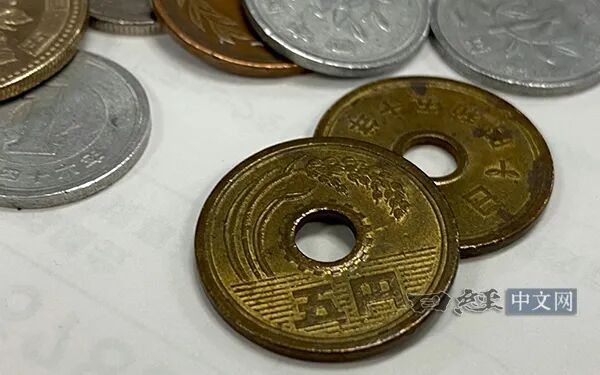
5日元硬币的时价已超面值?原因是……
3 6 Ke· 2025-12-17 04:17
Group 1 - The value of the 5 yen coin's raw materials has exceeded its face value, while the 10 yen coin's raw materials are close to 90% of its face value due to rising copper prices [2][3] - The composition of the 5 yen coin includes 60% to 70% copper and 30% to 40% zinc, while the 10 yen coin consists of 95% copper, 3% to 4% zinc, and 1% to 2% tin [3][4] - The current market price for the raw materials of the 5 yen coin is 5.4 yen and for the 10 yen coin is 8.7 yen as of December 15 [3][4] Group 2 - The increase in raw material prices is attributed to a global trend, with the U.S. Mint halting the production of the 1 cent coin due to high manufacturing costs [5] - The trend towards cashless payments is also observed in Japan, with a significant decrease in cash usage for transactions under 1000 yen over the past decade [5][7] - The Japanese Ministry of Finance acknowledges the necessity of cash for those unable to use cashless payment methods, but the environment for currency issuance has changed significantly [7]

造一分亏三分,美国正式停铸1美分硬币!
Jin Shi Shu Ju· 2025-11-13 08:47
Core Points - The U.S. has officially ceased the production of the 1-cent coin, marking the end of a 230-year circulation due to rising costs and the digital payment trend [1][2] - The production cost of the 1-cent coin has increased from 1.42 cents to 3.39 cents over the past decade, nearly quadrupling its face value [1] - The U.S. Mint estimates that stopping the production of the 1-cent coin will save approximately $56 million annually in material costs [1] - Retailers have begun rounding cash transactions to the nearest 5 cents, but there are concerns about operational issues arising from the coin's rapid disappearance [1] Industry Impact - The decision to stop producing the 1-cent coin reflects a broader trend towards modernization in payment methods, aligning with the increasing prevalence of digital payment systems [1] - Despite the cessation of production, over 300 billion 1-cent coins remain in circulation and are still considered legal tender [2] - The last batch of 1-cent coins produced will not enter circulation but will be auctioned by the Mint, featuring a special "Ω" mark for historical significance [2]
美国铸币局宣布停止生产一美分硬币
Xin Hua Wang· 2025-11-13 07:47
Core Points - The U.S. Mint has officially ceased the regular production of the one-cent coin, marking the end of its 232-year circulation history [1] - The last one-cent coin for circulation was minted by U.S. Treasury's Treasurer, Brandon Beach, during a ceremony at the Philadelphia Mint [1] - The production cost of the one-cent coin has significantly increased over the past decade, rising from 1.42 cents to 3.69 cents per coin, making its production unsustainable [1] Industry Summary - The one-cent coin has played a vital role in American daily life since its inception in 1793, but changing economic conditions and consumer behaviors have led to its discontinuation [1] - Despite the cessation of production, the one-cent coin remains legal tender in the U.S., with an estimated 300 billion coins currently in circulation, far exceeding commercial demand [1] - Retailers and businesses can continue to price items in one-cent increments, and the U.S. Mint plans to produce limited edition one-cent commemorative coins for historical research and collectors [1]