无现金化

Search documents
异动盘点0313 | 香港银行股再度走低,游戏股集体走高;石油股走高,奇景光电早盘暴涨超23%
贝塔投资智库· 2026-03-13 04:00
Group 1 - Zhaoyi Innovation (03986) saw an intraday increase of 1.72% amid rising shipping risks in the Hormuz Strait affecting the supply chain of key raw materials like helium [1] - Rongchang Bio (09995) rose over 3.6% after its RC288 injection application was accepted by NMPA, showing excellent anti-tumor activity and safety in preclinical studies [1] - Swire Properties (01972) increased by over 2.2% following the release of its 2025 full-year results, reporting revenue of HKD 16.041 billion, a year-on-year increase of 11%, and a basic earnings per share of HKD 1.49 [1] Group 2 - Health 160 (02656) surged over 10%, reaching a new high of HKD 140.5, with a nearly doubled stock price since March 9, despite a previous drop of about 30% on February 11 [2] - Gaming stocks collectively rose, with notable increases in companies like Boyaa Interactive (00434) up 4.44% and Tencent (00700) up 1.1%, following Apple's announcement of a commission rate adjustment for the App Store in mainland China [2] - Qidian Guofeng (01280) experienced a significant rise of over 26% after announcing a sales contract for AI servers with an independent third party [2] Group 3 - Hong Kong bank stocks fell again, with Standard Chartered (02888) down 4.67% and HSBC Holdings (00005) down 3.8%, amid ongoing tensions in the Middle East affecting transactions involving Asian balance sheets [3] - Cement stocks saw a general increase, with China National Building Material (03323) up 2.62%, as construction activity picked up post-Lantern Festival, leading to a steady recovery in cement market demand [3] - Domestic property stocks rebounded, with CIFI Holdings (00884) up 2.9% and Sunac China (01918) up 5.45%, as recent data indicated a 3.3% year-on-year decline in second-hand housing listings in Shenzhen [4] Group 4 - Yao Cai Securities (01428) saw a significant rise of over 39% after extending the acquisition offer deadline with Ant Group to March 25, 2026 [4] - PayPay (PAYP.US), a digital wallet operator backed by SoftBank, debuted on the US stock market with a 13.5% increase, achieving a market cap of nearly USD 12 billion [5] - Chinese electric vehicle companies NIO (NIO.US) and Xpeng Motors (XPEV.US) saw stock increases of 1.46% and 3.58%, respectively, amid discussions of potential collaborations with European automotive giant Stellantis [5] Group 5 - Storage stocks collectively declined, with SanDisk (SNDK.US) down 5.59% and Micron Technology (MU.US) down 3.19%, following negative sentiment from short-seller Citron Capital [6] - Optical communication stocks fell, with Applied Optoelectronics (AAOI.US) down 16.39%, despite securing a bulk order for a new data center transceiver [6] - Agricultural input stocks continued to rise, with CF Industries Holdings (CF.US) up 13.21%, driven by supply chain disruptions in the Middle East affecting fertilizer transportation [7] Group 6 - Oil stocks rose sharply, with Battalion Oil (BATL.US) up 15.48% as international oil prices surged, with WTI crude rising over 8% to USD 94.66 [8] - EHang Intelligent (EH.US) reported total revenue of RMB 509.5 million (approximately USD 72.9 million) for the fiscal year 2025, marking an 11.7% year-on-year increase, despite a net loss of RMB 231 million [8]



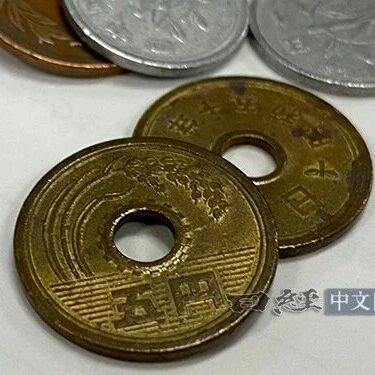
5日元硬币的时价已超面值?原因是……
3 6 Ke· 2025-12-17 04:17
Group 1 - The value of the 5 yen coin's raw materials has exceeded its face value, while the 10 yen coin's raw materials are close to 90% of its face value due to rising copper prices [2][3] - The composition of the 5 yen coin includes 60% to 70% copper and 30% to 40% zinc, while the 10 yen coin consists of 95% copper, 3% to 4% zinc, and 1% to 2% tin [3][4] - The current market price for the raw materials of the 5 yen coin is 5.4 yen and for the 10 yen coin is 8.7 yen as of December 15 [3][4] Group 2 - The increase in raw material prices is attributed to a global trend, with the U.S. Mint halting the production of the 1 cent coin due to high manufacturing costs [5] - The trend towards cashless payments is also observed in Japan, with a significant decrease in cash usage for transactions under 1000 yen over the past decade [5][7] - The Japanese Ministry of Finance acknowledges the necessity of cash for those unable to use cashless payment methods, but the environment for currency issuance has changed significantly [7]
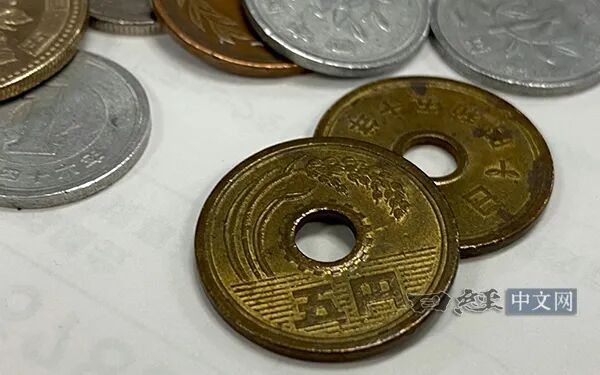
5日元硬币的时价已超面值?原因是……
日经中文网· 2025-12-17 03:26
Core Viewpoint - The value of Japanese yen coins is increasing due to rising raw material prices, particularly copper, which has reached historical highs, leading to the raw material value of the 5 yen coin exceeding its face value and the 10 yen coin approaching 90% of its face value [2][4]. Group 1: Raw Material Composition and Prices - The 5 yen coin consists of 60% to 70% copper and 30% to 40% zinc, while the 10 yen coin is made up of 95% copper, 3% to 4% zinc, and 1% to 2% tin [4][5]. - As of December 15, the raw material prices are estimated at 5.4 yen for the 5 yen coin and 8.7 yen for the 10 yen coin based on domestic market prices [4][5]. Group 2: Global Trends and Implications - The increase in raw material prices is a global phenomenon, with the U.S. Mint halting the production of the 1 cent coin due to high manufacturing costs, which are nearly four times its face value [6]. - The trend towards cashless payments is growing, with a significant decrease in cash usage for transactions under 1000 yen in Japan, dropping from 89.2% to 61.6% over the past decade [6]. Group 3: Currency Production and Future Considerations - The Japanese Ministry of Finance has stated that cash remains essential for those unable to use cashless payment methods, and there are no plans to stop producing circulating currency [8]. - The manufacturing environment for currency has changed significantly, with no new production of 1 yen and 5 yen coins for circulation since 2016 and 2021, respectively, indicating a need to reassess the value of currency [8].