
跨境电商营销服务

Search documents
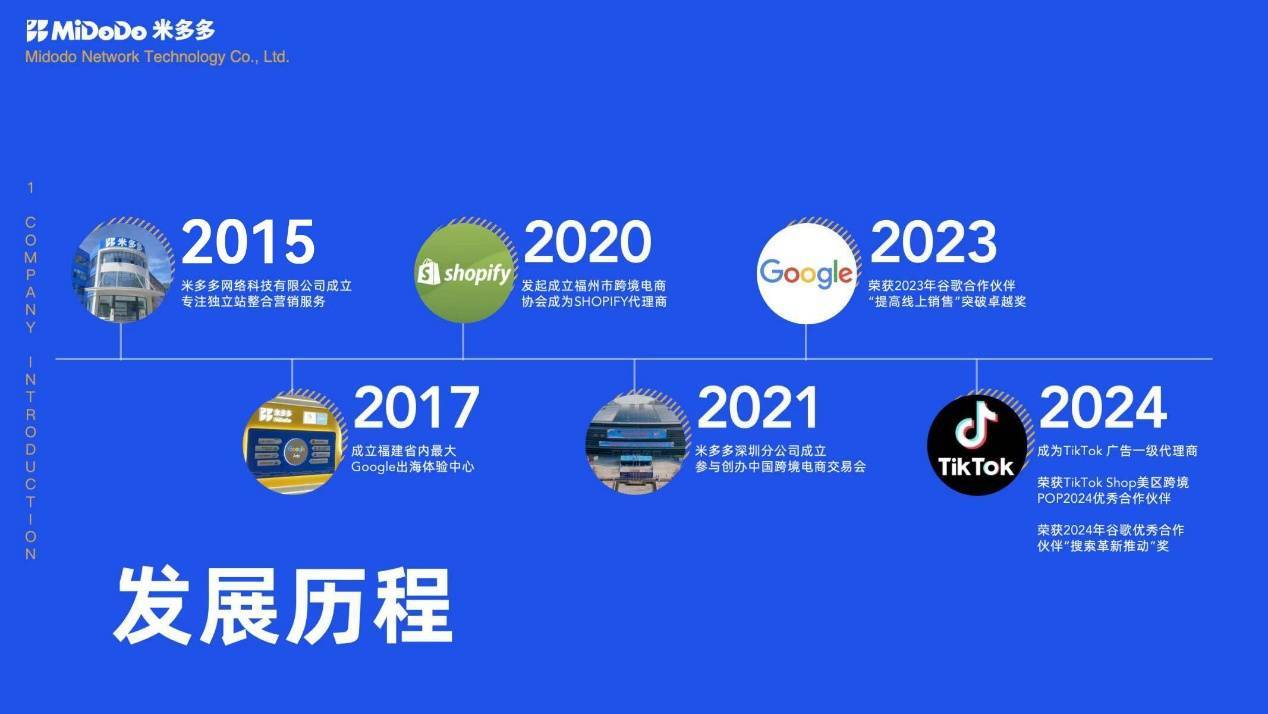
米多多港股IPO:资不抵债,4%毛利率下的“流量搬运工”能走多远?
Sou Hu Cai Jing· 2025-12-24 09:37
Core Viewpoint - The overseas traffic business appears prosperous but is struggling within the ecosystem dominated by tech giants, as evidenced by the financial difficulties faced by Midoor Group, which is seeking to go public while revealing significant losses and operational challenges [1]. Group 1: Business Development and Structure - Midoor's business has evolved through three main phases: from a traditional cross-border trade intermediary (2014-2017) to a digital advertising agency (2018-2021), and finally to a cross-border e-commerce marketing service provider since 2021 [2]. - The company operates three main business segments: overseas marketing services, digital exhibition services, and overseas e-commerce operations, with overseas marketing services contributing over 98% of its revenue [5][6]. - Midoor's market share in the cross-border e-commerce service sector is only 0.5%, despite being the fifth largest provider in China [4]. Group 2: Financial Performance - Midoor's revenue from 2022 to 2024 was reported as $65.17 million, $70.85 million, and $71.13 million, with a significant slowdown in growth to just 0.4% in 2024 [6]. - The company experienced a net profit of $1.64 million in 2022, but reported a loss of $16.41 million in 2023, with losses further escalating to $19.85 million in the first half of 2025, marking a nearly 900-fold increase year-on-year [6][10]. - As of June 2025, Midoor's unremitted losses reached $32.53 million, with a debt-to-asset ratio consistently above 106%, indicating a precarious financial position [7]. Group 3: Dependency and Profitability Issues - Midoor's gross profit margins have remained low, fluctuating between 4% and 8%, with the core overseas marketing service margin dropping to 3.8% in 2023 due to increased media costs from platforms like Google and TikTok [10][11]. - The company is heavily reliant on a few major suppliers, with 96.5% of its procurement costs coming from the top five suppliers, primarily Google and TikTok, which limits its pricing power and profitability [11]. - The customer base is primarily composed of small to medium-sized cross-border sellers, with an average revenue per client of only $657,000, leading to intense price competition and further pressure on profit margins [12]. Group 4: Future Prospects and Challenges - Midoor plans to use the funds raised from its IPO to expand global operations and develop its overseas e-commerce operational system and technology [13]. - The company faces significant challenges, including tightening policies from major platforms and increasing industry competition, which may hinder its ability to transform its business model successfully [13].
米多多不是不想转型,而是根本转不动
Sou Hu Cai Jing· 2025-12-22 11:07
Core Viewpoint - Mido's IPO application reveals a paradox of "increasing revenue without increasing profit," with a significant revenue growth of 81.6% to $55.8 million in the first half of 2025, but a staggering net loss of $19.85 million, marking a 892-fold increase in losses [1][9][27] Financial Performance - Mido's revenue structure is heavily reliant on overseas marketing services, which accounted for 98.7% of total revenue in the first half of 2025, but the gross margin for this core business plummeted to 3.8% in 2023 and only slightly improved to 4% in 2025 [3][4][6] - The overall gross margin has remained low, fluctuating between 4% and 8%, with the first half of 2025 showing a gross margin of 4.8%, significantly below the industry average of over 20% [1][3][4] Cost Structure - Mido's sales costs are predominantly consumed by media costs, which accounted for over 98% of total sales costs, indicating a severe limitation on retained gross profit [6][7] - The company's business model operates as a middleman, purchasing advertising space from platforms like Google and TikTok and reselling it to clients, which restricts its pricing power and profit margins [6][7] Market Dynamics - The global cross-border e-commerce market is projected to grow to $123.7 billion by 2029, with a compound annual growth rate of 24.3%, yet many small and medium-sized service providers, including Mido, are trapped in a cycle of low margins and fierce competition [2][15] - Mido's reliance on a concentrated supplier base, with 96.5% of procurement costs coming from its top five suppliers, poses a risk as any changes in platform policies can directly impact profitability [7][9] Competitive Landscape - The competitive environment is characterized by a high number of active service providers, with over a thousand in the market, leading to price wars and reduced margins for smaller players [15][16] - In contrast, leading companies in the industry have successfully achieved higher margins through technology and comprehensive service offerings, highlighting that low margins are not an industry inevitability but rather a result of business model choices [18][19] Future Prospects - Mido's IPO aims to raise funds for expanding its global business, developing higher-margin overseas e-commerce operations, and investing in marketing technology, but the success of this strategy is uncertain due to existing challenges [19][20] - The company has launched a new overseas e-commerce operation with a gross margin of 67.9%, but its slow revenue growth indicates that it may not significantly alter the overall low-margin situation in the short term [21][19] Industry Insights - Mido's situation reflects a broader issue within the cross-border service industry, where many small providers struggle with low margins due to reliance on platform-driven business models [25][27] - To escape the low-margin trap, service providers must focus on technology empowerment, comprehensive service offerings, and deepening customer relationships to enhance profitability [25][26]

米多多港股IPO:核心子公司被撤销科技型中小企业评价 Google持续收紧返点政策 毛利率暴跌市场份额仅剩0.5%
Xin Lang Cai Jing· 2025-12-19 03:17
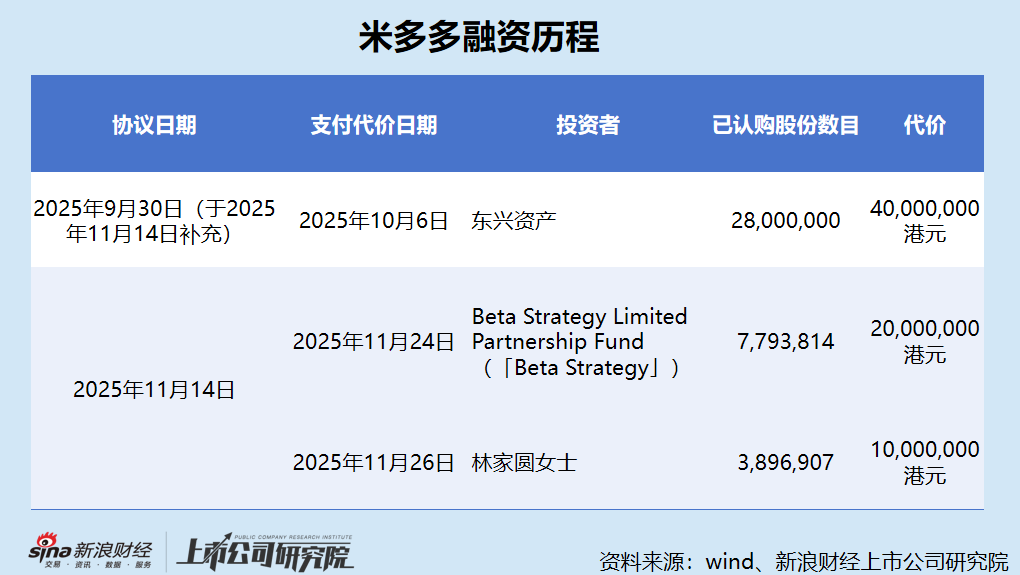
Core Viewpoint - Mido's recent IPO application reveals significant financial challenges, including substantial share-based payments leading to massive losses and a heavy reliance on Google for revenue, which is under threat due to tightening rebate policies [1][18]. Financial Performance - Mido's revenue from 2022 to 2024 was $65.17 million, $70.85 million, and $71.13 million, with 2024 showing only a 0.40% year-on-year growth. Net profits were $1.64 million in 2022, followed by losses of $16.41 million in 2023 and $1.98 million in the first half of 2025 [25]. - In the first half of 2025, Mido achieved revenue of $55.78 million, a year-on-year increase of 81.60%, but recorded a net loss of $19.85 million, a 900-fold increase in losses compared to the previous year [25][26]. - The adjusted net profits for 2023 and the first half of 2025 were $5,900 and -$2,200 respectively, indicating the company is near the breakeven point [25]. Share-Based Payments - Mido made significant share-based payments of $16.47 million in 2023 and $19.46 million in the first half of 2025, which directly contributed to its substantial losses [4][24]. - The payments to executives and employees raised concerns about potential profit transfer issues [1][24]. Business Model and Revenue Sources - Mido's revenue is heavily dependent on overseas marketing services, accounting for 99% of total income, which poses a risk due to lack of diversification [1][29]. - The company has recently expanded into overseas e-commerce operations, generating only $35,200 in revenue, less than 1% of total income [29]. Financial Health - Mido has consistently faced financial instability, with debt ratios of 119.81%, 107.21%, 107.56%, and 106.77% across reporting periods, significantly higher than industry averages [26]. - As of mid-2023, Mido's current liabilities were $28.10 million, while current assets were only $25.45 million, resulting in negative working capital of $264,400 [26]. Market Position and Competition - Mido is the fifth largest cross-border e-commerce marketing service provider in China, with a market share of only 0.5% [34]. - The industry is characterized by intense competition, with many players and no unified standards, leading to low profit margins across the sector [34]. Dependency on Google - Mido's reliance on Google is significant, with Google accounting for 66.6% to 88.7% of total sales costs during the reporting periods [15][35]. - Recent changes in Google's rebate policies have negatively impacted Mido's gross margins, which have been declining [37].
易点天下:2025年上半年营收猛增近60%,坚定AI转型之路,Agentic AI成出海营销新引擎
Zheng Quan Shi Bao Wang· 2025-08-18 12:51
Core Insights - The company, 易点天下, reported a significant revenue increase of 59.95% year-on-year, reaching 1.737 billion yuan in the first half of 2025, driven by a surge in e-commerce client revenue which grew by 102.22% [1][2] - The company's net profit attributable to shareholders rose by 8.81% to 144 million yuan, with a basic earnings per share of 0.3 yuan [1] - The company is undergoing a deep transformation driven by AIGC technology, enhancing advertising material testing efficiency by 10 times and reducing labor costs by 65% [1][3] Performance Analysis - Internet marketing remains the primary revenue driver, contributing 99.51% of total revenue, with a year-on-year growth of 59.68% [2] - E-commerce business alone contributed 544 million yuan, doubling compared to the previous year [2] - The number of direct clients increased by 24%, from 580 to 721, indicating strong market recognition and demand [2] AI Revolution - The company has implemented multiple AI innovations, achieving a generational upgrade in overseas service capabilities [3] - The AdsGo.ai system allows for global ad placement in just 5 minutes, with a 5-fold increase in advertising strategy diversity and a 65% reduction in labor costs [3] - The AI technology has significantly improved efficiency, with a 7-fold increase in reasoning efficiency and a 30% reduction in task time [3] Industry Positioning - The company is strategically positioned in a rapidly growing market, focusing on the overseas expansion of Chinese enterprises [4] - The global mobile internet advertising market is projected to grow from approximately 503.88 billion yuan in 2024 to 852.81 billion yuan by 2029, with an annual growth rate of 11.10% [4] - The company has increased its R&D investment by 26.23% to 57.22 million yuan, collaborating with major tech partners to accelerate AI capabilities [4] Transformation Journey - The company is transitioning from an advertising service provider to an AI marketing infrastructure provider [5] - The newly announced AI Drive 2.0 solution aims to create a closed-loop marketing process through intelligent insights, creative generation, automated placement, and data attribution [5] - This shift signifies a move from manual optimization to AI management in advertising, fundamentally restructuring global marketing rules [5]