
轨道交通动力装备

Search documents
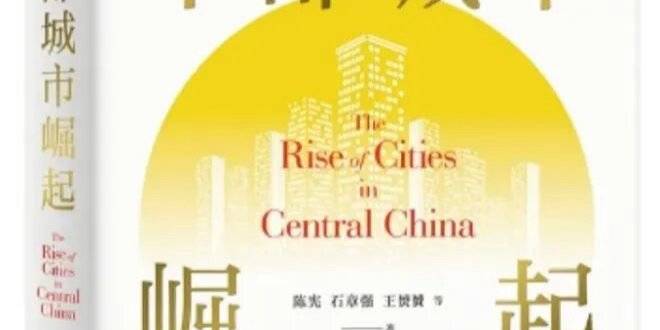
重庆登顶消费第一城,武汉长沙合肥能中部城市崛起?
Sou Hu Cai Jing· 2026-02-10 05:55
Core Viewpoint - The article discusses the rise of central cities in China, highlighting the economic growth and development opportunities presented by the national strategy of "Central Rise" and the integration of industry, culture, and tourism as key drivers for this transformation [2][4][76]. Economic Growth - The total GDP of the six central provinces reached 5.55 trillion yuan in the first half of 2024, with a year-on-year growth of 8.9%, slightly below the national average of 11.4% [2][3]. - Wuhan leads the central region with a GDP of 997.5 billion yuan, followed by Zhengzhou at 903.4 billion yuan, showcasing their strengths in high-end manufacturing and modern services [3][8]. Urban Development Models - The article emphasizes the need for a "production-city integration" model, which combines industrial development with urban planning, infrastructure, and public services to create a mutually beneficial relationship between industry and urban life [3][4]. - Central cities are responding to national strategies and seizing new opportunities, with cities like Wuhan, Changsha, Zhengzhou, and Hefei emerging as leaders in this transformation [4][76]. Cultural and Tourism Integration - Cultural tourism has become a new engine for the transformation of central cities, leveraging rich historical and natural resources to develop unique local tourism projects [4][24]. - The integration of culture and tourism is seen as essential for enhancing the competitiveness of central cities, yet many face challenges in effectively combining these sectors [26][30]. Challenges Faced by Central Cities - Central cities struggle with branding, lacking a memorable and representative "super IP" that can effectively communicate their unique identities [26][28]. - There is a disconnect between cultural tourism and industrial development, with both sectors often operating independently without synergy [30][32]. Future Development Strategies - The article suggests that central cities should focus on identifying and leveraging their unique cultural and industrial strengths to create distinctive brands and improve their market presence [54][57]. - Emphasis is placed on the importance of collaboration among government, enterprises, and society to achieve a cohesive brand strategy that integrates industry, culture, and urban development [58][60].

国家级名单公示!南京再+1
Nan Jing Ri Bao· 2025-09-25 02:21
Group 1 - The Ministry of Industry and Information Technology announced the inclusion of the Lishui District CNC Machine Tool Functional Components Industry Cluster in the 2025 list of characteristic industrial clusters for small and medium-sized enterprises (SMEs) [1] - The Lishui District cluster focuses on the upstream and downstream industries of CNC machine tools, establishing a high-end machine tool industrial park that has attracted 180 enterprises, forming a complete industrial ecosystem [1][2] - The cluster includes a national manufacturing single champion enterprise, nine national-level specialized and innovative "little giant" enterprises, and 105 high-tech enterprises, indicating a strong competitive and innovative capacity [2] Group 2 - The cluster has established 21 provincial innovation platforms and has participated in the formulation of seven national standards, with 70% of its CNC machine tool functional components achieving import substitution [2] - The Lishui District has actively engaged in招商工作 (investment promotion) by visiting leading enterprises and industry associations in major cities to accelerate industrial aggregation [3] - The Yuhuatai District Rail Transit Power Equipment Industry Cluster, which was also recognized, includes key enterprises like Nanjing Huashi Electronics and Nanjing Taitong Technology, dominating the market for urban rail transit traction systems and related products [3][4] Group 3 - The Jiangning Development Zone's Intelligent Power Distribution Equipment Industry Cluster has been recognized for its leading research and development capabilities in power control protection products [3][4] - The Yuhuatai District Intelligent Special Robot Industry Cluster focuses on the development and production of inspection robots and firefighting robots, leveraging the advantages of the Software Valley [4] - The city aims to enhance the core competitiveness of SMEs and improve the resilience of industrial supply chains, targeting the creation of more national-level characteristic industrial clusters [4]