
边贸物流

Search documents
西藏边贸物流业迈入高效智能化国际化新阶段
Xin Lang Cai Jing· 2025-12-25 01:01
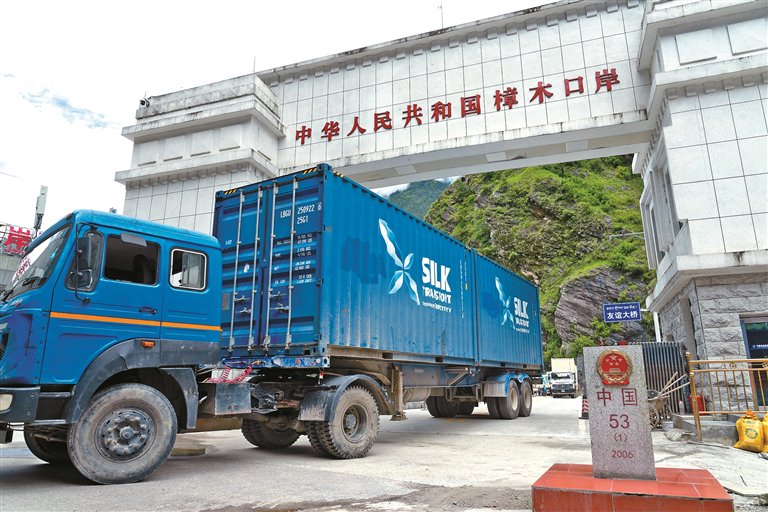
Core Insights - The logistics industry in Tibet is experiencing significant growth, with advancements in border trade logistics and infrastructure development contributing to high-quality economic growth [2][8] - The establishment of national-level logistics hubs in Lhasa and Shigatse marks a milestone in enhancing trade relations with South Asian countries [3][8] - Innovations in customs efficiency and logistics processes are drastically reducing clearance times and costs, thereby improving the overall business environment [4][7] Group 1: Logistics Development - The Lizi Port has been operational for two years, showcasing improvements in smart customs facilities and cross-border logistics channels [2] - The South Asia New Energy Vehicle train service has successfully transported goods from Tibet to Kathmandu, indicating a shift towards a more efficient logistics model [2] - The international cargo station at Lhasa Gonggar Airport has achieved a record annual import and export value of over 11 million yuan, enhancing the region's logistics capabilities [3] Group 2: Efficiency Improvements - The implementation of the H986 intelligent review system has reduced vehicle inspection times from 2.7 hours to just 18 minutes [4] - The average customs clearance time has been significantly compressed, with vehicle transit times reduced by 85% and individual clearance costs decreasing by 600 yuan [4] - The introduction of a "single window" platform for international trade has further streamlined logistics operations [4] Group 3: E-commerce and Trade - The launch of a new retail model combining cross-border e-commerce and quick delivery services has resulted in significant sales growth, with the flagship store achieving 1.2 million yuan in its first month [5] - The establishment of overseas warehouses and the successful export of various Tibetan products, including barley and wine, have contributed to a 20% increase in export value [6] - The region is exploring dual trade channels for local products and global imports, enhancing its integration into the global market [5][6] Group 4: Policy and Infrastructure Support - The Tibetan government is investing 250 million yuan annually to support border trade development and infrastructure projects [7] - The completion of the Nepal-China road transport agreement and the construction of key transport links are expected to reduce logistics costs by over 10% [7] - The region's transition from a "transit economy" to a "value-creating economy" is being supported by various new business models and government initiatives [7][8]

雪域高原谱写新华章
Jing Ji Ri Bao· 2025-10-29 22:04
Core Viewpoint - The "2025 China Tibet Development Forum" held in Linzhi focuses on high-quality development in Tibet, gathering insights from over 400 international guests to enhance Tibet's image and development strategies [1] Group 1: Ecological Development - Tibet has significantly improved its ecological environment, with the implementation of the North-South Mountain Greening Project resulting in 1.1087 million acres of afforestation and over 120 million trees planted, achieving a survival rate of over 85% [2] - The forest coverage rate in Tibet has increased to 12.31%, and over 440,000 ecological jobs have been created, contributing to an income increase of over 3 billion yuan [2] - By 2024, clean energy generation in Tibet is expected to exceed 99%, making it the region with the highest clean energy generation ratio in China [3] Group 2: Economic Development - The opening of the Lizhi Port in November 2023 has enhanced trade efficiency, with over 1,100 electric vehicles passing through in September alone [4] - In the first three quarters of 2023, the total import and export value of Shigatse reached 2.149 billion yuan, accounting for 38.7% of Tibet's total foreign trade [4] - Tibet's total trade value has grown from 6.93 million yuan in 1965 to an annual scale of over 100 billion yuan, with trade partners expanding to over 100 countries and regions [5] Group 3: Social Welfare and Living Standards - The average disposable income for urban residents in Tibet is projected to reach 55,444 yuan in 2024, while rural residents' disposable income is expected to be 21,578 yuan, with a year-on-year increase of over 12.5% for the income of the poverty alleviation population [9] - The implementation of clean energy heating projects has improved living conditions in high-altitude areas, providing stable heating for schools and homes [7][8] - Investments totaling 24.65 billion yuan have been allocated for social projects, enhancing public services and infrastructure, ensuring better access to education and healthcare [8][9]
杨阿维:强基提质激发内生动力
Jing Ji Ri Bao· 2025-10-16 00:09
Core Insights - The economic development of Tibet has achieved historic milestones over the past 60 years, with GDP increasing from 327 million yuan in 1965 to 276.5 billion yuan in 2024, emphasizing the need for high-quality development based on local realities [1] - The core of Tibet's economy lies in its real economy, which has been shaped by its unique geographical and environmental conditions, leading to the establishment of a nine-industry system that includes highland agriculture, clean energy, green industry, digital technology, cultural tourism, modern services, Tibetan medicine, border trade logistics, and general aviation [1] - The real economy serves as a stabilizer for improving livelihoods, a cornerstone for social stability, and a vital link for promoting prosperity in border areas, while also playing a crucial role in poverty alleviation and cultural heritage [2] Industry Development - The focus on enhancing the quality and efficiency of the real economy is essential for sustainable development, as it acts as a guardian of ecological security and a driver for common prosperity [2] - The shift from reliance on policy support to a sustainable market-driven model is underway, with technological innovation and industrial upgrades becoming the core engines for continuous economic health [3] - The development strategy includes fostering local endogenous power through the modernization of highland agriculture, industrialization of clean energy, and integration of culture and tourism, which collectively aim to upgrade the characteristic industrial system [3] Strategic Initiatives - The emphasis on local enterprise growth and the development of the private economy is crucial for stimulating operational vitality [3] - The integration of technology into traditional industries and the innovation of the digital economy are key to enhancing industrial competitiveness [3] - The construction of the South Asia transit hub and the deepening of the Belt and Road Initiative are expected to unlock the potential for openness and connectivity [3]
强基提质激发内生动力
Jing Ji Ri Bao· 2025-10-15 22:12
Core Insights - The economic development of Tibet has achieved historic milestones, with GDP increasing from 327 million in 1965 to 276.5 billion in 2024, emphasizing the need for high-quality development based on local realities [1] Group 1: Economic Structure - The core of Tibet's economy lies in the real economy, which has evolved under harsh natural conditions, forming a unique industrial system comprising nine key sectors: highland特色 agriculture, clean energy, green industry, high-tech digital, cultural tourism, modern services, Tibetan medicine, border trade logistics, and general aviation [1] - These sectors are not only vital for regional economic development but also serve as a foundation for social stability, ethnic unity, and ecological protection [1] Group 2: Role of the Real Economy - The real economy acts as a stabilizer for improving livelihoods, a cornerstone for social stability, and a crucial link for promoting prosperity in border areas [2] - It possesses "green genes," safeguarding ecological security, and is a driving force for common prosperity, supporting poverty alleviation and rural revitalization efforts [2] - The real economy also plays a significant role in the transmission and innovation of ethnic culture, injecting new life and economic value into traditional handicrafts like Thangka, Tibetan carpets, and incense through industrial development [2] Group 3: Internal Development Dynamics - Tibet's development is shifting from reliance on "policy blood transfusions" to a sustainable "market blood production" model, with technological innovation and industrial upgrading as core engines for continuous economic health [3] - The focus is on cultivating local endogenous power through the modernization of highland green agriculture, industrialization of clean energy, and enhancement of cultural tourism [3] - The strategy includes leveraging local enterprises and private sector growth, enhancing industry competitiveness through technology, and optimizing human resource structures via local talent development [3] - This approach aims to effectively connect the "resources-industry-market" chain, promoting high-quality economic development in Tibet [3]