金融托管

Search documents
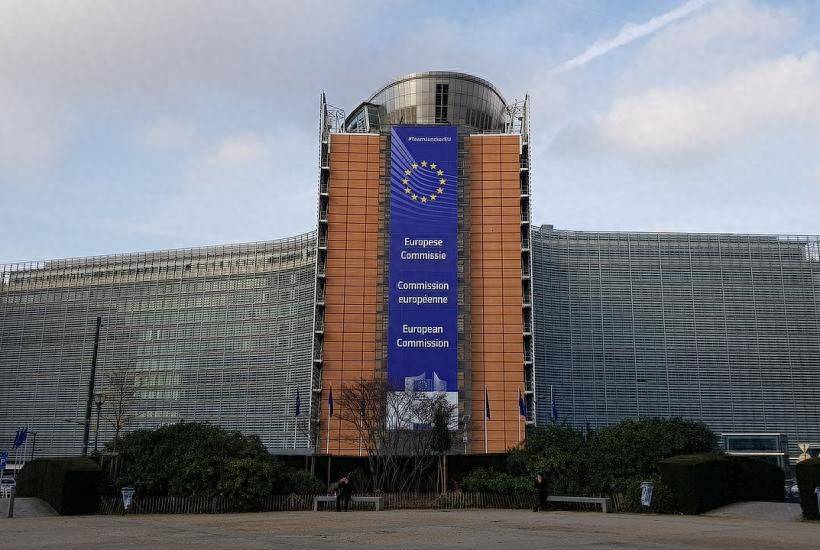
德总理默茨游说失败 比利时仍反对用俄资产援乌
Yang Shi Xin Wen· 2025-12-06 02:25
Group 1 - German Chancellor Merz urgently traveled to Brussels to persuade Belgian Prime Minister De Wever to accept the EU's proposal to use frozen Russian assets to provide loans to Ukraine, but the persuasion was unsuccessful [1] - The Belgian government firmly opposes the proposal due to concerns over financial and legal risks, as well as its potential negative impact on the peace process in Ukraine [1] - Merz canceled his trip to Oslo to meet with De Wever and European Commission President von der Leyen in a relaxed setting, but De Wever did not change his opposing stance [1] Group 2 - Approximately 90% of the frozen Russian assets in the EU are held by the European Clearing Bank based in Belgium, which has raised concerns about potential retaliation from Russia if these assets are utilized [2] - Belgium has made it clear that it will only consider agreeing to the proposal if there is a guarantee that EU member states will compensate the full amount immediately in the event of Russian claims for the assets [2] - De Wever has stated in a letter to von der Leyen that the EU Commission's compensation loan proposal is fundamentally flawed and that the EU is actually obstructing the finalization of a peace agreement [2]
欧盟援乌陷僵局!欧洲央行拒为俄冻结资产背书,比利时警告风险
Sou Hu Cai Jing· 2025-12-03 08:07
Core Viewpoint - The European Central Bank (ECB) has rejected the European Commission's proposal to use frozen Russian assets as collateral for loans to Ukraine, highlighting deep-seated conflicts between EU political aspirations and legal/economic realities [1][3]. Group 1: Proposal Details - The European Commission proposed a plan to raise €140 billion in "compensation loans" to support Ukraine's post-war reconstruction, using frozen Russian assets in the EU as collateral [1]. - Most of the frozen assets are managed by the Belgian custodian Euroclear, which has raised concerns about the legal risks associated with the plan [5]. Group 2: ECB's Position - The ECB emphasized that providing guarantees for such controversial assets would undermine its credibility as an independent institution and could set a harmful precedent for political interference in monetary policy [3][4]. - The ECB's rejection poses a significant setback for the European Commission's strategy, which has faced legal and financial safety concerns from various experts and EU member states [5]. Group 3: Legal and Financial Risks - Belgian authorities have warned of substantial legal risks associated with the plan, demanding additional safeguards to avoid potential claims amounting to billions of dollars [5]. - The proposal's implementation could be viewed as "asset expropriation," violating core principles of private and public property protection in the international financial system [7]. Group 4: Ongoing Negotiations - The European Commission plans to present a revised version of the proposal for discussion among EU ambassadors, aiming for a decision at the EU summit on December 18, despite opposition from the ECB and Belgium [5][7]. - The ongoing internal negotiations within the EU reflect the challenge of balancing support for Ukraine, legal risks, and maintaining financial credibility [7].

投资项目资金托管机构的合规实务与风险防范
Sou Hu Cai Jing· 2025-10-03 02:53
Core Insights - The article emphasizes the critical role of third-party fund custodians in ensuring the safety of investment funds, highlighting their responsibilities in fund custody, payment supervision, and information disclosure [1][16] - It outlines the increasing risks faced by custodians due to the diversification of investment models, such as private equity financing and cross-border investments, which lead to ambiguous responsibilities and potential fund misuse [1][16] Pre-Custody Preparation - The preparation phase is essential for defining custodial responsibilities, verifying the compliance of custody agreements, and ensuring the qualifications of transaction parties to prevent disputes arising from unclear prior agreements [3] - Custody agreements must clearly delineate the custodian's core responsibilities, explicitly excluding investment decision-making and risk assessment to avoid additional liabilities [3][4] Custody Agreement Details - Payment conditions should be clearly defined, specifying the issuing authority of payment instructions and necessary documentation to prevent erroneous payments [4] - Legal disclaimers should limit the custodian's liability to "intentional or gross negligence," ensuring they are not held responsible for losses due to errors from the client or fraud by the investee [4] Verification of Parties' Qualifications - Custodians must verify the qualifications of the client, investee, and fund manager to ensure the legality of fund sources and the qualifications of transaction parties [5] - This includes checking the registration of fund managers and ensuring that foreign investors comply with foreign exchange regulations [5] Payment Instruction Process - The payment instruction process should be confirmed in advance with the client, detailing the transmission methods and correction mechanisms for erroneous instructions [6] - Regular reporting frequency and content must be agreed upon to avoid accountability issues due to delayed information disclosure [6] Custody Operations - The core objective during custody operations is to strictly execute payments as per agreements, monitor fund flows in real-time, and promptly alert any abnormal transactions to ensure funds are used for their intended purposes [7] Payment Review Mechanism - A dual-review mechanism for payment instructions is essential to prevent fund misuse, focusing on the compliance of the instruction's form and the consistency of fund usage with the investment agreement [8][9] Monitoring Fund Flows - Custodians should utilize a fund monitoring system to track fund flows and identify any irregularities, such as funds being transferred to non-designated accounts or unusual transaction patterns [10] - They must also alert clients about idle funds and potential misuse of funds to mitigate risks [10] Post-Custody Procedures - The post-custody phase aims to maintain complete custody records, assist in resolving disputes, and standardize the termination of custody processes to ensure accountability [11][14] - Custodians must retain custody records for a minimum of five years after the termination of the custody agreement, ensuring timely and complete documentation [12] Risk Management in Emerging Areas - As investment models evolve, custodians must address specific risks associated with cross-border investments and digital economies, including compliance with foreign exchange regulations and managing currency fluctuation risks [15][16] - The article stresses the importance of adhering to legal frameworks and enhancing collaboration with clients and regulatory bodies to provide professional and efficient custody services [16]

特朗普耐心耗尽?关税重压中印买家,全球石油贸易链风声鹤唳
Sou Hu Cai Jing· 2025-09-14 07:27
Group 1 - The U.S. and its allies are considering a structural upgrade in sanctions against Russia, focusing on asset freezes and tariffs on countries purchasing Russian oil [1][2][8] - Discussions have intensified regarding the legal mechanisms to utilize frozen Russian assets, estimated between $280 billion to $330 billion, to support Ukraine's defense and reconstruction [5][7][10] - The U.S. Treasury has proposed imposing secondary tariffs, potentially up to 100%, on countries that continue to import Russian oil, targeting major buyers like China and India [5][14][16] Group 2 - India has requested larger discounts on Russian oil to offset the impact of proposed tariffs, with discounts rising from a few dollars to nearly $10 per barrel [12][16] - The European Union is divided on the implementation of tariffs and asset utilization, with some members advocating for a swift exit from Russian energy imports while others emphasize the need for legal stability [12][22] - Legal challenges exist regarding the use of frozen assets, as international law protects sovereign assets from seizure, raising concerns about potential lawsuits and market trust [20][24] Group 3 - The U.S. aims to cut off funding sources for Russia's military by disrupting its oil revenue through tariffs and asset utilization [8][18] - The complexities of asset management and legal frameworks may delay the implementation of proposed policies, with ongoing discussions among G7 and EU members [24] - The potential for market volatility exists if frozen assets are liquidated, as many are held in stocks or government bonds [24]