风电纤维织物

Search documents
中国风电纤维织物行业发展深度研究与投资前景分析报告(2025-2032年)
Sou Hu Cai Jing· 2025-12-10 05:13
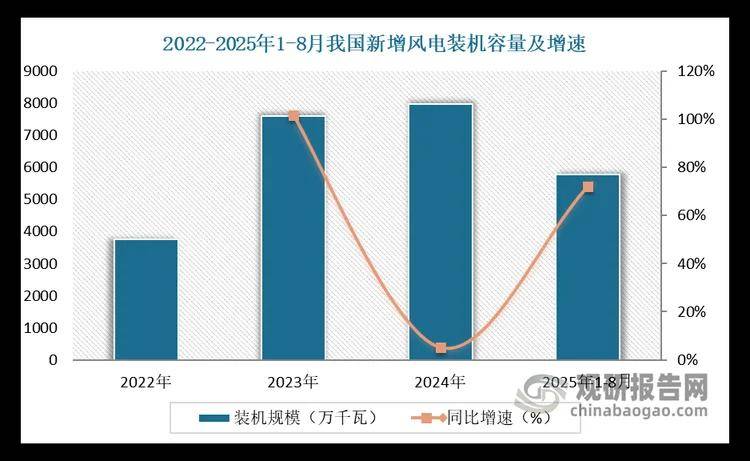
Group 1 - The wind power market is experiencing rapid growth, leading to increased demand for wind power fiber fabrics, which are essential materials in the manufacturing of wind turbine blades [1][5] - As of August 2025, China's installed wind power capacity reached 579 million kilowatts, a year-on-year increase of 22.1%, with new installations in the first eight months of 2025 growing by 72.1% [1] - The "Beijing Wind Energy Declaration 2.0" sets ambitious targets for wind power capacity, aiming for an annual increase of no less than 120 million kilowatts from 2025 onwards, with a cumulative target of 1.3 billion kilowatts by 2030 [5] Group 2 - The offshore wind power market is gaining momentum, creating new demand for wind power fiber fabrics due to its unique operational conditions [6][10] - Offshore wind power has significant advantages, including an equivalent full-load hour of over 4,000 hours and resource reserves three times that of onshore, which positions it as a core growth area for the wind power industry [6] - By 2024, China's offshore wind power capacity is expected to reach 43.31 million kilowatts, with new installations projected to be 5.4 GW in 2024 and 15 GW by 2027 [6][10] Group 3 - The trend of larger wind turbines is driving the demand for high-end wind power fiber fabrics, as larger blades require materials with superior strength and fatigue resistance [11][13] - The diameter of mainstream onshore wind turbine rotors in China has reached 193 meters, while offshore turbine blades have exceeded 153 meters in length [11] - Carbon fiber fabrics are increasingly preferred over traditional glass fiber due to their lower density (30%-35% lighter) and higher tensile modulus (3-8 times greater), which allows for a weight reduction of over 20% in blade manufacturing [13][15] Group 4 - The wind power fiber fabric market is characterized by high concentration, with leading companies like Zhenhua Co., Taishan Glass Fiber, and Hongfa New Materials dominating the market [18][19] - Zhenhua Co. holds over 35% of the global market share in wind power fiber fabrics as of 2024, maintaining its position as the largest supplier for three consecutive years [18] - The company has established production bases globally and serves major clients, including top ten wind turbine manufacturers, enhancing its competitive advantage [19]


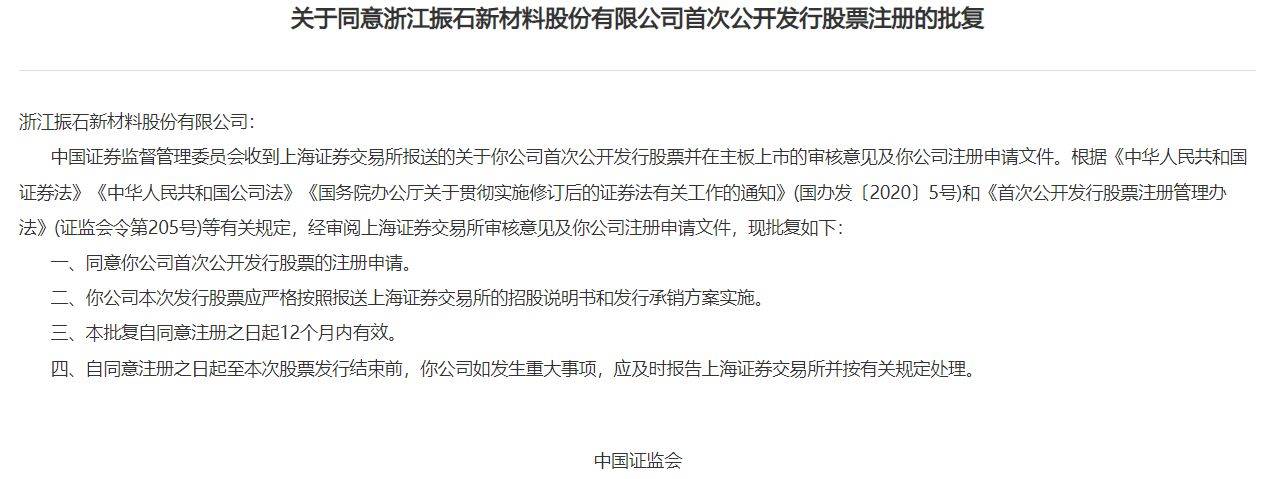
沪市主板企业振石股份IPO获注册
Sou Hu Cai Jing· 2025-12-09 14:07
Core Viewpoint - The China wind power fiber fabric industry is at a critical juncture, transitioning from a "large" to a "strong" phase, necessitating leading companies to focus on technological advancements and global strategies to maintain their competitive edge [7] Company Overview - Zhejiang Zhenstone New Materials Co., Ltd. is a national high-tech enterprise primarily engaged in the research, production, and sales of fiber-reinforced materials in the clean energy sector, with over 70% of its revenue derived from wind power fiber fabrics [4][5] - The company has become a global leader in wind blade material manufacturing, holding over 35% of the global market share for wind power glass fiber fabrics in 2024, and is recognized for its innovative solutions across various clean energy applications [4][5] Market Dynamics - The global wind power installation capacity is continuously increasing, with a clear trend towards larger blades, which can weigh nearly 20 tons and require about 60% glass fiber, driving demand for wind power fabrics [5] - The Chinese market demand for wind power fabrics is projected to reach 810,000 tons by 2025, indicating a robust market environment despite seasonal fluctuations [5] Industry Challenges - The industry faces significant challenges, including ongoing technological upgrade pressures and the risk of material substitution, particularly from carbon fiber, which is gaining market share in wind blade applications [6] - The international trade environment poses additional challenges, with anti-dumping and countervailing duties affecting the competitiveness of Chinese glass fiber products in overseas markets [6] - There is a potential risk of structural oversupply in low-end segments, as new entrants target high-performance fiber markets, necessitating strategic foresight from leading companies to avoid price wars and market saturation [6] Future Directions - Leading companies must not only maintain their current market positions but also strive for advancements in high-modulus and ultra-high-modulus products, while exploring new materials like carbon fiber [7] - A strategic shift towards localized production overseas is essential to mitigate trade risks and transition from merely exporting products to establishing technology standards and brand recognition globally [7]