
材料替代

Search documents
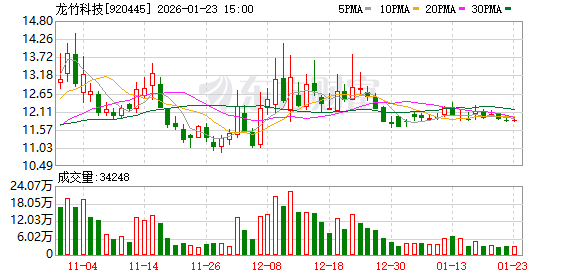
龙竹科技:公司将在家居、建材和特种材料三个方面发力
Zheng Quan Ri Bao· 2026-01-23 13:43
Core Viewpoint - Longzhu Technology aims to achieve performance targets set in its equity incentive plan by focusing on three main areas: home furnishings, building materials, and specialty materials [2] Group 1: Home Furnishings - The company plans to maintain steady progress in its major customer business while striving to develop new growth in cross-border e-commerce [2] Group 2: Building Materials - Longzhu Technology is accelerating the production capacity construction of its newly developed bamboo orthogonal composite board, specifically the flat bamboo multilayer board, to achieve large-scale order deliveries [2] Group 3: Specialty Materials - The company is intensifying application phase testing in collaboration with research institutes and leading sports equipment companies, aiming for market application in the fields of carbon fiber and glass fiber alternatives [2]

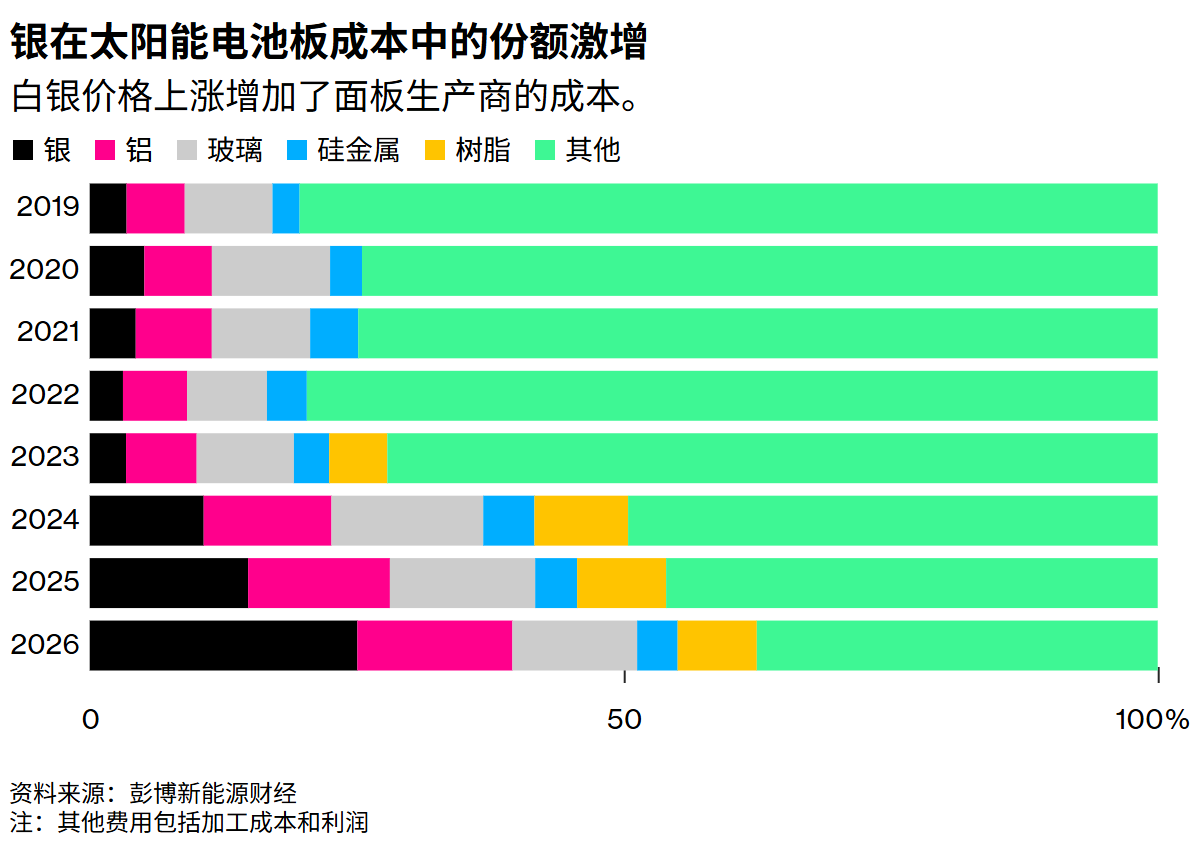
白银占成本从3%飙升至29%!光伏巨头“血亏”求生:涨价能救命吗?
智通财经网· 2026-01-16 02:24
Core Viewpoint - The surge in silver prices is exacerbating the financial struggles of solar panel manufacturers, who are facing intensified competition and ongoing losses despite efforts to adjust pricing and reduce costs through material substitution. Group 1: Industry Challenges - Solar panel manufacturers are implementing a dual strategy to cope with rising costs: increasing product prices and accelerating the transition to cheaper materials like copper to replace silver [1][4] - The industry is experiencing severe overcapacity following a period of rapid expansion since the early 2020s, leading to escalating losses [1] - Current spot silver prices have exceeded $93 per ounce, marking a historical high and tripling in value over the past year [1] Group 2: Pricing and Market Dynamics - In the largest market, China, component manufacturers have raised prices to over 0.8 yuan per watt, reflecting a 1.4% to 3.8% increase due to rising silver costs [4] - Leading solar companies, including Trina Solar, have warned of expected net losses continuing into 2025, indicating that the industry downturn has not yet reached its lowest point [4] Group 3: Material Usage and Future Projections - Silver paste, a critical material for solar panels, currently accounts for 29% of total component costs, up from 3.4% in 2023 and 14% last year [1] - Efforts to reduce silver paste usage are accelerating, with projections indicating an average usage of 8.96 milligrams per watt by 2025, down from 11.2 milligrams in 2024 [5] - The solar industry accounted for approximately 17% of total silver demand last year, a significant increase from a decade ago, but a slowdown in consumption could threaten the long-term price momentum of silver [5][6]
天风证券:铜价上涨,家电行业材料替代并非一蹴而就
Mei Ri Jing Ji Xin Wen· 2025-12-31 00:16
Core Viewpoint - Copper prices are expected to rise significantly due to overseas policy influences and supply-demand mismatches starting from 2025, while the white goods sector is likely to recover quickly in profitability due to a favorable competitive landscape and price adjustments by leading appliance manufacturers [1] Group 1: Copper Market - Copper prices are projected to increase significantly from 2025 due to external policy drivers and supply-demand imbalances [1] - Historical trends indicate that the white goods sector has a strong competitive structure that allows for rapid recovery in profitability [1] Group 2: White Goods Sector - Leading appliance manufacturers are effectively passing on cost pressures through price increases and new product launches [1] - The sector's ability to recover profitability quickly is attributed to its competitive advantages [1] Group 3: Long-term Considerations - Short-term observation is recommended as material substitution is not an immediate process [1] - Long-term focus should be on the practical implementation of "aluminum replacing copper" under the influence of policies and cost catalysts [1]

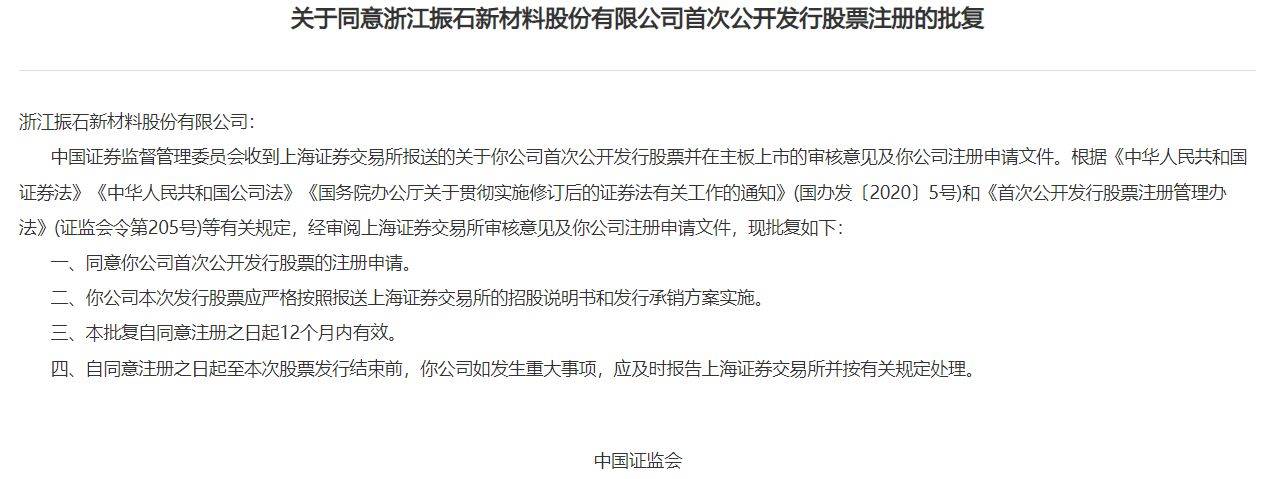
沪市主板企业振石股份IPO获注册
Sou Hu Cai Jing· 2025-12-09 14:07
Core Viewpoint - The China wind power fiber fabric industry is at a critical juncture, transitioning from a "large" to a "strong" phase, necessitating leading companies to focus on technological advancements and global strategies to maintain their competitive edge [7] Company Overview - Zhejiang Zhenstone New Materials Co., Ltd. is a national high-tech enterprise primarily engaged in the research, production, and sales of fiber-reinforced materials in the clean energy sector, with over 70% of its revenue derived from wind power fiber fabrics [4][5] - The company has become a global leader in wind blade material manufacturing, holding over 35% of the global market share for wind power glass fiber fabrics in 2024, and is recognized for its innovative solutions across various clean energy applications [4][5] Market Dynamics - The global wind power installation capacity is continuously increasing, with a clear trend towards larger blades, which can weigh nearly 20 tons and require about 60% glass fiber, driving demand for wind power fabrics [5] - The Chinese market demand for wind power fabrics is projected to reach 810,000 tons by 2025, indicating a robust market environment despite seasonal fluctuations [5] Industry Challenges - The industry faces significant challenges, including ongoing technological upgrade pressures and the risk of material substitution, particularly from carbon fiber, which is gaining market share in wind blade applications [6] - The international trade environment poses additional challenges, with anti-dumping and countervailing duties affecting the competitiveness of Chinese glass fiber products in overseas markets [6] - There is a potential risk of structural oversupply in low-end segments, as new entrants target high-performance fiber markets, necessitating strategic foresight from leading companies to avoid price wars and market saturation [6] Future Directions - Leading companies must not only maintain their current market positions but also strive for advancements in high-modulus and ultra-high-modulus products, while exploring new materials like carbon fiber [7] - A strategic shift towards localized production overseas is essential to mitigate trade risks and transition from merely exporting products to establishing technology standards and brand recognition globally [7]
凯赛生物(688065.SH):正与合作伙伴一起开发伺服器、关节等应用,替代部分PEEK等材料
Ge Long Hui· 2025-09-22 08:24
Group 1 - The company is collaborating with partners to develop applications such as servers and joints, aiming to replace certain materials like PEEK with a clear cost advantage [1]

中金公司 复合集流体量-产业进度复盘与观点更新
中金· 2025-03-16 15:50
Investment Rating - The report indicates a positive outlook for the composite copper foil industry, highlighting significant growth potential and market opportunities. Core Insights - The composite copper foil industry has recently overcome key production challenges, particularly the laser welding yield issue, which has been resolved since December 2024, enabling mass production and cost reduction [2]. - Major battery manufacturers are expected to complete order processes for approximately 16GW of production capacity by Q2 2025, indicating initial market demand release [2]. - The price of lithium battery copper foil has been on the rise since 2020, with costs now approaching 20% of lithium iron phosphate battery production, prompting a shift towards composite copper foil to mitigate cost pressures [2][4]. - The initial pricing for composite conductive fluid is set at 4.5 yuan per square meter, offering a 16% cost advantage over traditional copper foil, with expectations for further price reductions in the coming years [2][6]. - The composite conductive fluid market is projected to reach a space of approximately 48 billion square meters by 2030, with potential profits estimated between 14.4 billion to 24 billion yuan [12]. Summary by Sections Recent Industry Changes - The composite copper foil industry has received around 2GW of mass production orders since January 2025, with major battery manufacturers confirming procurement plans [2][3]. - Sodium green materials have secured 1 billion yuan in financing for expansion, reinforcing their position as a core supplier [2][3]. Market Dynamics - The copper foil cost in lithium batteries has increased significantly, with prices rising from 40,000 yuan per ton in 2020 to over 80,000 yuan currently, leading to a shift towards more cost-effective materials [4]. - The annual procurement volume for copper foil in global power batteries is estimated to be between 120 billion to 130 billion yuan, expected to exceed 250 billion yuan by 2030 [4]. Production and Technology - The composite conductive fluid has transitioned from P&T to PTC testing, with all yield issues resolved by 2024, entering a phase of large-scale production [7]. - The multi-porous structure of composite copper foil addresses technical challenges in fast charging and solid-state battery applications, indicating its broad applicability [2][8]. Future Projections - Global lithium battery shipments are expected to reach 1,900-2,000GWh in 2024 and grow to 4,000GWh by 2030, driving demand for composite conductive fluid [12]. - The equipment investment required for this transition is estimated to be between 120 billion to 160 billion yuan, with a need for over 100 billion yuan in capital expenditure in the next five years [12].
