
Consumer Credit

Search documents
Best Dividend Stocks to Buy Right Now for Passive Income
The Motley Fool· 2026-03-22 09:30AI Processing
There has been a move out of large-cap growth stocks into other asset classes, and one of the major beneficiaries has been mid caps.Mid-cap stocks are generally not as expensive as large caps and are viewed as more stable than small caps, giving them a better growth profile than both, particularly as interest rates are expected to decline.So far this year, the S&P 400 mid-cap index is up about 1%, while the S&P 500 (^GSPC 1.51%) is down about 4% and the Russell 2000 is little changed (as of March 19). Anoth ...




Jefferson Capital Reports Fourth Quarter and Full Year 2025 Results
Globenewswire· 2026-03-12 20:05
Core Insights - Jefferson Capital, Inc. reported record financial results for the fourth quarter and full year 2025, with significant growth in collections, deployments, and estimated remaining collections (ERC) [1][2][6]. Financial Performance - Fourth quarter collections increased by 41% to $245.3 million compared to $174.3 million in the same quarter of 2024 [6][12]. - Deployments rose by 6% to $380.5 million from $357.9 million in the fourth quarter of 2024 [6][13]. - ERC grew by 23% to $3.4 billion, reflecting strong performance across all key operating aspects [6][8]. - Total revenue for the fourth quarter increased by 30% to $154.8 million, driven by strong deployments and higher net yields [10][6]. - Pre-tax income surged by 50% to $44.1 million, with net income reaching $37.7 million and earnings per share (EPS) of $0.58 [1][6]. Adjusted Financial Metrics - Adjusted pre-tax income for the fourth quarter increased by 15% to $51.1 million, with adjusted net income of $44.7 million and adjusted EPS of $0.69 [1][6][33]. - The cash efficiency ratio stood at 71.0%, indicating strong operational efficiency [6][31]. Geographic Performance - Collections in the United States rose by 41.4% to $186.4 million, while collections in Canada increased by 40.4% to $30.6 million [5][7]. - The company also reported significant growth in collections from Latin America, which increased by 69.5% [7]. Strategic Developments - The acquisition of the Bluestem portfolio, completed on December 4, 2025, is expected to enhance the company's leadership position in acquiring dislocated consumer credit assets [2]. - A follow-on equity offering was executed, reducing J.C. Flowers' ownership to 53% and increasing the company's liquidity [2]. Dividend Declaration - The Board of Directors declared a quarterly cash dividend of $0.24 per share, payable on April 2, 2026, to shareholders of record as of March 24, 2026 [15].


UK regulator brings BNPL services under full consumer credit regulation
Yahoo Finance· 2026-02-12 12:17
Core Viewpoint - The UK's Financial Conduct Authority (FCA) will implement full consumer credit regulation for Buy Now Pay Later (BNPL) services starting 15 July 2026, following a government directive to enhance regulatory oversight in this sector [1]. Regulatory Changes - BNPL agreements will now be subject to the Consumer Duty, ensuring that consumers receive clearer information regarding repayment terms, including due dates and payment amounts, as well as the consequences of missed payments [2]. - Firms offering BNPL products will be mandated to conduct affordability checks prior to credit approval and must provide support to customers experiencing financial difficulties, including directing them to free debt advice when appropriate [2]. Consumer Protections - Consumers will gain access to the Financial Ombudsman Service for complaints related to BNPL providers, and all firms wishing to offer BNPL products will require authorization, with pre-application guidance provided to assist in compliance [3]. - FCA deputy chief executive Sarah Pritchard emphasized the importance of ensuring that consumers are not lent money they cannot repay, highlighting the need for proportionate protections for the 11 million users of BNPL services [4]. International Context - The regulatory landscape for BNPL services varies internationally, with the US Consumer Financial Protection Bureau classifying BNPL providers as credit card issuers last year [4].
PGY vs. OMF: Which Stock Wins the Consumer Credit Battle?
ZACKS· 2026-01-30 19:26
Core Insights - Two key players in the consumer finance space targeting underserved credit segments are Pagaya Technologies Ltd. (PGY) and OneMain Holdings, Inc. (OMF) with differing operating models and revenue streams [1] Pagaya Technologies Ltd. (PGY) - Pagaya operates on an AI-powered, capital-light platform, partnering with banks and lenders rather than holding large loan books [2] - The company has expanded its offerings from personal lending to include auto loans and point-of-sale financing, spreading risk across multiple asset classes [4] - PGY has established relationships with over 135 institutional investors and utilizes forward-flow agreements to enhance funding predictability [4][6] - In 2025, PGY achieved three consecutive quarters of positive GAAP net income, with a net income of $47.1 million compared to a net loss of $163.5 million in the prior year [7] - Credit-related impairment losses improved significantly, declining by over $95 million year-over-year, reflecting better-performing loan vintages and improved AI-driven underwriting accuracy [8] - PGY's return on equity (ROE) stands at 44.45%, indicating higher efficiency in generating profits compared to OMF's 22.70% [21] - Revenue growth estimates for PGY indicate increases of 28.4% and 19.2% for 2025 and 2026, respectively, with earnings growth estimates of 273.5% and 10% for the same years [24] OneMain Holdings, Inc. (OMF) - OMF provides unsecured and secured personal installment loans through 1,300 locations across 47 states, focusing on debt consolidation and other large personal needs [10] - The company has experienced a revenue growth CAGR of 3.6% from 2019 to 2024, with continued momentum in 2025 [11] - OMF employs rigorous underwriting supported by centralized data analytics, maintaining a strong record of managing credit performance [12] - The company has raised dividends eight times since 2019, with a recent increase of 1% announced in October 2025, and has a $1 billion share repurchase program in place [13] - Revenue growth estimates for OMF indicate increases of 8.9% and 7.5% for 2025 and 2026, respectively, with earnings growth estimates of 36% and 19.1% for the same years [26] Comparative Analysis - In the past year, PGY's stock has surged by 117.1%, while OMF's stock has gained 19%, indicating stronger investor sentiment towards PGY [15] - PGY is trading at a trailing 12-month price-to-book (P/B) ratio of 3.02X, compared to OMF's 2.30X, suggesting PGY is more expensive in terms of valuation [19] - PGY's AI-driven model shows stronger earnings growth prospects than OMF's traditional lending approach [9] - PGY's compelling growth trajectory and capital-efficient funding strategy position it as a high-upside investment opportunity compared to OMF's established marketplace model [30][31]


Alliance Data Systems(BFH) - 2025 Q4 - Earnings Call Presentation
2026-01-29 13:30
Fourth quarter and full year 2025 results January 29, 2026 © 2 0 2 2 B r e a d F i n a n c i a l | C o n f i d e n t i a l & P r o p r i e t a r y 1 2025 achievements Delivered responsible growth Adapted to the macroeconomic and regulatory environment Disciplined capital allocation and risk management Drove operational excellence and technology advancement Achieved full year 2025 financial outlook (2) In the calculation of Full year 2025 actuals, Revenue (excl. gain on sale) excludes from Total revenue $3 m ...

Affirm Stock Pulls Back As Markets Digest Trump's Credit Card Rate Proposal
Benzinga· 2026-01-13 21:03
Core Viewpoint - Affirm Holdings Inc's stock is experiencing volatility in response to President Trump's proposal to cap credit card interest rates at 10%, which has implications for the consumer credit market [2][3]. Group 1: Market Reaction and Implications - The proposed cap on credit card rates could disrupt traditional credit issuers, potentially benefiting Affirm by positioning it as a consumer-friendly alternative to revolving credit [3]. - Following the initial rise in stock price due to the proposal, Affirm's shares have declined as the market assesses the long-term effects of the policy change [2][3]. Group 2: Technical Indicators - Affirm's stock is trading 0.2% above its 20-day simple moving average (SMA) and 0.3% above its 100-day SMA, indicating a stable short-term trend [4]. - Over the past year, shares have increased by 38.89%, reflecting strength in the longer-term trend [4]. Group 3: Analyst Predictions and Valuation - Analysts predict a significant earnings surge, with the next earnings report scheduled for February 5 [6]. - The stock carries a Buy Rating with a consensus price target of $84.56, supported by an expected earnings growth of 165% [7]. - Affirm's valuation shows a P/E ratio of 110.7x, indicating a premium valuation despite strong growth expectations [9]. Group 4: Benzinga Edge Rankings - Affirm is classified as a "High-Flyer" with strong momentum (score: 80) and exceptional growth potential (score: 98), but a low value score (17) suggests it is priced for perfection [8]. Group 5: Key Price Levels and Estimates - Key resistance for the stock is at $79, while key support is at $65.50 [9]. - EPS estimate is 61 cents, up from 23 cents year-over-year, and revenue estimate is $1.06 billion, up from $866.38 million year-over-year [9]. Group 6: ETF Exposure - Affirm has significant weight in various ETFs, meaning substantial inflows or outflows could lead to automatic buying or selling of the stock [11].


AEON CREDIT发布前三季度业绩 期间溢利3.53亿港元 同比增加28.11%
Zhi Tong Cai Jing· 2025-12-23 10:45
Core Viewpoint - AEON CREDIT (00900) reported a revenue of HKD 1.358 billion for the nine months ending November 30, 2025, representing a year-on-year increase of 4.1% [1] - The company's profit for the same period was HKD 353 million, reflecting a significant year-on-year increase of 28.11% [1] - Basic earnings per share were reported at HKD 0.8422 [1] Financial Performance - Revenue for the nine-month period reached HKD 1.358 billion, up 4.1% compared to the previous year [1] - Profit for the period was HKD 353 million, marking a 28.11% increase year-on-year [1] - Basic earnings per share stood at HKD 0.8422 [1]
Jefferson Capital to Acquire Credit Card Portfolio with Face Value of $488 Million
Globenewswire· 2025-10-27 12:00
Core Insights - Jefferson Capital, Inc. has announced the acquisition of a credit card asset portfolio from Bluestem Brands for a gross purchase price of $302.8 million, with a face value of $488.2 million [1][2][3] Group 1: Transaction Details - The acquisition involves a revolving loan portfolio for which the ability to draw on the receivables has been suspended [1] - The gross purchase price will be adjusted for interim portfolio cash flows from June 30, 2025, to the closing date [1] - The transaction is expected to close in the fourth quarter of 2025, pending customary regulatory approvals [3] Group 2: Strategic Positioning - This transaction reinforces Jefferson Capital's position as a strategic acquirer of dislocated consumer credit assets, following a previous portfolio purchase from Conn's [2] - The company aims to leverage its expertise in managing small balance active and charged-off portfolios to provide solutions for sellers while generating returns for shareholders [2] Group 3: Funding and Servicing - The transaction will be funded through existing capacity under Jefferson Capital's senior secured revolving credit facility [3] - An interim servicing agreement will be established with Bluestem to transition servicing activities to CardWorks Servicing, LLC [2]
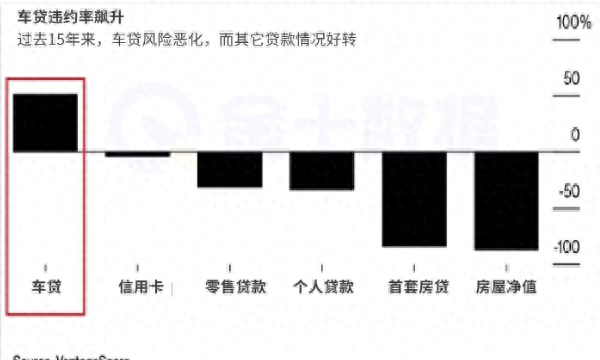
美国车贷危机?违约率飙升、利率破9%、新车均价超5万
Jin Shi Shu Ju· 2025-10-27 07:31
Core Insights - Auto loans have become the riskiest consumer credit product in the United States [2] Group 1 - The increasing default rates on auto loans indicate a growing risk in this sector [2] - Economic factors such as rising interest rates and inflation are contributing to the heightened risk associated with auto loans [2] - The trend of subprime lending in the auto loan market is exacerbating the overall risk profile [2]
PGY vs. OMF: Which Consumer Credit Stock Is Better Placed for Growth?
ZACKS· 2025-10-24 17:16
Core Insights - Pagaya Technologies Ltd. (PGY) and OneMain Holdings, Inc. (OMF) are significant players in the consumer finance sector, focusing on underserved credit segments like subprime and non-prime borrowers, but they operate under different business models [1][3] Pagaya Technologies Ltd. (PGY) - Pagaya is a technology-driven fintech platform utilizing AI-powered machine learning algorithms for credit risk assessment, loan underwriting, and asset securitization in collaboration with banks and fintech lenders [2] - The company has diversified its offerings from personal loans to auto lending and point-of-sale financing, reducing reliance on any single loan type and enhancing resilience during economic fluctuations [4] - Pagaya has established a network of over 135 institutional partners and employs forward flow agreements to ensure funding stability, particularly during market disruptions [4][6] - The company has recorded two consecutive quarters of positive GAAP net income, marking a significant turnaround from previous losses, driven by strong network volume growth and improved operating leverage [8] - Pagaya's return on equity (ROE) stands at 31.69%, indicating higher efficiency in generating profits compared to OneMain's 20.65% [18] - The Zacks Consensus Estimate predicts revenue growth of 28.4% and 20.1% for 2025 and 2026, respectively, with earnings growth estimates of 219.3% and 28.3% for the same years [19] OneMain Holdings, Inc. (OMF) - OneMain operates as a traditional non-prime lender, providing personal loans through a nationwide branch network and digital channels, with a focus on unsecured and secured personal installment loans [11] - The company has a strong revenue growth trajectory, with a loan mix designed for sustainability and upside potential in a changing macroeconomic environment [12] - OneMain has a $1 billion buyback program extending through December 2026 and has raised dividends seven times since initiating them in 2019, reflecting a commitment to shareholder returns [14] - The Zacks Consensus Estimate indicates revenue growth of 7.8% and 7.4% for 2025 and 2026, respectively, with earnings growth estimates of 28.2% and 25.4% for the same years [23] Comparative Analysis - Pagaya's stock has surged 217.8% this year, significantly outperforming OneMain's 8.1% gain, indicating stronger investor sentiment towards Pagaya [15] - In terms of valuation, Pagaya trades at a trailing 12-month price-to-book (P/B) ratio of 4.83X, while OneMain's P/B ratio is 2.03X, suggesting that Pagaya is considered more expensive [16][18] - Pagaya's compelling growth trajectory positions it as a high-upside investment opportunity, while OneMain's established marketplace model offers a more attractive valuation [25][26]