Electric Power

Search documents
Vistra Banks on the Data Center & ERCOT Growth: The 2027-2028 Setup
ZACKS· 2026-03-31 20:11
Core Insights - Vistra Corp. (VST) is strategically positioning its integrated retail-plus-generation platform to capitalize on expected growth in U.S. electricity demand, particularly driven by data centers in 2026-2027 [1][11] Group 1: Demand and Market Dynamics - Management anticipates that data-center-driven demand will significantly tighten power markets by late 2027 or early 2028, which is crucial for VST as it is heavily hedged through 2026 and much of 2027 and 2028 [2][11] - The demand from data centers is enhancing the future prospects of electricity providers, with American Electric Power (AEP) securing nearly 20 gigawatts (GW) of customer commitments through 2030, and Dominion Energy (D) having approximately 40 GW of clean energy capacity under long-term contracts [3] Group 2: Texas Market Outlook - In Texas, management expects ERCOT peak demand to grow at a mid-single-digit annual rate through 2030, which can increase the value of flexible generation and disciplined risk management in a competitive market [4] - VST's Texas segment integrates generation, wholesale energy transactions, risk management, and fuel logistics in ERCOT, linking retail load to generation and hedging to manage commodity risk [5] Group 3: Nuclear Energy Contracts - VST's nuclear contracting has extended significantly, with nearly 3.8 gigawatts of 20-year power purchase agreements (PPAs) expected by the fourth quarter of 2025, reinforcing the stability of the contracted base with investment-grade buyers [6] - The company has entered into 20-year PPAs to provide over 2,600 megawatts (MW) of zero-carbon energy from three nuclear plants, including 2,176 MW of operating generation and 433 MW of planned output increases, with notable agreements with Meta Platforms (META) and Amazon Web Services [7][8] Group 4: Financial Performance - Vistra's stock has increased by 25.6% over the past year, outperforming the Zacks Utility-Electric Power industry's growth of 24.1%, driven by strong retail and commercial operations [9]



电力,算力,时空重构!Token出海成绿电消纳新蓝海
证券时报· 2026-03-30 08:12
Core Viewpoint - The article discusses the emerging synergy between computing power and electricity, termed "算电协同" (computing-electricity collaboration), which is crucial for the development of the AI industry and the digital economy in China. This collaboration is expected to reshape the energy landscape and facilitate the export of computing power through tokens [3][5][11]. Group 1: Computing Power and Electricity Demand - Computing power is likened to an engine, while electricity is the fuel, with the consensus that "the end of computing power is electricity" [5]. - The average power consumption of a computing center cabinet has increased from around 2 kW a decade ago to over 10 kW today, with some cabinets reaching 100 kW [5]. - China leads globally in token usage and export, with a share of 36% in token calls and over 60% in exports, largely due to reliable electricity supply and a robust communication network [5][6]. Group 2: Future Projections and Concerns - The China Academy of Information and Communications Technology predicts that by 2030, electricity consumption by computing centers could exceed 700 billion kWh, accounting for 5.3% of total national electricity consumption [6]. - Concerns have been raised regarding the electricity supply for intelligent computing centers, especially in eastern regions where demand is high but energy supply is low [6]. - The average industrial electricity price is around 0.67 yuan per kWh, with costs in developed regions exceeding 0.7 yuan, making electricity expenses a significant portion of operational costs for new computing centers [6]. Group 3: Green Energy and Tokenization - The collaboration between computing power and electricity is transforming green energy resources in western China into tokens, providing new pathways for electricity export [3][7]. - The direct supply of green electricity to data centers is being explored, with projects like the 2 GW green electricity supply project in Ningxia aiming to stabilize electricity prices at 0.36 yuan per kWh [6][10]. - The article highlights the potential for tokens to serve as intermediaries in electricity exports, with international market prices for tokens ranging from $60 to $168 per million tokens [9]. Group 4: Regional Dynamics and Strategic Developments - The article notes the structural differences in computing power and electricity between eastern and western China, with the west having abundant green energy but facing challenges in supply stability [11][12]. - A project in Qinghai aims to connect green computing power with eastern regions, alleviating pressure on eastern computing centers while enhancing the green energy sector in the west [12]. - The article emphasizes the need for intelligent scheduling and market-based trading to optimize the synergy between computing power and electricity, leveraging AI technologies for real-time data analysis [14].

PCG or OGE: Which Is the Better Value Stock Right Now?
ZACKS· 2026-03-25 16:41
Core Viewpoint - The comparison between PG&E (PCG) and OGE Energy (OGE) indicates that PG&E presents a better value opportunity for investors at this time [1]. Group 1: Zacks Rank and Earnings Outlook - PG&E has a Zacks Rank of 2 (Buy), while OGE Energy has a Zacks Rank of 3 (Hold) [3]. - The Zacks Rank emphasizes positive revisions to earnings estimates, suggesting an improving earnings outlook for PG&E [3]. Group 2: Valuation Metrics - PG&E has a forward P/E ratio of 10.56, significantly lower than OGE's forward P/E of 19.32 [5]. - PG&E's PEG ratio is 0.66, indicating a favorable valuation relative to its expected earnings growth, while OGE's PEG ratio is 3.36 [5]. - PG&E's P/B ratio is 1.22, compared to OGE's P/B of 1.9, further supporting PG&E's valuation advantage [6]. Group 3: Value Grades - Based on various valuation metrics, PG&E holds a Value grade of A, while OGE has a Value grade of C [6]. - The solid earnings outlook and favorable valuation figures position PG&E as the superior value option currently [6].



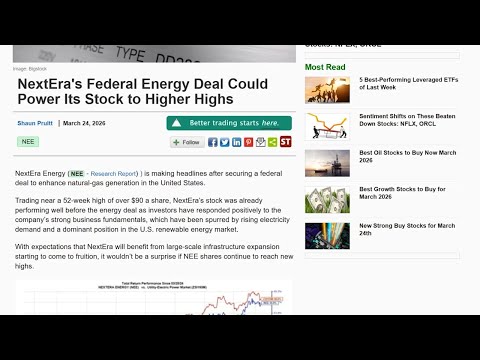
Zacks Strategist Shaun Pruitt Discusses NextEra's (NEE) Federal Energy Deal
Zacks Investment Research· 2026-03-24 22:16
Greetings. I'm Sean Puit, Zach's equity strategist, and today I'm going to be discussing why Next Era's federal energy deal could power his stock to higher highs. So, Next Era Energy, ticker symbol NE, is making headlines after securing a federal deal to enhance natural gas generation in the United States.Uh, so trading near a 52- week high of over $90 a share. Next era stock was already performing well before the energy deal as investors have responded positively to the company's strong business fund funda ...

2025广东电力市场年度报告
广东电力交易中心· 2026-03-19 01:36
Market Overview - In 2025, the total trading volume in the Guangdong electricity market reached 654.18 billion kWh, with direct market transactions accounting for 458.63 billion kWh, a year-on-year increase of 16.2%[3] - The average settlement price on the electricity consumption side was 0.380 yuan/kWh, down 14.2% year-on-year, indicating significant cost reduction and efficiency improvement[3] - The number of operating entities exceeded 140,000, reflecting a diverse range of participants including thermal power, nuclear power, renewable energy, and virtual power plants[3] Renewable Energy Development - The trading volume of green electricity reached 11.63 billion kWh, marking a 60.2% increase year-on-year, effectively meeting the province's green electricity consumption needs[3] - By the end of 2025, the installed capacity of renewable energy in Guangdong reached 79.73 million kW, surpassing coal power to become the largest power source in the province[14] - The market structure for renewable energy has been enhanced, with a focus on establishing a sustainable pricing settlement mechanism for renewable projects[22] Market Mechanisms and Innovations - The average HHI index for the generation side was 1192, indicating a low concentration market structure, while the consumption side had an HHI index of 383, reflecting a competitive market environment[56] - The Guangdong electricity market has implemented a digital regulatory cockpit covering the entire process, enhancing risk monitoring and management capabilities[3] - A new mechanism for virtual power plants was established, allowing for the aggregation of dispersed resources to participate in system regulation[3] Future Outlook - In 2026, the focus will be on improving market mechanisms, enhancing service quality, and strengthening risk prevention measures to support the construction of a unified national electricity market[7] - The goal is to create a more mature, green, and low-carbon high-standard electricity market, facilitating the transition to a new energy system[7]
Utilities are spending billions on the data center boom. What are the risks?
Yahoo Finance· 2026-03-06 09:00
Core Insights - The GPU depreciation issue poses a significant risk to neocloud companies like CoreWeave, which provide GPU capacity to hyperscalers, indicating a potential threat to the entire sector [1] - The future of the inference services industry remains uncertain due to the presence of competing companies offering similar services, making it difficult to predict demand [2] - The electric power industry operates on long-term planning horizons, while the surge in data center demand driven by AI technologies has occurred rapidly since late 2022, creating challenges for utilities [4] Industry Dynamics - The demand for electricity from data centers is unprecedented, leading utilities to race to build new generation and grid infrastructure [5] - Neocloud companies are at a higher risk during market corrections, especially compared to established cloud service providers like Google and Amazon [6] - The credit risk associated with large load customers is a significant concern for utilities, as the financial stability of these customers is crucial for recovering infrastructure investments [7][8] Market Trends - There are reasonable concerns about a potential market correction, similar to the dot-com bubble, due to the interconnected nature of investments in the AI and data center sectors [9][10] - Utilities are increasingly adopting large load tariffs and long-term contracts to manage risks associated with connecting data centers to the grid [20] - The Northern Virginia Electric Cooperative anticipates that data center customers will account for over 95% of its energy sales by 2032, raising concerns about dependency on a single customer segment [26] Technological Considerations - The energy demands of AI data centers are fundamentally different from traditional data centers, complicating future power needs predictions [3] - GPUs, essential for AI workloads, can draw significant power and generate unpredictable energy spikes, posing challenges for energy management [14][15] - The focus on securing power for large data centers has overshadowed efforts to improve energy efficiency, although there is a push for cleaner power solutions [16][19] Regulatory and Structural Factors - Utilities are implementing new tariff structures to rationalize demand and manage risks associated with data center connections [22][28] - The structure of utilities, whether vertically integrated or not, influences the effectiveness of models like bring-your-own-generation for meeting data center demand [28] - The potential acquisition of the Northern Virginia Electric Cooperative by Dominion Energy highlights the interconnected nature of utilities and data center operations in the region [26]
新能源占比40+%的德国,为什么比我们更少负电价?
新财富· 2026-03-05 09:25
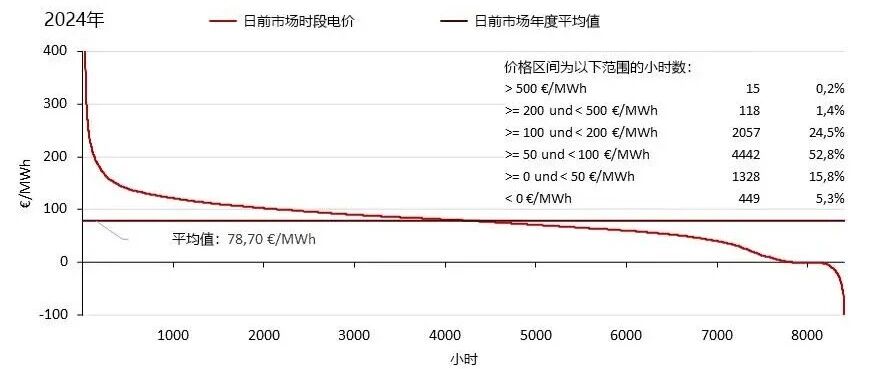
Core Viewpoint - The article discusses the phenomenon of negative electricity prices in the European power market, particularly highlighting that the issue is not merely an excess of renewable energy but rather the flexibility of the system to adjust to supply and demand [2][3][29]. Summary by Sections Negative Electricity Prices in Europe - In 2025, many European markets, including France, Germany, the Netherlands, and Spain, are expected to see negative electricity prices, with the proportion of negative price hours reaching 6%, up from approximately 3-5% in 2024 [5]. - Spain experienced the largest year-on-year increase in negative price hours, doubling its occurrences, while France saw a 45% increase, and Germany and the Netherlands both experienced around a 25% increase [5]. Germany's Renewable Energy Contribution - In 2025, Germany's renewable energy contribution to public net electricity generation remains at 55.9%, with wind power contributing approximately 132 TWh and solar power about 87.5 TWh [9]. - The total renewable energy generation in Germany is projected to be around 278 TWh, with 256 TWh fed into the public grid [9]. Comparison with China's Shandong Province - Shandong Province in China is projected to have over 1,300 hours of negative electricity prices in 2025, representing about 15% of the total hours, significantly higher than Germany's 6.5% [15]. - In 2025, Shandong's non-fossil energy generation is expected to account for 32.3% of total generation, with wind and solar contributing approximately 24% [18]. System Flexibility and Regulation - The article emphasizes that the key issue lies in the system's ability to adjust, with Germany showcasing better system flexibility through various measures [3][29]. - Germany's regulatory framework has been adjusted to tighten subsidy conditions for renewable energy projects, reducing the threshold for subsidy loss during negative price hours [20][22]. Infrastructure and Market Integration - Germany is enhancing its transmission infrastructure to address structural mismatches between energy supply and demand, particularly through high-voltage direct current lines [24]. - The country is also expanding its electricity market integration across Europe, allowing for better supply-demand balancing through cross-border electricity trade [24]. Demand Response and Storage Solutions - Germany has developed a mature demand response market, allowing for flexible power consumption adjustments [26]. - The country is investing in energy storage systems, with a cumulative installed capacity of nearly 25 GWh by 2025, which helps stabilize the grid and manage supply fluctuations [27]. Conclusion - Germany's approach to managing negative electricity prices involves tightening subsidy signals, enhancing interconnectivity, and improving system flexibility and storage capabilities, providing a model for other countries, including China, to consider [29][30].
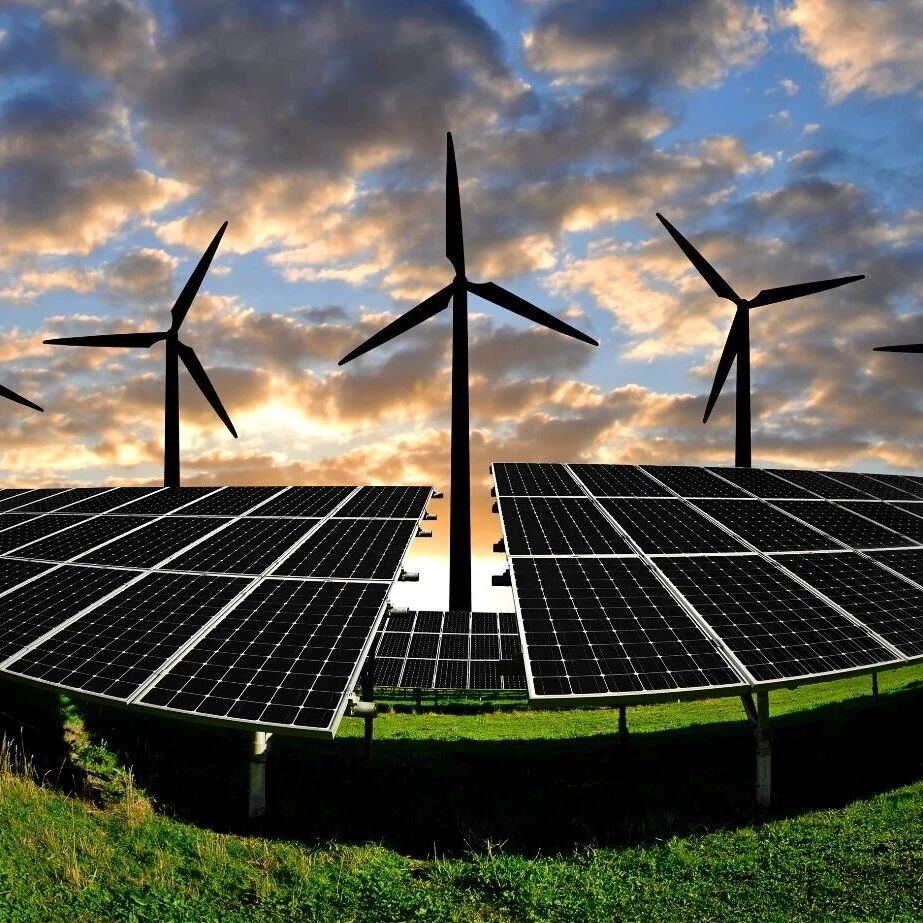
CMS Energy to Benefit From Renewable Expansion & Strategic Investments
ZACKS· 2026-03-03 15:21
Core Insights - CMS Energy Corporation is enhancing its operations through targeted investments while ensuring reliable service for customers and expanding its renewable energy portfolio [1][2] Group 1: Investment Strategy - CMS Energy benefits from stable, regulated utility operations in Michigan, supported by a disciplined capital investment strategy focused on grid modernization and clean energy transition initiatives [2] - The company plans to invest approximately $24 billion in capital expenditures from 2026 to 2030 to modernize the grid and enhance clean energy generation [3][8] Group 2: Renewable Energy Growth - CMS Energy is accelerating the growth of its renewable generation portfolio, aiming to add around 8 GW of solar capacity and 2.8 GW of wind capacity over the next 20 years [4][8] - The updated renewable plan includes the addition of up to 9,000 MW of purchased renewable resources and as much as 4,000 MW of wind capacity [4] Group 3: Regulatory Environment and Risks - More than 95% of CMS Energy's earnings come from regulated electric and natural gas businesses, providing a stable revenue stream [2] - The company faces challenges from tightening carbon emission regulations, with coal comprising about 20% of its generation mix as of December 31, 2025, exposing it to compliance costs [5][8]

【环保】电力不出国境,价值全球流通——碳中和领域动态追踪(一百七十四)(殷中枢/郝骞/宋黎超)
光大证券研究· 2026-03-01 23:08
Core Viewpoint - The article highlights the significant growth of China's AI model API usage, surpassing that of the United States, driven by competitive pricing and low electricity costs [4][5]. Group 1: AI Model Performance and Market Dynamics - From February 16 to 22, 2023, the weekly usage of Chinese AI models increased from 41.2 trillion tokens to 51.6 trillion tokens, marking a 127% rise over three weeks, while the U.S. model usage fell to 27 trillion tokens [4]. - China's AI models achieve comparable performance to leading international models at a significantly lower cost, with output prices around 10-20 RMB per million tokens, compared to over 10 USD per million tokens for U.S. models, representing a nearly 7-fold price advantage [5]. Group 2: Electricity and Computing Power Synergy - The "East Data West Computing" initiative and related policies have established a framework for the synergy between electricity and computing power, leading to a new energy supply structure that supports the development of computing hubs and renewable energy bases [6]. - Several power operators are actively investing in electricity-computing synergy projects, such as the construction of a 5000P intelligent computing center in Xinjiang and strategic partnerships to enhance computing capabilities [6]. Group 3: Industry Outlook and Valuation Recovery - The cyclical nature of renewable energy pricing is becoming more pronounced due to market-driven electricity pricing policies, with current valuations of power operators at relatively low levels [7]. - If the Chinese economy recovers from deflation and new applications for high electricity demand continue to emerge, the industry may enter a new upward cycle post-2027, leading to a potential recovery in valuations [7].
NRG Energy's Financial Performance and 2026 Strategic Outlook
Financial Modeling Prep· 2026-02-25 01:00
Core Insights - NRG Energy is a significant player in the electric power industry, focusing on power generation and retail electricity services, with a mixed recent financial performance [1] Financial Performance - For Q4 2026, NRG reported an adjusted EPS of $1.04, surpassing the estimated $1.02, but down from $1.56 in the same quarter last year, reflecting a decline of approximately 33.3% [2] - The company's revenue for the same quarter was $7.76 billion, significantly exceeding the estimated $6.65 billion, and consistent with the previous quarter's revenue of $7.75 billion, which exceeded expectations by 45.87% [2][3] - NRG has consistently outperformed revenue estimates over the past four quarters, despite the year-over-year decline in EPS [3] Strategic Outlook - NRG projects its 2026 adjusted EPS to be between $7.90 and $9.90, with EBITDA expected to range from $5.32 billion to $5.82 billion [3] - The CEO emphasized strategic advancements such as expanding generation capacity and enhancing demand response capabilities to navigate the ongoing power demand supercycle [3] Financial Metrics - NRG has a high debt-to-equity ratio of approximately 6.15, indicating a reliance on debt financing [4] - The company's current ratio is 1.05, suggesting adequate short-term liquidity [4] - Despite financial challenges, NRG's strategic initiatives and focus on shareholder returns demonstrate a commitment to long-term growth and stability [4]