Local Services

Search documents
美团-W:Bottoming out-20260327
Zhao Yin Guo Ji· 2026-03-27 01:24
| (YE 31 Dec) | FY24A | FY25A | FY26E | FY27E | FY28E | | --- | --- | --- | --- | --- | --- | | Revenue (RMB mn) | 337,592 | 365,982 | 408,564 | 464,754 | 517,386 | | YoY growth (%) | 22.0 | 8.4 | 11.6 | 13.8 | 11.3 | | Net profit (RMB mn) | 35,807.2 | (23,355.1) | (10,786.5) | 27,256.6 | 42,112.8 | | Adjusted net profit (RMB mn) | 43,772.4 | (18,648.0) | (4,703.1) | 33,682.8 | 48,726.3 | | YoY growth (%) | 88.2 | na | na | na | 44.7 | | EPS (Adjusted) (RMB cents) | 714.64 | (306.86) | (77.39) | 554.26 | 80 ...

美团-内部会议管理层分享的影响
2026-03-22 14:35
Summary of Meituan's Internal Meeting Management Sharing Company Overview - **Company**: Meituan (3690.HK) - **Market Cap**: HK$463.37 billion (US$59.195 billion) [6] Key Points from the Meeting Strategic Priorities - **AI Investment**: CEO Wang Xing emphasized a strong commitment to investing in AI, viewing it as a more disruptive force than the internet [1][4] - **Globalization Approach**: Meituan will adopt a disciplined and selective approach to international expansion, particularly in Brazil, focusing on tailored strategies rather than irrational growth [1][5][8] Organizational Changes - **Flattening Structure**: To foster innovation, Meituan is streamlining its organizational structure, encouraging open communication by having employees address senior leaders by their first names [3] - **Cultural Shift**: The initiative aims to break down communication barriers and promote a collaborative environment, essential for adapting to the fast-paced AI landscape [3] AI Strategy - **Productivity Gains**: Meituan plans to leverage AI technologies to enhance productivity and transform operational processes [4] - **Data Infrastructure**: The company is investing in logistics automation and local services data infrastructure, including the development of its own large language models (LLMs) and AI assistants for merchants [4] - **AI Product Launch**: The recent launch of the AI search product "Wen Xiao Tuan" during the Chinese New Year holiday exemplifies Meituan's commitment to integrating advanced AI into its services [4] Financial Outlook - **Target Price**: The target price for Meituan shares is set at HK$94, representing a potential upside of 23.8% from the current price of HK$75.95 [6][11] - **Valuation Method**: A sum-of-the-parts (SOTP) approach is used for valuation, with key segments valued as follows: - Food delivery and Instashopping: HK$272 billion (~HK$45 per share) - In-store hotel and travel: HK$160 billion (~HK$26 per share) - New initiatives (excluding grocery retail): HK$25 billion (~HK$4.1 per share) - Grocery retail: HK$39.6 billion (~HK$6.5 per share) [9][10][11] Risks - **High Risk Rating**: Meituan is assigned a high-risk rating due to potential volatility from intense competition, particularly in the food delivery sector [12] - **Downside Risks**: Include continued losses in food delivery, competitive pressures in the hotel business, and higher-than-expected operational costs [12] - **Upside Risks**: Potential for competition to moderate and regulatory interventions to ease competitive pressures [12] Additional Insights - **Focus on Brazil**: While Brazil presents significant market potential, Meituan will ensure that its expansion is executed rationally and strategically, focusing on appropriate regions and new strategies [8] - **Upcoming Updates**: An update on the competitive landscape of the food delivery business in China is anticipated in the upcoming results call at the end of March [1]

美团:管理层内部分享会议的启示
2026-03-16 02:26
Summary of Meituan's Internal Meeting Management Sharing Company Overview - **Company**: Meituan (3690.HK) - **Market Cap**: HK$463.37 billion (US$59.195 billion) [6] Key Points Strategic Priorities - **AI Investment**: CEO Wang Xing emphasized a strong commitment to investing in AI, viewing it as a more disruptive force than the internet [1][4] - **Globalization Approach**: Meituan will adopt a disciplined and selective approach to international expansion, particularly in Brazil, focusing on tailored strategies rather than irrational growth [1][5][8] Organizational Changes - **Flattening Structure**: To foster innovation, Meituan is streamlining its management hierarchy, encouraging open communication by having employees address senior leaders by their first names [3] - **Cultural Shift**: The initiative aims to break down communication barriers and promote a collaborative environment, essential for adapting to the fast-paced AI landscape [3] AI Strategy - **Productivity Gains**: Meituan plans to leverage AI technologies to enhance productivity and transform operational processes, including logistics automation and local services data infrastructure [4] - **AI Product Launch**: The introduction of the AI search product "Wen Xiao Tuan" during the Chinese New Year holiday exemplifies Meituan's commitment to integrating advanced AI into its services [4] Financial Outlook - **Target Price**: The target price for Meituan shares is set at HK$94, reflecting an expected return of 23.8% [6][11] - **Valuation Method**: A sum-of-the-parts (SOTP) approach is used to value Meituan, with key segments including food delivery, in-store hotel and travel, and new initiatives [9][10] Risks - **High Risk Rating**: Meituan is assigned a high-risk rating due to potential volatility from intense competition, particularly in the food delivery sector [12] - **Downside Risks**: Risks include continued losses in food delivery, competitive pressures on margins, and macroeconomic factors affecting consumer behavior [12] Upcoming Events - **Competitive Landscape Update**: An update on the competitive landscape of the food delivery business in China is anticipated in the upcoming results call at the end of March [1] Additional Insights - **Investment in Brazil**: While recognizing Brazil's market potential, Meituan will ensure that its expansion is executed rationally and strategically, focusing on appropriate regions [8] - **Cultural Adaptation**: The cultural shift within the organization is seen as crucial for maintaining agility and innovation in response to rapid changes in technology and market demands [3]
阿里也不想给外卖砸钱了
3 6 Ke· 2025-11-26 10:42
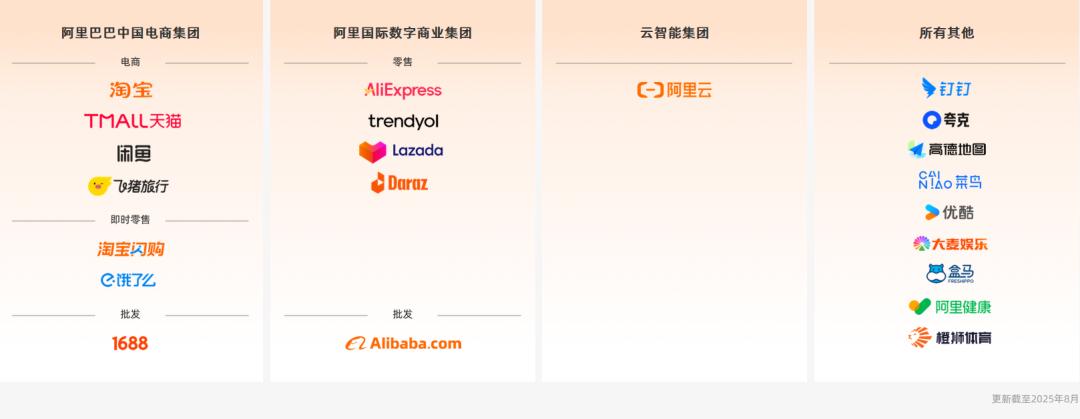
Core Insights - Alibaba's Q3 2025 financial results show a revenue increase of 5% year-on-year, reaching 247.795 billion RMB, driven by its cloud and core e-commerce businesses [1][2] - However, profits have significantly declined, with operating profit down 85% to 5.365 billion RMB and net profit down 53% to 20.612 billion RMB, attributed to heavy investments in instant retail and technology [1][6] Revenue Growth Driven by E-commerce and Cloud - The revenue growth is primarily attributed to the contributions from Alibaba's China e-commerce group and cloud business, with the latter seeing a 34% year-on-year increase [2][4] - The China e-commerce group's revenue reached 132.578 billion RMB, marking a 16% increase, while the international digital commerce group grew by 10% to 34.799 billion RMB [4] Profit Decline and Cost Pressures - The intense competition in the instant retail sector has led to a 105% increase in sales and marketing expenses, totaling 66.496 billion RMB [6] - The adjusted EBITDA for Alibaba's China e-commerce group fell by 76% to 10.5 billion RMB, indicating that the instant retail battle has significantly impacted core e-commerce profitability [6][7] Strategic Focus on Instant Retail and AI - Alibaba is focusing on reducing losses in its Taobao Flash Sale segment, with plans to optimize unit economics and improve operational efficiency [8][9] - The company aims to leverage AI to enhance its e-commerce and cloud services, with a goal of becoming a leading full-stack AI service provider [9][11] Future Outlook and Investment Strategy - Alibaba's management indicated that future investments in Taobao Flash Sale may decrease as operational efficiencies improve [8] - The company is committed to enhancing user experience and expanding its ecosystem, with ambitions to achieve a trillion RMB in transaction volume within three years [8][9]


What's Fueling Alibaba Stock's Jump Past Its 52-Week High?
Benzinga· 2025-10-02 12:46
Core Insights - Alibaba's Amap platform achieved a record 360 million daily users during China's National Day holiday, indicating a strong push into the local services market [1] - The platform guided trips totaling over 9 billion kilometers during the holiday period, showcasing its extensive usage [2] - Amap's new road safety system, Eagle Eye Guardian, issued over 290 million driving alerts, reflecting Alibaba's efforts to expand Amap's functionalities beyond navigation [3] Competitive Positioning - Amap is positioned to compete directly with Meituan in areas such as restaurant bookings, food delivery, and hotel reservations, as part of a broader strategy to create a local services ecosystem [3][4] - The launch of the AI assistant Xiaogao in August, which handled 2.6 billion user requests in one day, enhances Amap's competitive edge by assisting users with various travel-related inquiries [4] - Amap Street Stars, an AI-driven ranking tool for restaurants and hotels, was introduced to challenge Meituan's Dianping platform, combining navigation data with user reviews [5] Market Response and Valuation - Following these developments, Alibaba's shares rose 2.73% premarket, surpassing the previous 52-week high of $183.08 [5] - JPMorgan analysts raised their price target for Alibaba's Hong Kong shares by nearly 45%, indicating strong market confidence in the company's growth potential [6] - The valuation of Alibaba, at approximately 12 times fiscal 2028 earnings, suggests significant upside potential, bolstered by stronger cloud revenue and synergies between AI and e-commerce operations [6][7] Strategic Momentum - The record traffic on Amap, combined with Alibaba's AI innovations, signals renewed momentum for the company as it seeks to deepen its presence in China's digital services landscape [7] - Alibaba is positioned to leverage its capabilities across compute, platforms, and applications, directly improving merchant economics and focusing on long-term growth despite short-term competitive pressures [7]