
Steel Production

Search documents
X @The Economist
The Economist· 2026-04-04 08:00
A simpler, cleaner one-step process for steel production is a wonderful idea. But the fate for any startup attempting it is paved with potholes. To learn why, register to read the full story (it’s free) https://t.co/L0jBSTRaRY ...
X @Nick Szabo
Nick Szabo· 2026-04-03 00:54
RT Stephen McIntyre (@ClimateAudit)here is a graph showing per capita steel production in Iran vs USA from 1980-2025. I show steel production because it is a fundamental component of a modern economy and is a "real", not monetary, statistic.In the days of the Shah, despite Iran being an extremely large oil exporter, Iran produced little to no steel. Since 1979 (when the Shah was deposed), Iran's per capita steel production has become greater than USA's per capita steel production. Which, during the same per ...
X @Nick Szabo
Nick Szabo· 2026-04-02 07:42
RT Taban (@Tabantimes)There’s something deeply depressing about the destruction of Mobarakeh Steel Company in Isfahan, and the loss goes far beyond economics.Iran’s century-long fight to build its own industrial base, but keep getting knocked back, is what makes this attack feel especially personal.MSC wasn’t just a regular company.It was the largest steel producer in Iran and across the MENA region, responsible for more than half the country’s total output.In an economy that runs on oil, a single company p ...
X @Nick Szabo
Nick Szabo· 2026-03-20 03:03
RT 🇹🇷☪️Dr.JxlHš⚜️ (@ErkaniHarbiyye)💢Iran is the largest steel producer in the Middle East, manufacturing around 32 million tons annually nearly matching Germany’s output. Over the past decade, it has doubled its total steel production from 16 to 32 million tons💢Did you know? Iran produces about as much steel as France and Italy combined. Yet after accounting for construction, industrial use, and exports, a question remains: where do the unexplained 3 million tons each year go?💢The answer, quite clearly, lie ...
Stock news for investors: Goeasy shares plunge nearly 60% after lender suspends dividend
MoneySense· 2026-03-13 08:40
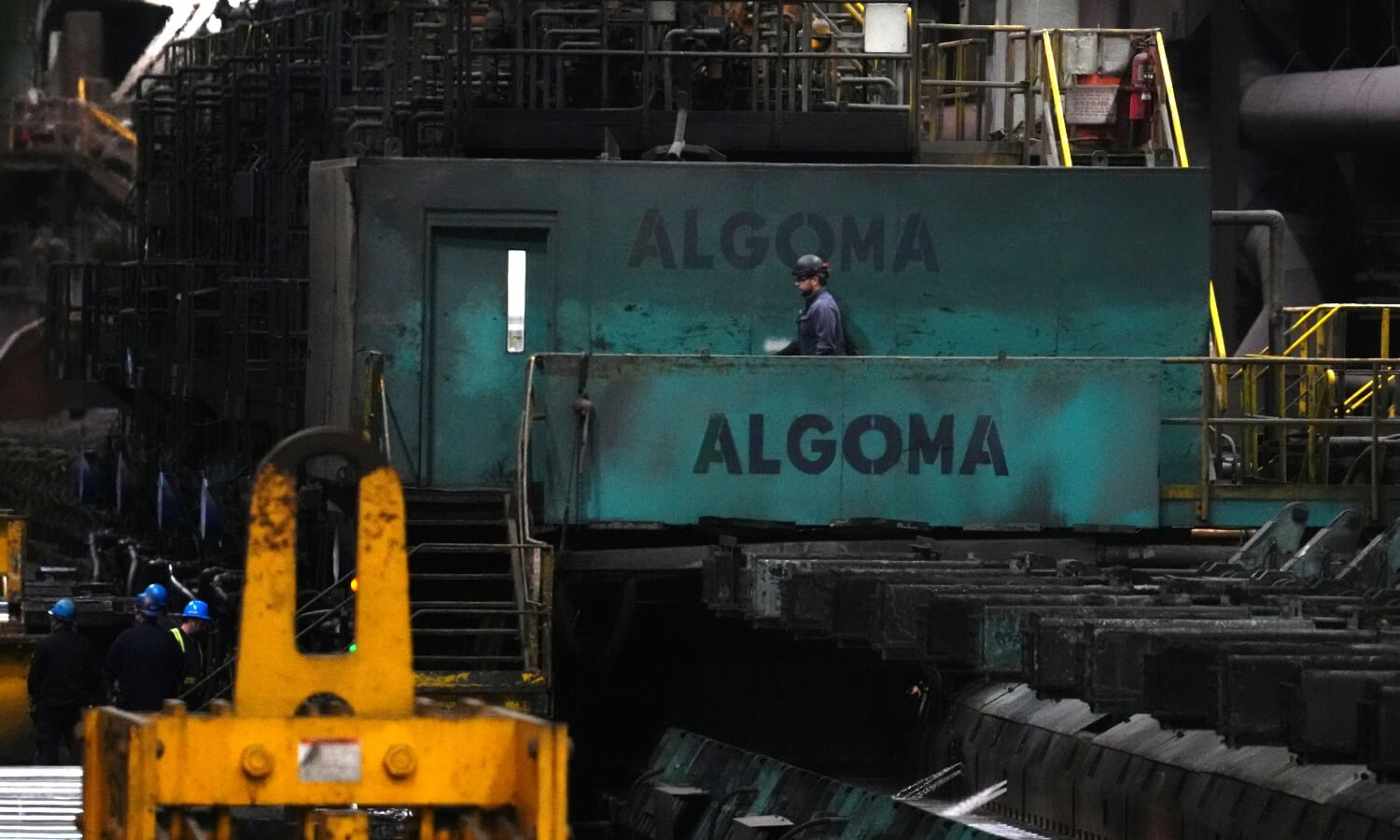
Goeasy - Goeasy shares fell by $65.90 or 57% to $49.65 on the Toronto Stock Exchange due to an expected $178 million charge for bad loans related to its LendCare business in Q4, along with a writedown of approximately $55 million for loan interest and fees [1] - The company anticipates a net increase in allowance for credit losses on gross consumer loans receivable of $86 million in Q4 compared to the amount reported on September 30 [1][2] Algoma Steel - Algoma Steel reported a net loss of $364.7 million in Q4, widening from a net loss of $66.5 million in the same period last year, resulting in a net loss per common share of $3.36 compared to a loss of 61 cents [4][6] - Consolidated revenue for Algoma Steel was $455 million in Q4, down from $590.3 million year-over-year, with shipments falling 31% to 378,533 tons from 548,802 tons [5][6] - The company incurred direct tariff costs of $60.6 million in Q4 and received $500 million in financing from federal and Ontario governments to address the impact of U.S. steel tariffs [5] Transat A.T. Inc. - Transat A.T. Inc. reported a loss of $29.5 million in its latest quarter, an improvement from a loss of $122.5 million a year earlier, with a loss of 73 cents per diluted share compared to a loss of $3.10 per diluted share last year [9][12] - Revenue for Transat increased by 5% to $870.7 million from $829.5 million a year earlier, with an adjusted loss of $1.18 per share compared to an adjusted loss of $1.90 per share in the previous year [10][12] Royal Bank of Canada - Royal Bank of Canada has acquired fintech company Pinch Financial, which simplifies the mortgage application process, although terms of the agreement were not disclosed [15] - The acquisition aims to enhance the mortgage experience for borrowers by accelerating RBC's digital roadmap for a quicker and more streamlined process [16]


Jefferies adds Groww, State Bank of India, 5 others to 23 buy ideas. Here’s the full list
The Economic Times· 2026-03-13 07:09
Banking Sector - The largest bank in the country has a target price of Rs 1,300, indicating a 20% upside potential from current market levels, with a focus on growing its loan book supported by a lower loan-to-deposit ratio and stable asset quality [1] - The management aims to improve return on assets beyond the 1–1.1% range and increase the fee-to-asset ratio from 0.5% in FY25, while targeting deposit growth from 9% to 11–12% over the next 12–18 months [1] Financial Services - Groww, the parent company of Billionbrains Garage Ventures, has a target price of Rs 195 per share, representing a 23% upside from the last close, and holds a 28% market share as the largest broker in terms of active clients [2] - Revenue growth for Groww is forecasted at 29% CAGR over FY26–28E, driven by higher product velocity and rising client assets, which have grown 6–11 times over the past three years [2] Insurance Sector - Star Health & Allied Insurance has a target price of Rs 660 per share, indicating a 43% upside potential, and is the leading private health insurer in India with an estimated market share of around 31% [3] - Analysts expect the loss ratio to improve as claim frequency stabilizes and recent price hikes support higher net earned premiums [3] Automotive Sector - Bharat Forge has a target price of Rs 2,150, translating to a 21% upside from current levels, with operational improvements expected as the US truck cycle shows signs of bottoming out and demand strengthens in India [4] - The company is also benefiting from easing India–US tariff pressures and continued momentum in the defense segment [4] Steel Industry - JSW Steel has a target price of Rs 1,400, forecasting nearly a 20% gain from the last close of Rs 1,173, with rapid capacity expansion from 8 million tonnes per annum (mtpa) in FY10 to 34 mtpa in FY25 [6] - The company plans to expand its capacity to 43 mtpa by FY29E and targets 50 mtpa by FY31E, with a healthy 6% CAGR in India volumes over FY26–28E [6] Food Delivery and E-commerce - Eternal has a target price of Rs 480, indicating a 117% upside from current levels, with food delivery being a key cash generator for Zomato, growing at over 15% while profitability improves [7][11] - The company expects growth to accelerate to around 20% in the medium term, with significant opportunities in quick commerce, despite intense competition [11] Healthcare Sector - Max Healthcare has a target price of Rs 1,320, representing a 29% upside, with plans to double its bed capacity over the next three to four years through brownfield additions [9] - The new Dwarka facility broke even in six months and has begun contributing to EBITDA, with strong demand observed in recently acquired facilities [9]

Stock Markets Today March 9, 2026: Sensex crashed 2346 points
Rediff· 2026-03-09 05:27
Core Viewpoint - Indian stock markets are experiencing a significant decline due to soaring crude oil prices, negative global market sentiment, and persistent foreign fund outflows, raising concerns about economic stability [1][6]. Market Performance - The benchmark indices Sensex and Nifty fell nearly 3% in early trading, with the Sensex dropping 2,345.89 points (2.97%) to 76,573.01 and the Nifty tumbling 708.75 points (2.89%) to 23,741.70 [4][5]. - All 30 firms in the Sensex index were trading lower, with notable declines in InterGlobe Aviation (down nearly 8%), Tata Steel, Maruti, State Bank of India, Eternal, Asian Paints, and ICICI Bank [5][6]. Oil Price Impact - Brent crude oil prices surged by 23.63% to USD 114.59 per barrel, delivering a significant oil shock to import-dependent economies like India [5][7]. - Analysts indicate that if the West Asian conflict continues and oil prices remain elevated, market volatility is likely to persist [6][7]. Global Market Context - Asian markets mirrored the downturn, with South Korea's Kospi falling over 7% and Japan's Nikkei 225 dropping 6.5% [8]. - The US market also ended lower, contributing to the negative sentiment in global equities [8]. Foreign Fund Activity - Foreign Institutional Investors (FIIs) sold equities worth Rs 6,030.38 crore on Friday, while Domestic Institutional Investors (DIIs) purchased stocks worth Rs 6,971.51 crore in the previous trade [8].
Nikkei Hits Record High as Australian Inflation Surprises to the Upside
Stock Market News· 2026-02-25 00:38
Economic Indicators - Australia's January CPI rose 3.8% year-over-year, exceeding economist estimates of 3.7%, indicating persistent inflationary pressures [2][9] - The Trimmed Mean CPI accelerated to 3.4% year-over-year, surpassing both the prior reading and expectations of 3.3% [2] - Australia's Construction Work Done for Q4 fell by 0.1%, significantly underperforming the anticipated 1.2% growth [3][9] Market Developments - Japanese equities, led by the Nikkei index, reached an all-time high, supported by a rally in U.S. technology shares and local political developments [4][5] - The 2-year Japanese government bond yield eased to 1.215%, while the 5-year yield dipped to 1.57% [4] - Market participants are closely monitoring Prime Minister Takaichi's upcoming Bank of Japan board appointments, which may signal a delay in further interest rate hikes [5] Corporate Developments - Wayve, an autonomous vehicle technology company, secured $1.2 billion in funding, with plans to launch robotaxis on the Uber platform across 10 global cities by 2026 [6][9] - Nippon Steel announced a $4 billion bond issuance to finance the acquisition of United States Steel, facing regulatory and political scrutiny [7][9] - OpenAI expanded its executive team by hiring Arvind KC as its new Chief People Officer to manage its growing global workforce [7] Credit and Regional Trends - Moody's upgraded Erie County, NY to Aa3 with a stable outlook, citing improved financial management [8] - Asian markets remain optimistic as concerns over AI disruption ease, focusing on the scaling of AI infrastructure and commercial applications [8]


印度企业转型评估介绍
落基山研究所· 2026-02-17 00:25
Investment Rating - The report does not explicitly provide an investment rating for the industry or specific companies. Core Insights - The Corporate Transition Assessment (CTA) framework is essential for Indian banks to evaluate client transition readiness across three dimensions: strategy and ambition, feasibility, and accountability [21][38]. - The steel sector in India is highlighted as a critical area for transition due to its significant emissions and the need for decarbonisation to meet national targets [20][12]. - The report emphasizes the importance of understanding transition risks and opportunities to inform risk management and client engagement strategies [21][37]. Summary by Sections Section 1: The Value of Corporate Transition Assessments - The Reserve Bank of India (RBI) is pushing for deeper integration of climate considerations in risk assessments and financing strategies [26]. - Regulatory developments are creating a favorable environment for climate-aligned businesses, with significant progress in renewable energy and electric vehicle adoption [30][31]. - Banks are beginning to establish climate governance structures and capabilities to measure financed emissions and assess climate risks [32][34]. Section 2: Guidance on Conducting CTAs - The CTA framework helps banks gain actionable insights into corporate transitions by assessing transition vulnerability, feasibility, and accountability [45][46]. - Key components of the CTA include evaluating a company's exposure to transition risks, the feasibility of its decarbonisation efforts, and the governance structures in place [47][48][50]. - CTAs should focus on emissions-intensive companies in sectors like steel, cement, and power, which are critical for the bank's portfolio [51][53]. Section 3: Walkthrough: CTA of a Leading Indian Steel Producer - The analysis of Company X illustrates the process of conducting a CTA, focusing on its transition vulnerability and decarbonisation strategy [62][63]. - Company X's operations are primarily based in India, where it faces limited short- and medium-term transition pressures, but significant long-term challenges due to its emissions-intensive production methods [72]. - The company is taking steps to align with emerging regulations, such as the EU Carbon Border Adjustment Mechanism (CBAM), by converting existing facilities to green steel production [73].
X @Bloomberg
Bloomberg· 2026-02-16 03:12
BlueScope Steel, which rejected a takeover bid from Steel Dynamics and SGH last month, plans to push for growth in the US through an expansion of its North Star operations and premium products https://t.co/wBG9JZlu6n ...