《为了民族解放与世界和平——纪念中国人民抗日战争暨世界反法西斯战争胜利80周年》主题展览

Search documents
释放文博活力 厚植文化滋养面向未来的博物馆事业
Zhong Yang Ji Wei Guo Jia Jian Wei Wang Zhan· 2025-12-05 00:24
Core Viewpoint - The article emphasizes the importance of museums in preserving and transmitting human civilization, highlighting their role in enhancing cultural confidence and meeting the spiritual and cultural needs of the public in contemporary China [6][10]. Group 1: Museum Development and Cultural Confidence - The 2025 National Museum Directors Forum was held at the National Museum of China, with over 50 museum directors and representatives discussing high-quality development in the cultural heritage sector [6]. - Museums are seen as vital educational institutions that connect the past, present, and future, contributing to national strength and cultural revival [6][10]. Group 2: Exhibition and Cultural Narratives - The Shaanxi History Museum utilizes its extensive collection to narrate the history of Chinese civilization, showcasing the evolution of political systems, economic forms, and cultural exchanges from prehistoric times to modern China [7][8]. - The Sichuan Museum focuses on the historical narrative of the Bashu region, highlighting its contributions to Chinese civilization through various thematic exhibitions [9]. Group 3: Educational and Interactive Initiatives - Museums are adopting innovative educational programs and interactive experiences to engage the public, such as digital classrooms and immersive activities that bring history to life [12][13]. - The concept of mobile museums, like the "Big Tent" traveling museum in Sichuan, aims to reach underserved communities and enhance public access to cultural heritage [13][14]. Group 4: Revolutionary Cultural Heritage - The China People's Anti-Japanese War Memorial Museum has hosted a significant exhibition commemorating the 80th anniversary of the victory in the Anti-Japanese War, attracting over 1.5 million visitors since its opening [10][11]. - The exhibition emphasizes the importance of revolutionary artifacts in promoting national spirit and cultural identity, utilizing modern technology to enhance visitor engagement [14].

今年暑期的红色旅游有哪些不一样
Zhong Guo Qing Nian Bao· 2025-09-05 01:23
Core Insights - The article highlights the rise of red tourism in China, particularly in the context of the 80th anniversary of the victory in the Anti-Japanese War and World Anti-Fascist War, with various initiatives aimed at enhancing visitor engagement and historical education [1][2][3]. Group 1: Red Tourism Initiatives - Nanjing's Xixia Mountain scenic area launched a "free tour with ticket stubs" initiative, allowing visitors to enter for free with a movie ticket from "Nanjing Photo Studio," which has gained significant attention [1]. - The Anti-Japanese War Memorial Museum introduced a new exhibition titled "For National Liberation and World Peace," which has attracted over 600,000 visitors in just 44 days since its opening [3][4]. - Various red tourism sites are experiencing increased visitor numbers, with hotel bookings for red tourism destinations showing significant year-on-year growth during the summer [1]. Group 2: Visitor Experience and Engagement - Many red tourism sites are adopting immersive and interactive exhibition designs, moving away from traditional static displays to enhance visitor engagement [7][8]. - The Anti-Japanese War Memorial Museum's new exhibition features 3,237 artifacts, including 115 first-class relics, and employs innovative display techniques to create a more engaging experience [4][8]. - The integration of technology, such as virtual reality and multimedia presentations, is becoming a key trend in red tourism, enhancing the emotional impact of the experiences [9][10]. Group 3: Visitor Feedback and Suggestions - Visitors have expressed a desire for more diverse and engaging red tourism experiences, including the need for better organization and thematic routes connecting various sites [11][12]. - Suggestions include the development of interactive and gamified red cultural products to attract younger audiences and enhance the overall visitor experience [13][14]. - Experts recommend that red tourism sites innovate their offerings by incorporating modern performance art and expanding the scope of red tourism to include local community development [14].
旅游观察:今年暑期的红色旅游有哪些不一样
Zhong Guo Qing Nian Bao· 2025-09-05 01:04
Core Points - The article discusses the rise of red tourism in China, particularly in the context of the 80th anniversary of the victory in the Anti-Japanese War and World Anti-Fascist War, highlighting various initiatives and exhibitions that enhance visitor engagement and historical education [1][2][3][4][5] Group 1: Red Tourism Initiatives - Nanjing's Xixia Mountain scenic area offers free entry to visitors with movie tickets from "Nanjing Photo Studio," aiming to enhance historical awareness and visitor experience [1] - The Anti-Japanese War Memorial Museum launched a new exhibition for the 80th anniversary, attracting over 600,000 visitors in just 44 days [2][3] - Various red tourism sites are experiencing increased visitor interest, with hotel bookings for these destinations showing significant year-on-year growth [1][2] Group 2: Exhibition Innovations - The Anti-Japanese War Memorial Museum features 3,237 artifacts, including 115 first-class relics, with many items on display for the first time [3] - Exhibitions are increasingly utilizing immersive and interactive elements, moving away from traditional static displays to engage visitors more effectively [6][7] - The integration of technology, such as VR and multimedia presentations, is becoming a key trend in red tourism, enhancing the emotional impact of historical narratives [8][9] Group 3: Visitor Experience and Feedback - Visitors express a desire for more engaging and varied experiences at red tourism sites, with suggestions for improved interactivity and thematic organization [10][11] - There is a call for red cultural products to evolve beyond traditional merchandise, with a focus on innovative designs and interactive elements to attract younger audiences [12][13]
走进抗战历史“现场”:中国人民抗日战争纪念馆恢复开放
Xin Hua Wang· 2025-07-10 11:45
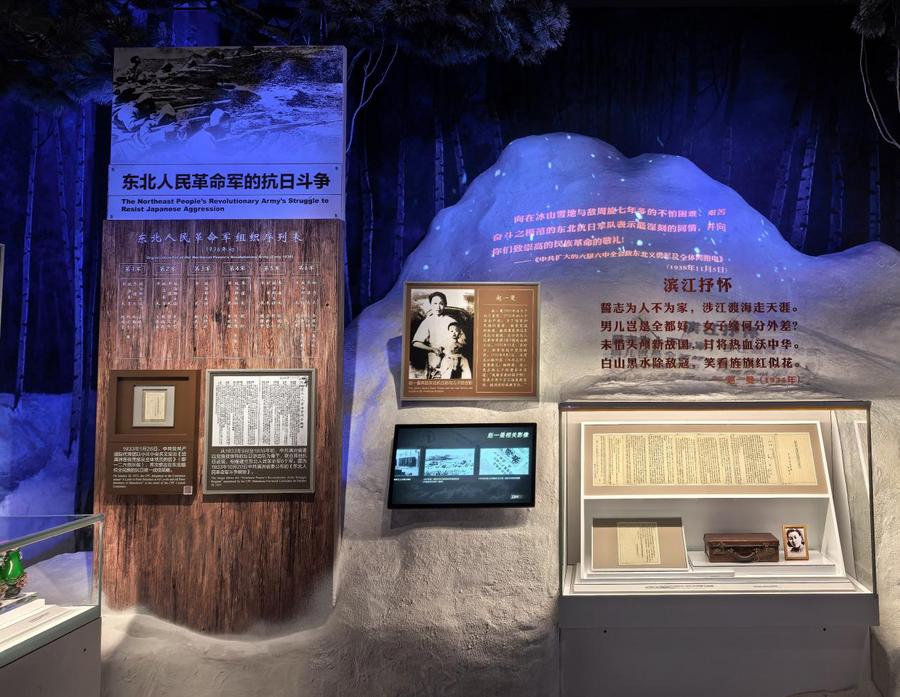
Core Viewpoint - The China Anti-Japanese War Memorial Museum has officially reopened to the public after nearly a year of renovation and exhibition updates, showcasing the history and spirit of the Chinese people's resistance against Japanese aggression during World War II [1]. Group 1: Exhibition Details - The museum features a theme exhibition titled "For National Liberation and World Peace - Commemorating the 80th Anniversary of the Victory of the Chinese People's Anti-Japanese War and the World Anti-Fascist War," covering an exhibition area of 12,200 square meters [1]. - The exhibition includes 1,525 photographs and 3,237 cultural relics, vividly reflecting the patriotic feelings and spiritual strength of anti-Japanese heroes, and comprehensively recreating the epic history of the 14-year-long war [1]. - One-third of the exhibited cultural relics and historical materials are being displayed for the first time [1]. Group 2: Emotional Impact - The exhibition features a section dedicated to Zhao Yiman, showcasing her portrait and personal letters, which deeply resonate with visitors, highlighting her dual role as a brave warrior and a devoted mother [2]. - Visitors express emotional responses to Zhao Yiman's story, emphasizing the profound sense of national and familial devotion conveyed through her words [2]. Group 3: Technological Integration - The exhibition employs advanced scientific technology and visual art to create immersive scenes, including realistic recreations of significant historical events such as the Pingxingguan Victory and the Hundred Regiments Offensive [5]. - Technologies like holographic images, transparent display screens, and AI interactions are utilized to break the barriers of time and space, allowing visitors to experience historical events up close [5]. - Interactive elements, such as digital trench cross-sections, provide visitors with a direct understanding of the tactics and facilities used in trench warfare, enhancing the educational experience [5]. Group 4: Curatorial Perspective - The museum aims to present a multi-faceted view of the anti-Japanese war history through precious artifacts, documents, and videos, encouraging visitors to delve into the depths of history and appreciate the Chinese people's love for peace [6]. - The exhibition's standout feature is its ability to present historical artifacts, documents, images, artworks, and scenes in a three-dimensional manner, allowing visitors to feel as if they are part of the historical narrative [6].