《剑器》

Search documents
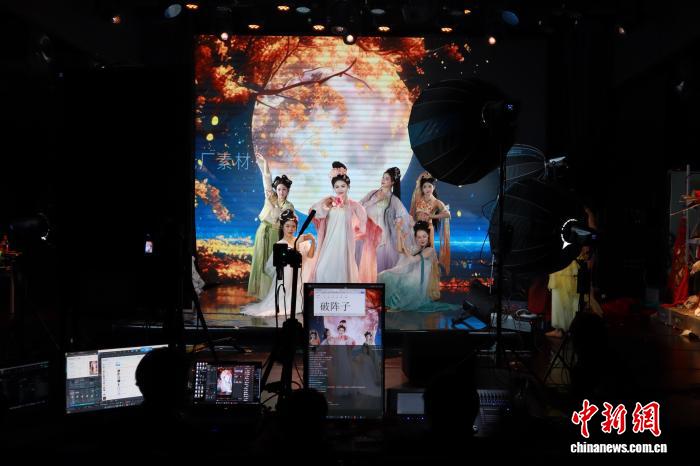
(神州写真)“团播”小屏乐赏剧场级舞美 专业院团开启手机“第二舞台”
Zhong Guo Xin Wen Wang· 2026-02-03 08:46
Core Viewpoint - The article discusses the innovative "group broadcast" model adopted by the Shaanxi Song and Dance Theatre, which aims to attract younger audiences by transforming traditional performances into engaging online experiences [1][2]. Group 1: Company Initiatives - The Shaanxi Song and Dance Theatre, with over 80 years of history, has faced challenges due to a decline in offline audience attendance [1]. - In June 2025, the theatre became the first professional troupe in China to experiment with the "group broadcast" model, aiming to reach audiences beyond traditional venues [1][2]. - The theatre's initial challenges included adapting to the online format, with performers needing to adjust their performances for mobile viewing [2]. Group 2: Performance Adaptations - Performances were restructured into 3 to 5-minute highlight segments, incorporating elements of martial arts, opera, and interactive poetry to enhance viewer engagement [2]. - The theatre achieved significant online exposure, with a single broadcast reaching up to 5.378 million viewers, demonstrating the effectiveness of the "group broadcast" model in revitalizing interest in traditional arts [2][3]. Group 3: Industry Trends - The "group broadcast" trend is gaining momentum, with various professional troupes across China exploring this model to connect with younger audiences [3]. - The China Performance Industry Association projects that the group broadcast market will exceed 15 billion RMB by 2025, indicating a growing acceptance and integration of digital platforms in traditional arts [4].

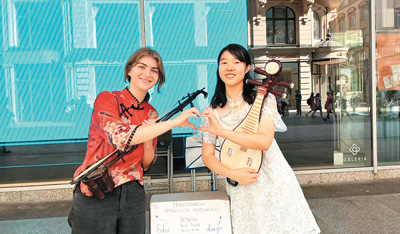
在莱比锡,演奏中国民乐
Ren Min Ri Bao Hai Wai Ban· 2025-04-24 01:08
Core Viewpoint - The article highlights the cultural exchange facilitated through music, particularly the introduction of the traditional Chinese instrument, the Liuqin, to German audiences by a student during her exchange program in Leipzig, Germany [2][3][4]. Group 1: Cultural Exchange through Music - The student, having learned various traditional Chinese instruments from a young age, utilized her time in Germany to perform and share the Liuqin, fostering connections with local music enthusiasts [3][4]. - During her performances, she received positive feedback from German audiences, many of whom had never encountered the Liuqin before, indicating a growing interest in Chinese traditional music abroad [4][5]. Group 2: Collaborative Efforts and Friendships - The student formed a friendship with a German girl who was learning the Erhu, leading to collaborative performances that blended Chinese and German musical traditions [5][6]. - They prepared informative materials about the instruments to enhance audience understanding, showcasing the unique characteristics of the Liuqin and Erhu [5][6]. Group 3: Ongoing Cultural Engagement - The student continued to engage with international friends during her exchange, sharing knowledge about the Liuqin and other Chinese instruments, which contributed to a broader appreciation of Chinese music [8]. - Plans for future online collaborations and performances were discussed, aiming to present Chinese traditional music in a modern context through social media [8].