
政治忠诚

Search documents
四川监狱:在“追光”中凝聚奋进力量
Zhong Guo Xin Wen Wang· 2026-01-21 03:29
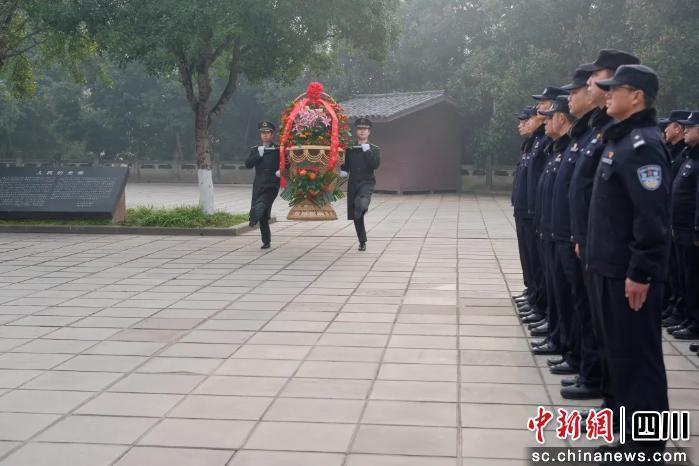
Core Viewpoint - The article highlights the various党建培训 (Party Building Training) and主题党日活动 (Thematic Party Day Activities) conducted by prisons in Sichuan Province at the beginning of the new year, aimed at strengthening political loyalty and collective motivation among the police force [1]. Group 1: Activities and Locations - Hanwangshan Prison organized police officers to visit the Sichuan Museum for party history education, emphasizing the development of the revolutionary history in Bashu [2]. - Yibin and Zigong prisons took young police officers to the hometowns of revolutionary figures Jiang Jie and Wu Yuzhang, drawing inspiration from the spirit of perseverance in adversity [2]. - Xinyuan Prison arranged for party representatives to visit the Red Army Long March Memorial Hall in Qionglai, utilizing digital displays and scene recreations to immerse participants in the resilience and dedication of Red Army soldiers [2]. Group 2: Learning from History - Qiaowo Prison organized young police officers to visit the prison's historical site, listening to stories of predecessors who exemplified hard work and dedication, instilling the spirit of "hard work and selflessness" [5]. - Chengdu Juvenile Offenders Management Institute conducted interviews in Changping Mountain, reflecting on the sacrifices of the Red Army and the commitment to their original aspirations [5]. Group 3: Commitment and Responsibility - Youth police officers at Chuanbei Prison solemnly pledged their commitment to their duties in front of revolutionary historical sites, embodying their mission as law enforcement officers [5]. - Police officers at Chuan Central Prison gained deep insights into the ideals, selflessness, and strong sense of public service from the memorial of Zhu De, vowing to take on responsibilities and maintain social stability in their work [5].

人工智能产业背后的隐形劳动者|荐书
Di Yi Cai Jing· 2025-11-07 02:47
Core Insights - The book "Feeding AI: A Documentary on the Global Underclass of the AI Industry" reveals the paradoxical foundation of advanced AI, which relies on the invisible labor of millions of workers globally, challenging the narrative of AI as a self-evolving entity [3][4] Group 1: Labor Dynamics in AI - The book highlights the plight of "digital laborers" from the Global South, such as data annotators in Kenya and gig workers in Venezuela, who perform essential tasks for AI development but remain largely unseen and undercompensated [3][4] - It emphasizes the alienation of labor, where the more effective the training of AI by these workers, the quicker they are replaced, leading to a paradox where they become marginalized despite their contributions [4] Group 2: Ethical Considerations - The narrative calls for a reevaluation of ethical standards in AI, urging that the rights and dignity of data laborers should be central to discussions about AI ethics [4] - It raises critical questions about how to provide fair compensation, psychological support, and professional respect to those who contribute to the development of AI technologies [4]

业务丛谈丨从严从实加强 教育管理监督
Zhong Yang Ji Wei Guo Jia Jian Wei Wang Zhan· 2025-08-21 01:01
Group 1 - The core viewpoint emphasizes the importance of strengthening political loyalty and enhancing the capabilities of the disciplinary inspection and supervision agencies, particularly in the context of the ongoing education and rectification efforts [1][2] - The focus is on integrating political construction into daily practices, ensuring that the principles of the Party are deeply ingrained in the actions of the disciplinary inspection personnel [2][3] - There is a commitment to rigorous management and supervision, promoting a culture of accountability and responsibility among the staff, while also encouraging proactive engagement in their roles [3][4] Group 2 - The article highlights the necessity of a comprehensive approach to supervision, which includes managing thoughts, work, style, and discipline in a coordinated manner [3] - It discusses the importance of continuous education and training for disciplinary inspection personnel to enhance their skills in identifying and addressing issues effectively [3][4] - The integration of strict management with supportive measures aims to create an environment where disciplinary inspection staff can perform their duties with integrity and commitment [4]