
《枣红马》

Search documents
马年徐悲鸿特展在四川报业博物馆开幕
Xin Lang Cai Jing· 2026-02-10 20:04
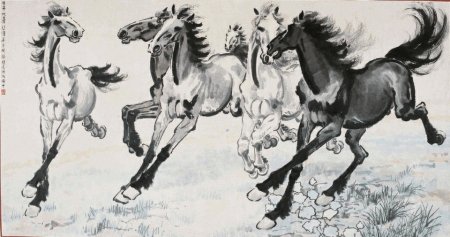
Core Viewpoint - The exhibition "Heavenly Horses Running Across the River" showcases the works of Xu Beihong, emphasizing his iconic horse-themed art and the influence of the "Beihong School" in Sichuan, marking the 90th anniversary of Xu Beihong's arrival in the region [5][7][8]. Group 1: Exhibition Highlights - The exhibition features 24 original works by Xu Beihong and 18 masterpieces from the "Beihong School," including classic pieces like "The Twelve Zodiac Album" and "Nine Fang Gao" [5][7]. - Notable works include the earliest version of "The Twelve Zodiac Album" created in 1939 and rare pieces from the "Galloping Horses" series, which are being publicly displayed in China for the first time [5][6]. - The exhibition runs for six months at the Sichuan Newspaper Museum, concluding on August 10 [10]. Group 2: Cultural Significance - Xu Beihong's horse paintings symbolize national spirit and resilience, reflecting his artistic pursuit of "diligence and greatness" [8]. - The exhibition aims to enhance public understanding of Xu Beihong and the "Beihong School," showcasing their contributions to modern art education in Sichuan [7][8]. - The event attracted notable figures from the art community, highlighting Xu Beihong's lasting impact on art education and cultural development in the region [9][10].

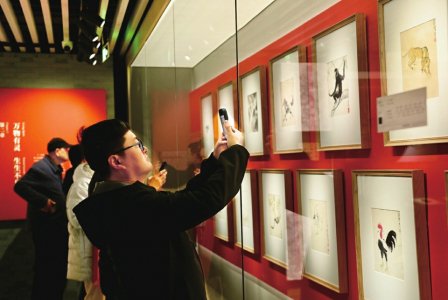
“天马行川”艺术特展
Xin Lang Cai Jing· 2026-02-08 18:30
Core Viewpoint - The exhibition "Heavenly Horses Running in the River - Xu Beihong Art Exhibition for the Year of the Horse and Commemoration of Xu Beihong's 90 Years in Sichuan" will open on February 10 at the Sichuan Newspaper Museum, showcasing the significant contributions of Xu Beihong to modern Chinese art and education [3][6]. Group 1: Xu Beihong's Contributions - Xu Beihong is recognized as one of the founders of modern Chinese art, known for his diverse subjects, particularly his famous horse paintings [3][4]. - His contributions to painting theory, practice, art education, and innovation have established him as the "Father of Modern Chinese Painting" [3][4]. - Xu Beihong's artistic philosophy emphasized the integration of Western realism with traditional Chinese ink painting, creating a unique "Chinese-Western fusion" style [4][5]. Group 2: Art Education and Realism - Xu Beihong advocated for a return to realism in art, emphasizing that art should originate from life and reflect reality, thus revitalizing traditional painting [5]. - He placed significant importance on figure painting, restoring its prominence in the art world through precise character modeling and expressive portrayal [5]. - His teaching philosophy highlighted the importance of sketching as the foundation of artistic creation, influencing contemporary art education practices [5]. Group 3: Upcoming Exhibition Details - The upcoming exhibition will feature dozens of representative works from Xu Beihong and the "Xu Beihong School," including 24 original pieces by Xu Beihong [6][7]. - Notable works on display will include the museum-level print of "Nine Fang Gao," rare fan pieces like "Running Horses," and other significant works such as "Ink Horses" and "Drinking Horses" [7]. - The exhibition will also provide a systematic overview of Xu Beihong's artistic creation and educational practices in Sichuan [7].

徐悲鸿尺幅最大的《立马图》创作于何处?
Xin Lang Cai Jing· 2026-02-06 18:56
Core Viewpoint - The exhibition "Heavenly Horses and Flowing Rivers - Xu Beihong Art Exhibition in the Year of the Horse" will open on February 10, showcasing significant works by Xu Beihong and his school, highlighting their impact in Sichuan over the past 90 years [1]. Group 1: Exhibition Details - The exhibition will feature dozens of representative works from Xu Beihong and the "Xu Beihong School," including 24 original paintings by Xu Beihong [1]. - Notable pieces include the museum-level print of "Nine Fang Gao," rare fan paintings "Group Gallop" and "Galloping Horses," as well as a series of works like "Ink Horses," "Drinking Horses," and "Chestnut Horses" [1]. - This exhibition aims to systematically review the artistic footprints and profound influence of Xu Beihong and his school in Sichuan [1]. Group 2: Historical Context - Xu Beihong, a pivotal figure in modern Chinese art, blended Western realism with the expressive spirit of traditional Chinese painting, creating the iconic "Thousand Li Horse" that symbolizes the indomitable spirit of the nation [2]. - Although originally from Jiangsu, Xu Beihong developed a strong connection with Sichuan, first visiting in 1935, which inspired his subsequent works [2]. - During the Anti-Japanese War, Xu Beihong resided in Sichuan, where he created many famous works, including "Group Gallop," and taught at Central University in Chongqing [2][3]. Group 3: Notable Works and Stories - In 1942, Xu Beihong created "Standing Horse" and "Ancient Cypress" during a visit to Baoguang Temple, symbolizing the resilience of the Chinese nation amidst adversity [4]. - "Standing Horse," recognized as the largest horse-themed work by Xu Beihong, stands nearly two meters tall [4]. - The painting gained sentimental value when Xu Beihong's wife, Liao Jingwen, visited the temple in 1993 and inscribed a heartfelt note on it, adding to its legacy [4].