《环境空气质量标准研究系列报告》

Search documents
亚洲清洁空气中心、清华大学、北京大学共同发布报告 以环境空气质量标准研究为修订提供科学参考
Jing Ji Wang· 2025-10-27 07:43
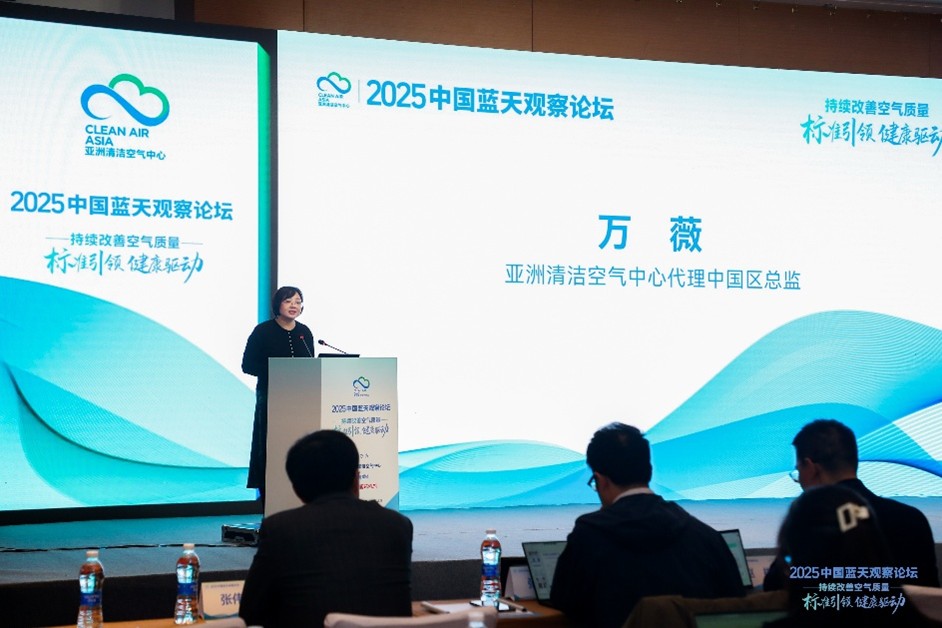
Core Insights - The 2025 China Blue Sky Observation Forum was held in Beijing, focusing on the theme "Continuous Improvement of Air Quality: Standards Lead, Health Driven" [1] - The forum released a series of research reports in collaboration with Tsinghua University and Peking University, analyzing the revision of China's air quality standards and its economic impacts [1][2] - The proposed new air quality standard limit of 25μg/m3 for PM2.5 aims to enhance health benefits and drive continuous improvement in air quality [1] Group 1 - The report "Analysis of the Path to Achieve Revised Environmental Air Quality Standards" outlines scenario target values and phased recommendations for revising air quality standards, establishing achievable paths for compliance [1] - The report emphasizes the need for upgrading standards in line with ongoing air quality improvements and reduction measures [1] - The research highlights the synergistic benefits of pollution reduction and carbon emission cuts, along with health benefits associated with the new standards [1] Group 2 - The economic impact assessment report utilizes a computable general equilibrium model to evaluate the macroeconomic effects and cost-benefit analysis of four standard revision scenarios for 2030 and 2035 [2] - Following the WHO's updated global air quality guidelines, the U.S. and EU are set to revise their air quality standards in 2024, tightening PM2.5 annual concentration limits to 9μg/m3 and 10μg/m3 respectively [2] - The study analyzes the triggers, institutional and decision-making processes, scientific evaluation frameworks, and cost-benefit assessments of the U.S. and EU practices, providing valuable insights for China and other countries [2]
以标准为引领、健康为驱动,推动空气质量持续改善
Zhong Guo Neng Yuan Wang· 2025-10-24 11:56
Core Insights - The 2025 China Blue Sky Observation Forum was successfully held in Beijing, focusing on improving air quality through standard revisions and health-driven actions [1] - The forum highlighted the importance of sharing advanced experiences and future pathways for air quality improvement, especially as China enters a new phase of air pollution prevention during the 14th Five-Year Plan [1] Air Quality Standards and Policy - The forum released three significant reports aimed at advancing air quality improvement, including studies on environmental air quality standards and health effects of air quality improvements [4] - The current air quality standards, established in 2012 and implemented in 2016, are set to be revised, with a focus on stricter limits and phased regional compliance [4][5] - Recommendations include establishing a new air quality standard limit of 25μg/m³ for PM2.5, which could enhance health benefits and guide future actions [5] Health Impact Assessments - Research indicates a structural shift in health risks associated with air pollution, with acute risks becoming more prominent due to extreme pollution events [10][11] - The health benefits of air quality improvements are not evenly distributed across regions, necessitating targeted strategies for vulnerable populations [11][13] Local Governance and Best Practices - Local governments play a crucial role in implementing air quality standards and innovative practices, with examples from cities like Beijing, Chengdu, and Shanghai showcasing effective pollution control measures [15][17][22] - The forum emphasized the need for regional collaboration and innovative governance mechanisms to address complex air pollution challenges [24]