
环境空气质量标准修订

Search documents
媒体纵览 | 环境空气质量新国标来了!“好天气”标准更严(新华社)
Xin Lang Cai Jing· 2026-02-25 10:46
Core Viewpoint - The newly revised "Ambient Air Quality Standards" (GB 3095—2026) introduces stricter limits on air pollutants, particularly PM2.5, to better protect public health [2][3]. Group 1: Revised Standards - The annual average concentration limit for PM2.5 has been adjusted to 10 micrograms per cubic meter for the first level and 25 micrograms per cubic meter for the second level [3]. - The daily average concentration limit for PM2.5 is set at 25 micrograms per cubic meter for the first level and 50 micrograms per cubic meter for the second level [3]. - The revised standards also tighten limits for PM10, sulfur dioxide (SO2), and nitrogen dioxide (NO2) [3]. Group 2: Implementation Phases - The new standards will be implemented in phases, with the first phase starting on March 1, 2026, and lasting until December 31, 2030, during which transitional concentration limits will apply: PM2.5 annual and daily average second-level limits will be 30 micrograms per cubic meter and 60 micrograms per cubic meter, respectively [3]. - The second phase will commence on January 1, 2031, when the revised concentration limits for PM2.5, PM10, SO2, and NO2 will be enforced nationwide [3].

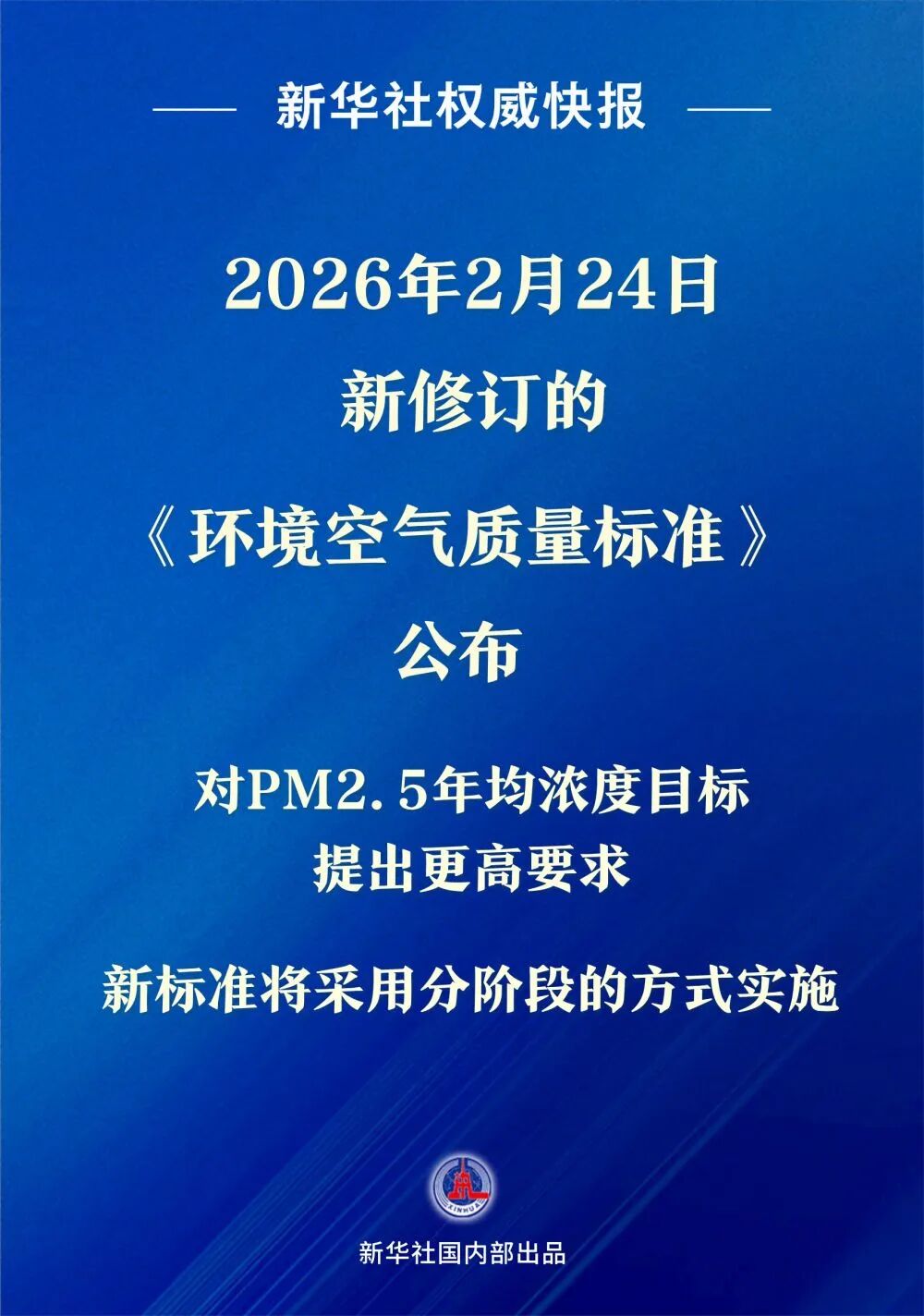
PM2.5从15微克到10微克,新国标让蓝天颜值更高
Xin Jing Bao· 2026-02-25 10:11
Core Viewpoint - The Ministry of Ecology and Environment has released the revised "Ambient Air Quality Standards" (GB 3095—2026), tightening the limits for PM2.5 and other pollutants to better protect public health and improve air quality [1][2]. Group 1: PM2.5 Standards Adjustment - The annual average PM2.5 limit has been adjusted to 10 micrograms per cubic meter for the first level and 25 micrograms per cubic meter for the second level, while the daily average limits are set at 25 and 50 micrograms per cubic meter respectively [1]. - The previous standard from 2012 set the annual average PM2.5 limits at 15 micrograms per cubic meter for the first level and 35 micrograms per cubic meter for the second level, indicating a significant tightening in the new standards [1][2]. Group 2: Implementation Phases - The new standards will be implemented in phases, with the first phase starting on March 1, 2026, until December 31, 2030, where the transitional limits for PM2.5 will be 30 micrograms per cubic meter for annual and 60 micrograms per cubic meter for daily averages [2]. - The second phase will commence in 2031, enforcing the revised limits for PM2.5, PM10, SO2, and NO2 [2]. Group 3: Broader Implications - The adjustments reflect a commitment to enhance environmental governance and align with international standards, as many countries have revised their PM2.5 limits in recent years [3]. - The tightening of standards is seen as a necessary step to ensure continuous improvement in air quality and public health, as well as to better integrate into global ecological governance frameworks [3].
环境空气质量标准更加严格
Ren Min Ri Bao· 2026-02-25 01:35
Core Viewpoint - The Ministry of Ecology and Environment and the State Administration for Market Regulation have jointly released revised air quality standards, tightening the concentration limits for particulate matter and its precursors to better protect public health [1][2]. Group 1: Revised Standards - The new PM2.5 annual average concentration limits have been adjusted to 10 micrograms per cubic meter for the first level and 25 micrograms per cubic meter for the second level [1] - Daily average concentration limits for PM2.5 have been set to 25 micrograms per cubic meter for the first level and 50 micrograms per cubic meter for the second level [1] - The limits for PM10, sulfur dioxide (SO₂), and nitrogen dioxide (NO₂) have also been tightened, along with updates to the environmental functional area classifications and pollutant analysis methods [1] Group 2: Impacts and Benefits - The implementation of the new standards is expected to decrease the proportion of cities meeting air quality standards, but this does not indicate a deterioration in air quality; rather, it reflects the stricter limits and higher requirements [2] - Health benefits include a continuous reduction in PM2.5 concentrations, effectively lowering health risks for vulnerable populations and enhancing public satisfaction with air quality [2] - The revised standards are anticipated to promote the development of clean energy and new energy vehicles, facilitate the adoption of advanced processes in key industries, and support the green and low-carbon transformation of industry, energy, and transportation sectors, contributing to high-quality economic and social development [2]
环境空气质量新国标来了!“好天气”标准更严
Xin Hua She· 2026-02-25 00:19
Core Viewpoint - The Ministry of Ecology and Environment and the State Administration for Market Regulation have jointly released the revised "Ambient Air Quality Standards" (GB 3095—2026), which will impose stricter standards for air quality to better protect public health [2] Group 1: Revised Standards - The revised standards tighten the concentration limits for particulate matter and its main precursors, adjusting the annual average concentration limit for PM2.5 to 10 micrograms per cubic meter for Level 1 and 25 micrograms per cubic meter for Level 2 [2] - The daily average concentration limits for PM2.5 are set at 25 micrograms per cubic meter for Level 1 and 50 micrograms per cubic meter for Level 2 [2] - The concentration limits for PM10, sulfur dioxide (SO2), and nitrogen dioxide (NO2) have also been tightened [2] Group 2: Implementation Phases - The new standards will be implemented in phases, with the first phase starting from March 1, 2026, to December 31, 2030, during which the transitional concentration limits for PM2.5 will be 30 micrograms per cubic meter (annual average) and 60 micrograms per cubic meter (daily average) [2] - The second phase will commence on January 1, 2031, when the revised concentration limits for PM2.5, PM10, SO2, and NO2 will be enforced nationwide [2]
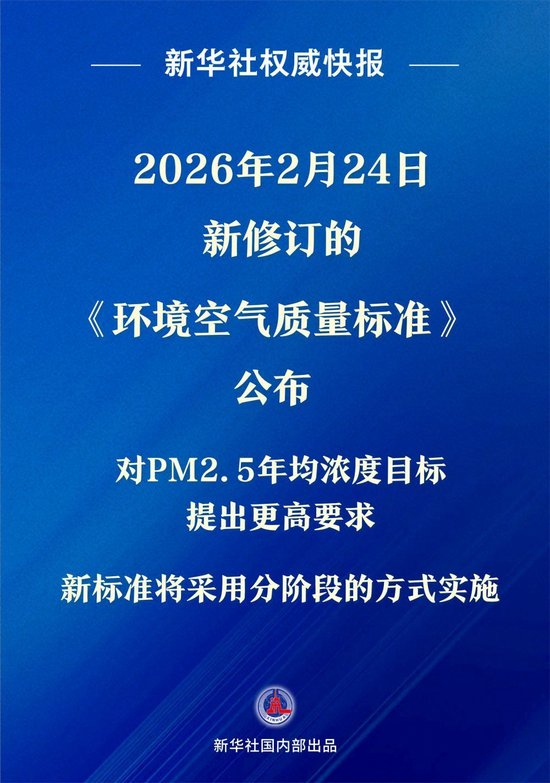
环境空气质量新标发布,“好天气”标准将更严格
Xin Hua Cai Jing· 2026-02-24 23:58
Core Viewpoint - The Ministry of Ecology and Environment and the State Administration for Market Regulation have jointly released revised air quality standards, tightening the concentration limits for particulate matter and its precursors to better protect public health [1][2]. Group 1: Revised Standards - The new standards set the annual PM2.5 concentration limit to 10 micrograms per cubic meter for Level 1 and 25 micrograms per cubic meter for Level 2, with daily limits of 25 and 50 micrograms per cubic meter respectively [1]. - The previous standards were established in 2012, and the new revisions reflect a significant tightening of limits for PM10, sulfur dioxide (SO2), and nitrogen dioxide (NO2) [1]. Group 2: Implementation Phases - The standards will be implemented in two phases: the first phase from March 1, 2026, to December 31, 2030, will have transitional concentration limits for PM2.5 and PM10 [2]. - The second phase, starting January 1, 2031, will enforce the revised concentration limits nationwide [2]. Group 3: Expected Impacts and Benefits - The revision is expected to lead to a decrease in the proportion of cities meeting air quality standards, but this does not indicate a deterioration in air quality; rather, it reflects the higher standards being set [3]. - The implementation of the new standards is anticipated to drive a continuous decline in PM2.5 levels, reducing health risks, particularly for vulnerable populations [3]. - The standards are projected to facilitate the development of clean energy and new energy vehicles, promoting a green and low-carbon transition in key industries, with an expected reduction of over 7 billion tons of carbon dioxide from 2026 to 2035 [3].
环境空气质量新国标来了
Xin Lang Cai Jing· 2026-02-24 17:17
Core Viewpoint - The Ministry of Ecology and Environment and the State Administration for Market Regulation have jointly released the revised "Ambient Air Quality Standards" (GB 3095-2026), which will impose stricter standards for air quality to better protect public health [1]. Group 1: Revised Standards - The revised standards tighten the concentration limits for particulate matter and its main precursors, adjusting the annual average concentration limit for PM2.5 to 10 micrograms per cubic meter for Level 1 and 25 micrograms per cubic meter for Level 2 [1]. - The daily average concentration limits for PM2.5 are set at 25 micrograms per cubic meter for Level 1 and 50 micrograms per cubic meter for Level 2 [1]. - The concentration limits for PM10, sulfur dioxide (SO2), and nitrogen dioxide (NO2) have also been tightened [1]. Group 2: Implementation Phases - The new standards will be implemented in phases, with the first phase starting from March 1, 2026, to December 31, 2030, during which the transitional concentration limits for PM2.5 will be 30 micrograms per cubic meter for annual average and 60 micrograms per cubic meter for daily average [1]. - The second phase will commence on January 1, 2031, when the revised concentration limits for PM2.5, PM10, SO2, and NO2 will be enforced nationwide [1].
新华社权威快报丨环境空气质量新国标来了!“好天气”标准更严
Xin Hua She· 2026-02-24 12:45
Core Points - The newly revised "Ambient Air Quality Standards" (GB 3095—2026) has been jointly released by the Ministry of Ecology and Environment and the State Administration for Market Regulation, indicating stricter standards for "good weather" to better protect public health [3] Group 1: PM2.5 Standards - The annual average concentration limit for PM2.5 has been adjusted to 10 micrograms per cubic meter for the first level and 25 micrograms per cubic meter for the second level [3] - The daily average concentration limit for PM2.5 has been set to 25 micrograms per cubic meter for the first level and 50 micrograms per cubic meter for the second level [3] Group 2: Implementation Phases - The new standards will be implemented in phases, with the first phase starting from March 1, 2026, to December 31, 2030, where the transitional concentration limits for PM2.5 will be 30 micrograms per cubic meter for the annual average and 60 micrograms per cubic meter for the daily average [3] - The second phase will commence on January 1, 2031, enforcing the revised concentration limits for PM2.5, PM10, SO2, and NO2 nationwide [3]
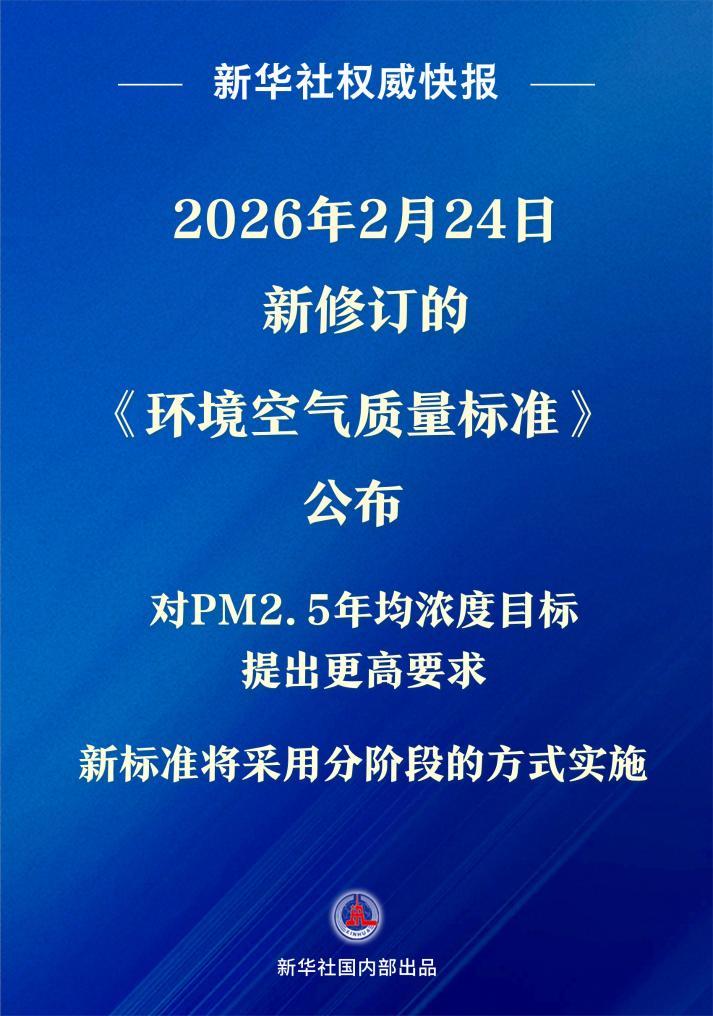
国务院常务会议听取2025年国务院部门办理全国人大代表建议和全国政协提案工作情况汇报等
Xin Hua She· 2026-02-09 06:26
Group 1 - The meeting emphasized the importance of promoting effective investment for stabilizing economic growth and enhancing development momentum [2] - It was highlighted that innovative policies and measures should be implemented to effectively utilize central budget investments, long-term special bonds, and local government special bonds [2] - The meeting discussed the need to plan and promote major projects in key areas such as infrastructure, urban renewal, public services, and emerging industries [2] Group 2 - The revised "Environmental Air Quality Standards" set higher annual average concentration targets for PM2.5, reflecting significant improvements in air quality in recent years [2] - The meeting called for better planning and policy support to align with the new standards, enhancing governance effectiveness to protect the environment [2] - The draft revision of the "Bidding and Tendering Law" was discussed and approved in principle, aiming to reform the bidding system and improve transparency [2]
国务院常务会议解读丨我国部署修订环境空气质量标准
Xin Hua She· 2026-02-09 01:20
Group 1 - The State Council meeting on February 6 announced the revision of the "Ambient Air Quality Standards," setting higher targets for annual PM2.5 concentration [1] - Under the current standards, China's air quality has significantly improved, with a projected PM2.5 average concentration of 28 micrograms per cubic meter by 2025, a year-on-year decrease of 4.4% [1] - The proportion of good air quality days is expected to reach 89.3% by 2025, an increase of 1.9 percentage points year-on-year [1] Group 2 - The Ministry of Ecology and Environment emphasized the need for standard revisions to enhance public health and support the goal of a "Beautiful China" [1] - The revised standards will focus on PM2.5 pollution, aiming for continuous reduction during the 14th Five-Year Plan period, with a cumulative decrease of 20% in PM2.5 concentration and a 25% reduction in heavy pollution days [1] - The meeting highlighted the importance of planning and policy support to ensure effective implementation of the new standards, including financial, technological, and regulatory measures [2]
守护美丽蓝天,我国部署修订环境空气质量标准
Xin Hua She· 2026-02-07 07:32
Core Viewpoint - The State Council's meeting on February 6 announced the revision of the "Ambient Air Quality Standards," setting higher targets for annual PM2.5 concentration levels to further improve air quality in China [1][2]. Group 1: Air Quality Improvement - Under the current air quality standards, China's air quality has significantly improved, with the national average PM2.5 concentration projected to be 28 micrograms per cubic meter by 2025, a year-on-year decrease of 4.4% [1]. - The proportion of days with good air quality is expected to reach 89.3% by 2025, an increase of 1.9 percentage points year-on-year [1]. - During the "14th Five-Year Plan" period, the cumulative reduction in PM2.5 concentration is targeted at 20%, with the best levels of good air quality days recorded since monitoring began, and a 25% reduction in heavy pollution days [1]. Group 2: Policy and Implementation - The revision aims to enhance the guiding role of air quality standards, focusing on the continuous reduction of PM2.5 concentrations and promoting structural optimization and refined pollution control [1][2]. - The Ministry of Ecology and Environment emphasizes the need for a smooth transition while ensuring stable economic and social operations, with gradual implementation of supporting policies, funding, and technical methods for air quality compliance [2]. - The revised standards will establish reasonable limit values and create a scientific framework to improve air management and pollution control effectiveness [2].