
《胥马》

Search documents
中国最早“战国马经”重现于世
Xin Lang Cai Jing· 2026-02-25 11:47
Core Insights - The release of the "Tsinghua University Collection of Warring States Bamboo Slips (Volume 15)" includes five bamboo texts related to horses, which are significant for the study of pre-Qin technology and culture [1][4]. Group 1: Historical Significance - The bamboo slips date back to a period earlier than the Mawangdui silk texts, indicating that the knowledge of horse breeding and care was documented much earlier than previously thought [4]. - The earliest known horse-related literature in China dates back to 4000-3500 years ago, with the term "horse classics" used to describe the accumulated knowledge on horse breeding [4]. Group 2: Content of the Bamboo Slips - The five bamboo texts include "Xu Ma," which serves as a guide for selecting horses, detailing various horse breeds and their characteristics [5][6]. - "Fan Ma Zhi Ji" is a medical text that documents various horse diseases and their treatments, making it the earliest known literature on veterinary care for horses [9]. - "Xun Ma" is a training manual for horse trainers, emphasizing the importance of proper exercise and diet for horses [10][11]. Group 3: Research and Preservation Efforts - The Tsinghua University team has been working for over a decade on the preservation and research of these bamboo slips, which were found in a well-preserved state due to their burial conditions [12][14]. - The bamboo slips are currently being preserved in a water environment, and the research team is focused on restoring and interpreting the texts for broader dissemination [14][15].

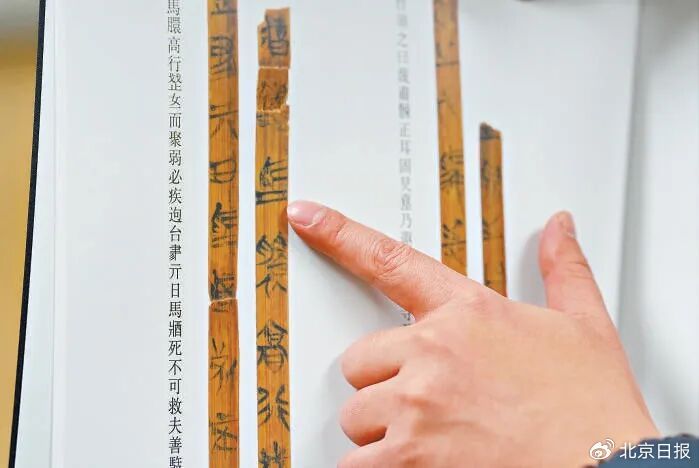
张传官:马年说马
Xin Lang Cai Jing· 2026-02-16 00:27
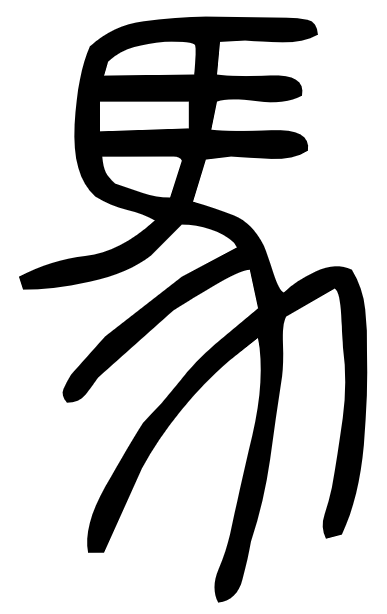
Core Insights - The article discusses the significance of horses in ancient Chinese culture, particularly their representation in the classic text "Shuo Wen Jie Zi" and the development of horse-related terminology and practices over time [1][6][12]. Group 1: Historical Significance of Horses - Horses were crucial in ancient life, serving as essential labor animals for transportation, agriculture, and military purposes, reflecting their status as "the foremost of the six domestic animals" [6][12]. - The character for "horse" in ancient Chinese was an ideogram that depicted the horse's physical features, showcasing the meticulous observation of horses by ancient people [3][5]. Group 2: Horse Terminology and Classification - The "horse" radical in "Shuo Wen Jie Zi" includes over 115 characters related to horses, indicating a comprehensive classification based on age, height, and function [5][6]. - Various terms describe the speed and characteristics of horses, demonstrating the detailed understanding and categorization of horses by ancient scholars [5][6]. Group 3: Horse Evaluation Techniques - The practice of "xiang ma" (horse evaluation) emerged as a specialized skill, focusing on assessing horses' physical traits to determine their quality [7][8]. - Historical figures like Bo Le and Jiu Fang Gao are noted for their expertise in horse evaluation, indicating the cultural importance of this practice in ancient China [8][12]. Group 4: Ancient Texts and Artifacts - Significant texts such as the "Xiang Ma Jing" and "Xu Ma" provide insights into horse evaluation methods and terminology, reflecting the sophistication of ancient equine knowledge [13][15]. - Artifacts like the bronze horse models (ma shi) were created to standardize horse evaluation, highlighting the importance of horses in governance and military strategy [19][22]. Group 5: Veterinary Practices - Ancient texts reveal a strong emphasis on veterinary care for horses, with documented methods for treating various ailments, showcasing the advanced understanding of equine health [63][64]. - The role of monkeys in protecting horses from disease is noted, illustrating cultural beliefs surrounding animal health management [64][65].
这些战国竹简,与“马”有关
Xin Lang Cai Jing· 2026-02-01 20:19
Core Insights - The recent publication by Tsinghua University reveals significant ancient texts on horse management, including techniques for horse selection, care, training, and driving, which are crucial for understanding ancient Chinese equestrian practices [1][2][3]. Group 1: Key Texts and Their Significance - The collection includes five important texts: "Xu Ma," "Fan Ma Zhi Ji," "Xun Ma," "Yu Shu," and "Yu Ma Zhi Dao," which are the earliest known writings on horse management in China [1][2]. - "Xu Ma" focuses on horse selection techniques, detailing 12 types of horses and their distinguishing features, providing valuable insights into ancient horse breeding and animal archaeology [1]. - "Fan Ma Zhi Ji" documents various horse diseases and symptoms, marking it as the earliest specialized text on veterinary practices in ancient China [1]. - "Xun Ma" summarizes horse training experiences, emphasizing the relationship between training and feeding, indicating that ancient practices already recognized the importance of proper care for horse health [1]. - "Yu Shu" systematically introduces techniques for driving horses, filling a gap in ancient literature regarding practical driving skills, and highlighting the complexity of ancient equestrian techniques [2]. - "Yu Ma Zhi Dao" discusses general principles of horse management, reflecting connections to the Legalist school of thought during the Warring States period [2]. Group 2: Broader Implications - The texts are crucial for understanding the development of transportation and military capabilities in ancient China, as horse domestication and management directly influenced these areas [2]. - The publication of these texts contributes significantly to the study of equestrian history, veterinary history, and the agricultural practices of the Warring States period [2][3]. - Tsinghua University plans to release a total of 16 volumes of these ancient texts, with the project nearing completion, aiming to provide comprehensive access to this important cultural heritage [3].