《相马经》

Search documents
金戈铁马 驰骋东西(上新了)
Ren Min Ri Bao· 2026-02-28 02:24
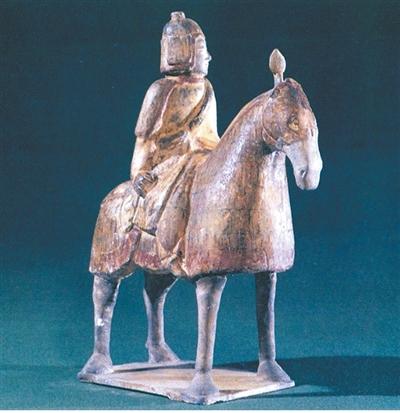
Core Insights - The new exhibition at the Chinese Archaeological Museum features 28 newly displayed ceramic figurines from the Northern Qi Dynasty, revealing insights into the royal tombs of the Eastern Wei and Northern Qi periods [2] Group 1: Archaeological Findings - The Bayang Wall Mural Tomb is the only confirmed imperial tomb among hundreds in the region, with excavation work conducted from 1987 to 1989 [2] - The tomb yielded significant artifacts, including 6 large saddles, 14 small horses, and 4 pack horses, indicating the use of horses for labor and transportation [2] - The emergence of domesticated horses in China dates back approximately 4,000 years, with evidence found in various archaeological sites [2] Group 2: Historical Context - During the pre-Qin period, horses served three main purposes: as burial and sacrificial items, as draft animals for carts, and for riding, particularly in warfare [3] - The importance of horses increased significantly from the Western Han Dynasty, with widespread ownership and use in various societal functions [3] Group 3: Military Significance - By around 600 BC, horseback riding became prevalent among Eurasian steppe peoples, leading to the development of mounted archery and a powerful military force [4] - The introduction of cavalry transformed warfare, with heavy cavalry units equipped with armor, as evidenced by the discovery of armored figurines in the Bayang Wall Mural Tomb [4] - The tomb is notable for its extensive wall murals and a large number of ceramic figurines, including over 200 cavalry figurines, reflecting the military organization of the Northern Qi Dynasty [5]

张传官:马年说马
Xin Lang Cai Jing· 2026-02-16 00:27
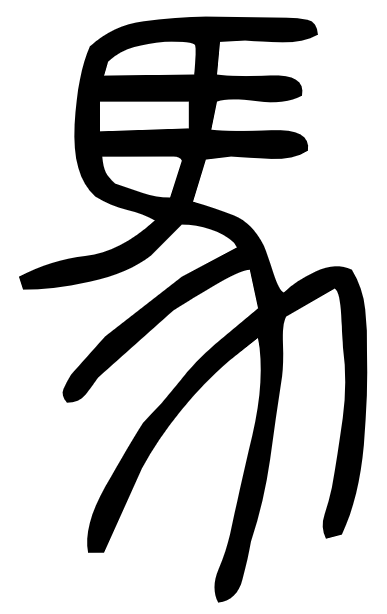
Core Insights - The article discusses the significance of horses in ancient Chinese culture, particularly their representation in the classic text "Shuo Wen Jie Zi" and the development of horse-related terminology and practices over time [1][6][12]. Group 1: Historical Significance of Horses - Horses were crucial in ancient life, serving as essential labor animals for transportation, agriculture, and military purposes, reflecting their status as "the foremost of the six domestic animals" [6][12]. - The character for "horse" in ancient Chinese was an ideogram that depicted the horse's physical features, showcasing the meticulous observation of horses by ancient people [3][5]. Group 2: Horse Terminology and Classification - The "horse" radical in "Shuo Wen Jie Zi" includes over 115 characters related to horses, indicating a comprehensive classification based on age, height, and function [5][6]. - Various terms describe the speed and characteristics of horses, demonstrating the detailed understanding and categorization of horses by ancient scholars [5][6]. Group 3: Horse Evaluation Techniques - The practice of "xiang ma" (horse evaluation) emerged as a specialized skill, focusing on assessing horses' physical traits to determine their quality [7][8]. - Historical figures like Bo Le and Jiu Fang Gao are noted for their expertise in horse evaluation, indicating the cultural importance of this practice in ancient China [8][12]. Group 4: Ancient Texts and Artifacts - Significant texts such as the "Xiang Ma Jing" and "Xu Ma" provide insights into horse evaluation methods and terminology, reflecting the sophistication of ancient equine knowledge [13][15]. - Artifacts like the bronze horse models (ma shi) were created to standardize horse evaluation, highlighting the importance of horses in governance and military strategy [19][22]. Group 5: Veterinary Practices - Ancient texts reveal a strong emphasis on veterinary care for horses, with documented methods for treating various ailments, showcasing the advanced understanding of equine health [63][64]. - The role of monkeys in protecting horses from disease is noted, illustrating cultural beliefs surrounding animal health management [64][65].
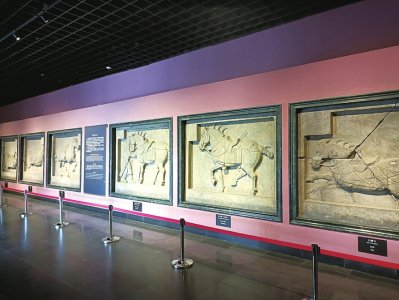
传说中那些名马有多飒?
Xin Lang Cai Jing· 2026-02-13 18:32
Core Perspective - The articles explore the significance of horses in Chinese civilization, highlighting their roles as symbols of power, nobility, and auspiciousness throughout history. They detail various legendary horses and their associations with emperors and historical figures, emphasizing the cultural and strategic importance of these steeds in ancient China [2][6][8]. Group 1: Mythical and Historical Horses - The articles describe mythical horses such as the "腾黄" (Teng Huang) and "飞兔" (Fei Tu), which are believed to possess extraordinary abilities and longevity, symbolizing auspiciousness in ancient texts [2][3]. - Historical accounts mention the "穆王八骏" (Eight Steeds of King Mu), each with unique attributes, showcasing the legendary status of these horses in the context of imperial power [5][6]. - The "昭陵六骏" (Six Steeds of Zhao Ling) are noted for their association with Emperor Taizong of the Tang Dynasty, reflecting the military prowess and cultural significance of these horses [7][8]. Group 2: Horses as Strategic Assets - Horses are identified as crucial strategic resources in ancient warfare, with notable steeds like the "七骏" (Seven Steeds) of Qin Shi Huang symbolizing the might of the Qin Dynasty [6][7]. - The articles highlight the role of horses in the expansion of empires, with specific breeds like the "汗血马" (Sweat Blood Horse) being introduced to enhance military capabilities and facilitate cultural exchanges [7][8]. - The significance of horses extends to their representation in art and literature, with various dynasties commissioning artworks to commemorate these legendary animals, further embedding them in the cultural fabric of Chinese history [9][10].