《赛马娘》

Search documents
TGA把我干懵了——《33号远征队》横扫9大奖,创下纪录
3 6 Ke· 2025-12-12 08:48
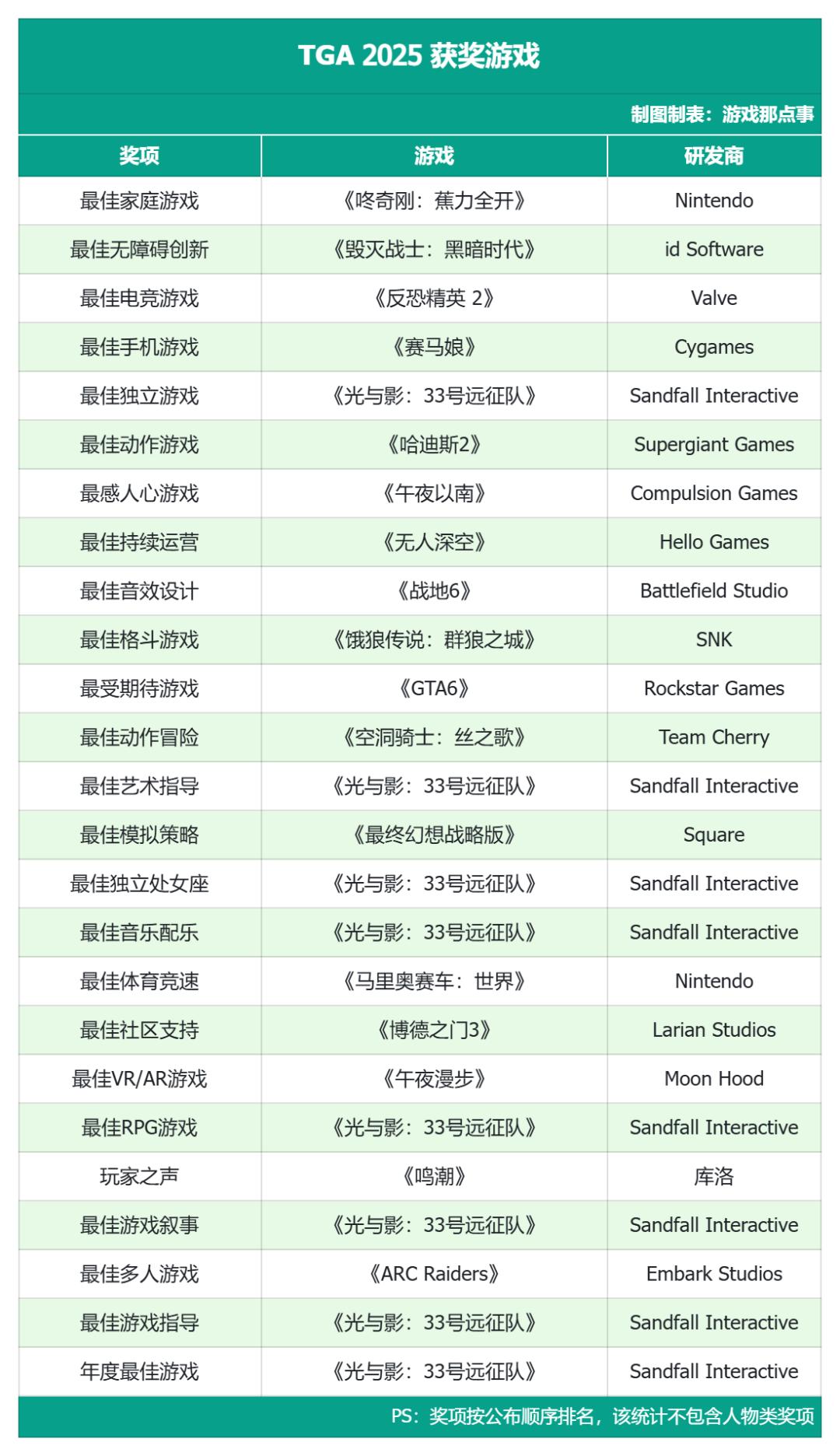
Core Insights - The 2025 TGA (The Game Awards) has been criticized as one of the worst editions, despite the anticipated winner being "33号远征队" [1][4][24] - The awards have sparked significant debate among players regarding the selection process and the perceived importance of TGA in the gaming industry [9][11][31] Award Summary - Best Family Game: "咚奇刚:蕉力全开" by Nintendo [3] - Best Accessibility Innovation: "毁灭战士:黑暗时代" by id Software [3] - Best Esports Game: "反恐精英 2" by Valve [3] - Best Mobile Game: "赛马娘" by Cygames [3] - Best Independent Game: "光与影:33号远征队" by Sandfall Interactive [3] - Best Action Game: "哈迪斯2" by Supergiant Games [3] - Most Emotional Game: "午夜以南" by Compulsion Games [3] - Best Ongoing Game: "无人深空" by Hello Games [3] - Best Sound Design: "战地6" by Battlefield Studio [3] - Best Fighting Game: "饿狼传说:群狼之城" by SNK [3] - Most Anticipated Game: "GTA6" by Rockstar Games [3] - Best Action-Adventure: "空洞骑士:丝之歌" by Team Cherry [3] - Best Art Direction: "光与影:33号远征队" by Sandfall Interactive [3] - Best Simulation Strategy: "最终幻想战略版" by Square [3] - Best Independent Debut: "光与影:33号远征队" by Sandfall Interactive [3] - Best Music Score: "光与影:33号远征队" by Sandfall Interactive [3] - Best Sports Racing: "马里奥赛车:世界" by Nintendo [3] - Best Community Support: "博德之门3" by Larian Studios [3] - Best VR/AR Game: "午夜漫步" by Moon Hood [3] - Best RPG Game: "光与影:33号远征队" by Sandfall Interactive [3] - Best Game Narrative: "光与影:33号远征队" by Sandfall Interactive [4] - Best Multiplayer Game: "ARC Raiders" by Embark Studios [4] - Best Game Direction: "光与影:33号远征队" by Sandfall Interactive [4] - Game of the Year: "光与影:33号远征队" by Sandfall Interactive [4] Industry Context - The TGA has faced ongoing criticism regarding its relevance and the selection process, with many players questioning the significance of the awards [11][24][31] - The awards are perceived as being heavily influenced by Western media and industry standards, which may not fully represent the global gaming landscape [23][35] - Despite criticisms, TGA remains a significant platform for global exposure, especially for Chinese games, which are increasingly impacting the awards' narrative and selection criteria [32][36][40]

日本手游泡沫的破灭和米哈游的第二次冲击
3 6 Ke· 2025-10-09 08:59
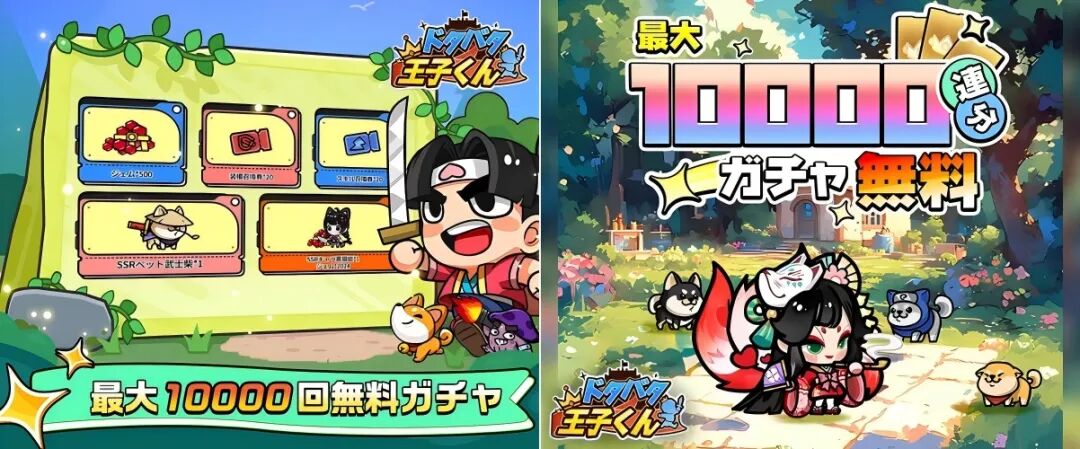
Group 1 - The Japanese mobile game industry has a unique development trajectory, originating from social games that thrived post-2007, with market size growing from 4.9 billion yen to 342.9 billion yen within five years [2] - The rise of social games led to a bubble, characterized by high costs and a surge in game failures, resulting in significant job losses and a shift towards outsourcing [3] - The first bubble burst in the social game sector was accelerated by the proliferation of smartphones, leading to a decline in social games, which were later replaced by mobile games with character collection and gacha mechanics [3] Group 2 - The introduction of smartphones allowed for more complex storytelling in games, with titles like "Chain Chronicle" and "Granblue Fantasy" setting new standards for narrative depth in mobile games [19][22] - The success of "Fate/Grand Order" (FGO) in 2015 marked a turning point, emphasizing the importance of narrative in mobile games and leading to a surge in demand for game scripts [25][37] - The influx of Chinese mobile games into the Japanese market, such as "Knives Out" and "Azur Lane," has disrupted the traditional Japanese mobile game landscape, leading to a decline in revenue for local companies [66][69] Group 3 - The Japanese mobile game industry is facing a crisis, with many companies experiencing revenue declines and struggling to adapt to changing consumer preferences [69][70] - The concept of "social game bubble burst" has been reintroduced, highlighting the industry's challenges in meeting the evolving demands of players for richer experiences and higher production values [81] - The competitive landscape is shifting, with companies needing to invest in high-quality narratives and production values to remain relevant in the face of successful foreign titles like "Genshin Impact" [75][80]


日本游戏市场的钱,正被中国厂商悄悄赚走
3 6 Ke· 2025-09-25 11:05
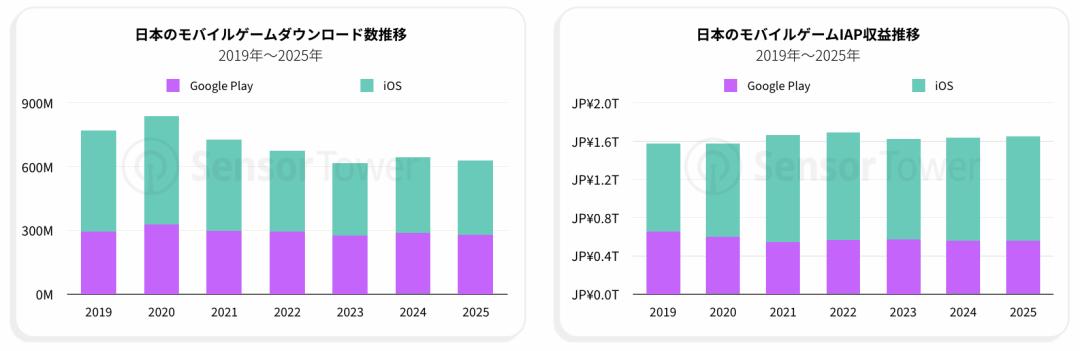
Market Overview - The total revenue from in-app purchases (IAP) in the Japanese mobile gaming market is projected to be $11 billion (approximately 78.2 billion RMB) from August 2024 to July 2025, reflecting a year-on-year decline of 2.2% [1] - Despite a slight market contraction and a 2.5% decrease in downloads, the market remains stable due to a high average revenue per user (ARPU) and effective monetization strategies, maintaining annual revenue above 1.6 trillion yen (approximately 77.2 billion RMB) since 2021 [1] Category Performance - RPG games continue to dominate the Japanese mobile gaming market, contributing 37.4% of total revenue, with titles like "Uma Musume," "Monster Strike," and "FGO" leading the revenue charts [3] - Strategy games rank second with a 21.8% revenue contribution, driven by 4X strategy games like "Last War: Survival" and "Whiteout Survival," which saw a 35% revenue increase, and the card battle game "Pokémon TCG Pocket," which achieved a 305% revenue surge [5] - Casual puzzle games are the primary drivers of download volume, accounting for 33.2% of total downloads, with games like "Car Jam" and "Screw Sort 3D" experiencing over 70% year-on-year growth in downloads [5] IP Importance - Local IPs play a crucial role in the Japanese gaming market, with the "Pokémon" IP achieving a 32% year-on-year revenue increase due to the success of "Pokémon TCG Pocket" [10] - The "Gundam" IP, through the new release "SD Gundam GGENERATION ETERNAL," saw over 800% year-on-year growth, highlighting the effective operational strategies that enhance IP value [10][12] Publisher Landscape - Japanese publishers dominate the market, contributing over 52% of total IAP revenue while accounting for only 31% of downloads [14] - Major Japanese companies like Bandai Namco, Sega, and Capcom rank among the top ten global publishers on Steam, indicating strong influence in the PC and console gaming markets [14] - Overseas publishers adopt differentiated strategies to penetrate the Japanese market, focusing on core paying users and launching casual games that appeal to a broader audience [16][18] Advertising Strategies - The gaming sector is a leading category for digital advertising in Japan, with significant ad spending and display volume [19] - LINE is the most prominent channel for game advertising, with successful campaigns often aligning with major in-game events [19][20] - Targeted advertising strategies are employed, such as "Whiteout Survival," which focuses on male users aged 25-34, utilizing platforms like TikTok and Instagram to resonate with younger audiences [22]
深刻?自嘲?招笑?揭开简中“动漫婆罗门”的尴尬困境
Hu Xiu· 2025-07-18 08:26
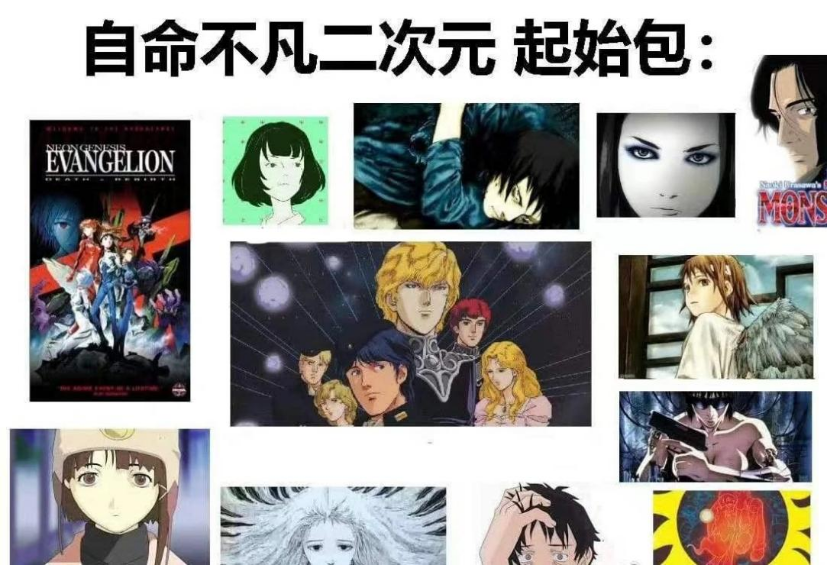
Core Viewpoint - The article discusses the concept of "Anime Brahmin," a term that has evolved within the Chinese online anime community, often carrying a negative connotation, and explores its implications on cultural identity and community dynamics [2][9][24]. Group 1: Definition and Characteristics of Anime Brahmin - "Anime Brahmin" refers to a group of anime enthusiasts who exhibit a sense of superiority based on their extensive knowledge and experience with older anime works, often criticizing contemporary anime and its fans [12][17]. - The term originates from the Indian caste system, representing the highest social class, and was adapted to describe a specific demographic within the anime community in China [10][11]. - Three main characteristics define the Anime Brahmin: 1. Accumulation of cultural capital and knowledge, often favoring older works from the 1980s and 1990s [12][14]. 2. Establishing group identity through exclusive language and references, creating a divide between themselves and newer fans [15][17]. 3. A critical stance towards contemporary anime, viewing it as overly commercialized and lacking depth compared to classic works [17][24]. Group 2: Cultural Capital and Community Dynamics - The concept of cultural capital, as defined by Pierre Bourdieu, helps explain the Anime Brahmin's authority within the community, encompassing embodied, objectified, and institutionalized forms of capital [29][30]. - The historical context of the Anime Brahmin's emergence is tied to the early exposure of certain users to Japanese anime during its introduction to China, which shaped their cultural identity and knowledge base [31][32]. - The article highlights the tension between older and newer anime fans, as the influx of new viewers with different tastes challenges the established norms and preferences of the Anime Brahmin [45][46]. Group 3: Social Perception and Vulnerability - The Anime Brahmin's elitism is often met with criticism, as their perceived superiority can lead to social alienation within the broader anime community [38][39]. - The article notes that the anime culture has historically been marginalized, which contributes to the vulnerability of the Anime Brahmin as they seek recognition and legitimacy [35][40]. - The negative stereotypes associated with "otaku" culture further complicate the Anime Brahmin's social standing, as they navigate the duality of seeking validation while facing societal stigma [41][44].