《雍正王朝》

Search documents
历史正剧何以强势回潮
Xin Lang Cai Jing· 2026-02-13 04:51
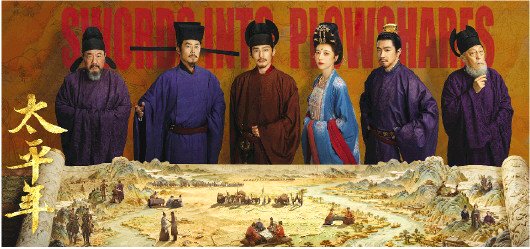
Core Viewpoint - The historical drama "Tai Ping Nian" has achieved significant success with a viewership rating exceeding 2.696%, highlighting the enduring appeal of historical dramas in the current television market [1] Group 1: Historical Drama Market Trends - The rise of "Tai Ping Nian" indicates a resurgence in high-quality historical dramas, contrasting with the previous trend of low-quality productions that often relied on superficial storytelling and star power [1][2] - Historical dramas have faced challenges due to high production costs and the shift towards more commercially viable content, leading to a decline in the quality of many productions [1][2] - Despite the dominance of low-quality productions, there remains a strong audience demand for well-crafted historical narratives, as evidenced by the renewed interest in classics like "Da Ming Wang Chao 1566" [2] Group 2: Production Insights - "Tai Ping Nian" benefited from a rigorous development process, with three years dedicated to script refinement and a total production cycle of five years, underscoring the commitment required for quality historical storytelling [2] - The current generation shows a strong affinity for traditional culture, providing a substantial market for historical dramas that are both authentic and engaging [2] Group 3: Creative Challenges and Opportunities - The balance between historical accuracy and artistic interpretation remains a critical focus in historical drama production, with the potential for creative tension to enhance the genre's appeal [3] - There is a need for a supportive environment for historical drama creators to thrive, free from undue criticism that may arise from misinterpretations of historical narratives [3] - The industry is encouraged to foster a new wave of high-quality historical dramas that can resonate with contemporary audiences while honoring the depth of China's rich history [3]
历史剧何以持续吸引观众
Xin Lang Cai Jing· 2026-01-25 19:17
Core Viewpoint - The historical drama "Tai Ping Nian" officially premiered on January 23, 2024, and is supported by the Ministry of Culture and the National Radio and Television Administration, focusing on the historical narrative of the Wu-Yue Kingdom during the Five Dynasties and Ten Kingdoms period, highlighting the character of Qian Hongchu and his contributions to achieving peace in the realm [2][3][4]. Group 1: Historical Narrative - "Tai Ping Nian" narrates the story of Qian Hongchu, who grows into a responsible leader during a tumultuous historical period, ultimately aiding in the unification under the Northern Song Dynasty [3]. - The series explores the relationships between historical figures such as Qian Hongchu, Zhao Kuangyin, and Guo Rong, emphasizing their difficult choices amidst the historical upheaval [3][4]. - The narrative structure is designed to reflect the transition from chaos to peace, encapsulating the governance of the Wu-Yue Kingdom and the political changes in the Central Plains [3]. Group 2: Production Quality - The production team invested years in historical research, creating over 550 diverse sets and designing more than 8,000 costumes to ensure historical accuracy [4]. - The series employs ultra-high-definition technology to present a cinematic quality, vividly depicting historical scenes and landscapes [4]. - Directed by Yang Lei, known for "The Three-Body Problem," the series aims to portray the individual desires for peace during chaotic times through meticulous historical research [4]. Group 3: Thematic Focus - Unlike previous historical dramas that often center on palace intrigue and warfare, "Tai Ping Nian" emphasizes the profound significance of the decision to "return the land to Song" made by Qian Hongchu, reflecting a deep commitment to the welfare of the people [5]. - The choice of historical period, the Five Dynasties and Ten Kingdoms, is significant as it represents a time of instability, yet the Wu-Yue Kingdom maintained relative peace and prosperity under the Qian family [5][6]. - The series aims to avoid stereotypical portrayals of characters, focusing instead on the complex relationships and motivations of over 200 named characters [8][9]. Group 4: Future Prospects - The success of "Tai Ping Nian" may set a precedent for future historical dramas, with several projects already in the pipeline, indicating a potential resurgence in the genre [9].

从互联网传播学角度,聊聊“洪玄烨”这个梗的爆红
虎嗅APP· 2025-11-10 13:19
Core Viewpoint - The article discusses the viral phenomenon of the "Hong Xuan Ye" meme, exploring its roots in internet culture and the changing perceptions of historical figures, particularly during the Qing Dynasty and the Three Kingdoms period [5][8]. Group 1: Internet Meme and Cultural Shifts - The "Hong Xuan Ye" meme gained widespread popularity, reflecting a significant shift in public sentiment towards the Qing Dynasty, with users expressing disdain for historical figures like Kangxi [5][8]. - The meme's success is attributed to its sensational nature, tapping into human curiosity about historical gossip, which resonates even with those indifferent to history [11][12]. - The article notes that the meme serves as a vehicle for users to vent their frustrations with the Qing Dynasty, indicating a broader trend of negative sentiment towards this historical period [8][10]. Group 2: Historical Representation in Media - The failure of the animated film "The Stars of the Three Kingdoms" is analyzed, suggesting that its portrayal of Cao Cao as a positive character clashed with current audience preferences, leading to poor box office performance [6][7]. - The article argues that if the film had focused on Liu Bei instead, it could have significantly improved its reception and financial success, highlighting the importance of aligning historical narratives with contemporary audience sentiments [7][8]. - The changing perceptions of historical figures, such as the rise of support for the Shu Han faction over the Wei faction, illustrate the evolving landscape of historical interpretation in popular media [10][12]. Group 3: Audience Engagement and Market Dynamics - The article emphasizes that creators must adapt to the rapidly changing opinions of internet users, as the current environment is characterized by a "fandom culture" where loyalty to specific historical narratives is paramount [12][14]. - It suggests that attempts to alter public perception through artistic works are often futile, as audiences seek content that reflects their existing beliefs rather than challenges them [14]. - The need for creators to navigate these dynamics carefully is underscored, as failure to do so can result in commercial failure and negative reception [13][14].