
流量经济

Search documents
为AI的创造性“破坏”未雨绸缪
第一财经· 2026-03-19 14:48
Core Viewpoint - The article discusses the significant price increases in AI computing power and storage services by major Chinese cloud providers, marking the end of a two-decade trend of continuous price declines due to the explosive demand for AI and supply chain price hikes [2][3]. Price Increase Factors - Alibaba Cloud announced price hikes of up to 34% for AI computing and storage products due to surging global AI demand and rising supply chain costs [2]. - Baidu Smart Cloud also raised prices for AI computing services by 5% to 30%, with file storage services increasing by approximately 30% [2]. - Tencent Cloud's recent price increases contribute to a broader trend among domestic cloud markets, indicating a historic price adjustment period [2]. Impact of AI on Business Models - The rise of AI, particularly through tools like OpenClaw, is rapidly altering existing business models, especially the prevalent "free front-end, paid back-end" model in platform economies [3][4]. - The demand for AI computing power from various agents is increasing the marginal costs of the flow economy, making price adjustments a natural market response [4]. Challenges to Traditional Platforms - Agents like Claw are disrupting the exclusive control that platform companies have over commercial topic-setting capabilities, allowing users to store their preferences locally and seek matches across interconnected networks [5]. - This shift challenges the effectiveness of traditional advertising and ranking models, as the marginal costs of providing free AI computing may not align with the marginal revenues generated from the platform economy [5]. Need for New Business Strategies - Companies must adapt to the new decentralized economic landscape brought about by AI, moving away from traditional flow economy thinking to find suitable profit models in the AI era [6]. - There is a critical need for businesses to innovate and redefine their operational logic in response to the challenges posed by AI, as those who can effectively navigate this transformation will gain a competitive edge in the AI economy [6].





出游流行“新中式”,跟着年俗打卡受热捧
Xin Lang Cai Jing· 2026-02-26 19:41
Core Insights - The article highlights the resurgence of traditional cultural activities during the Spring Festival, particularly through new forms of Spring Temple Fairs that combine cultural experiences, trendy interactions, and immersive activities, significantly boosting consumer engagement [1][4]. Group 1: Cultural Activities and Consumer Engagement - Various cultural activities, such as Spring Temple Fairs and intangible cultural heritage experiences, have become popular choices for people seeking traditional festive atmospheres, leading to a notable increase in experiential tourism demand [3][4]. - The Ministry of Commerce and other departments launched the "Happy Shopping Spring Festival" initiative, supporting local events like fairs and exhibitions, which attracted approximately 75.99 million visitors and generated a consumption of 5.934 billion yuan during the holiday [1][3]. Group 2: Youth Engagement and Market Trends - The demand for intangible cultural heritage experiences surged, with a 180% increase in search volume during the Spring Festival, particularly among the post-2000 generation, indicating a strong interest in traditional culture among younger consumers [5]. - Brands are increasingly integrating traditional cultural elements into trendy products, creating a bridge between heritage and modern consumer preferences, as seen in the popularity of items like zodiac-themed fridge magnets and themed stamps [2][5]. Group 3: Emotional and Cultural Resonance - The popularity of temple fairs is driven by a dual motivation of cultural recognition and emotional resonance, as families seek to connect generations through these traditional activities [6]. - The rise of national trends has enhanced young people's sense of identity and participation in traditional culture, with temple fairs serving as comprehensive cultural spaces that meet the demand for both cultural depth and trendy expression [6].
港股科技“冰火两重天” 投资逻辑或已深度重构
Zhong Guo Zheng Quan Bao· 2026-02-25 20:57
Core Viewpoint - The Hong Kong stock market is experiencing significant divergence, with the Hang Seng Technology Index declining while AI companies like Zhiyu and MiniMax show strong performance, indicating a potential fundamental restructuring of investment logic in the market [1][3]. Group 1: Market Performance - The Hang Seng Technology Index has seen a cumulative decline of over 20% from its peak in October last year to February 25, 2023, with a further drop of 8% since February [1]. - Major tech stocks such as Tencent, Alibaba, Baidu, and Meituan have experienced significant declines, with Tencent down nearly 14%, Alibaba over 12%, Baidu over 15%, and Meituan nearly 15% since February [1]. - In contrast, AI companies like Zhiyu and MiniMax have seen their stock prices surge, with Zhiyu rising from an issue price of 116.2 HKD to 725 HKD, and MiniMax from 165 HKD to 970 HKD, both reaching market capitalizations exceeding 300 billion HKD [2]. Group 2: Underlying Logic - The divergence in stock performance is attributed to three overlapping logics: macroeconomic factors, industry dynamics, and funding trends [3]. - Macroeconomic concerns, particularly the nomination of a new Federal Reserve chair, have led to fears of tightening global liquidity, impacting liquidity-sensitive assets like tech stocks [3]. - The industry logic reflects a shift in asset pricing as the market begins to reassess corporate value based on "technological generational differences," favoring AI companies over traditional internet giants [4]. Group 3: Investment Sentiment - Traditional internet companies are transitioning from a "growth stock" valuation logic to a "value stock" approach, as they face challenges in maintaining cash flow while investing in AI [5]. - Investors are increasingly drawn to new narratives surrounding AI, with companies like Zhiyu and MiniMax representing future potential rather than current performance [5]. - The fear of obsolescence in internet platforms and the desire to capitalize on the next investment opportunity are driving a revaluation of assets in the market [5]. Group 4: Long-term Implications - The current market divergence is seen as a sign of a fundamental restructuring of investment logic rather than a temporary style switch, driven by disruptive technological innovations [6]. - The shift from a "traffic economy" to an "intelligent economy" is redefining how technology assets are valued, moving from a focus on user traffic to core technological breakthroughs and commercialization speed [6]. - Investment strategies are evolving, with a combination of passive index investments to capture market beta and active management to identify excess alpha becoming increasingly important [8].
港股冰与火:智谱、MiniMax抢眼,互联网巨头为何“沉默”?
Xin Lang Cai Jing· 2026-02-25 05:18
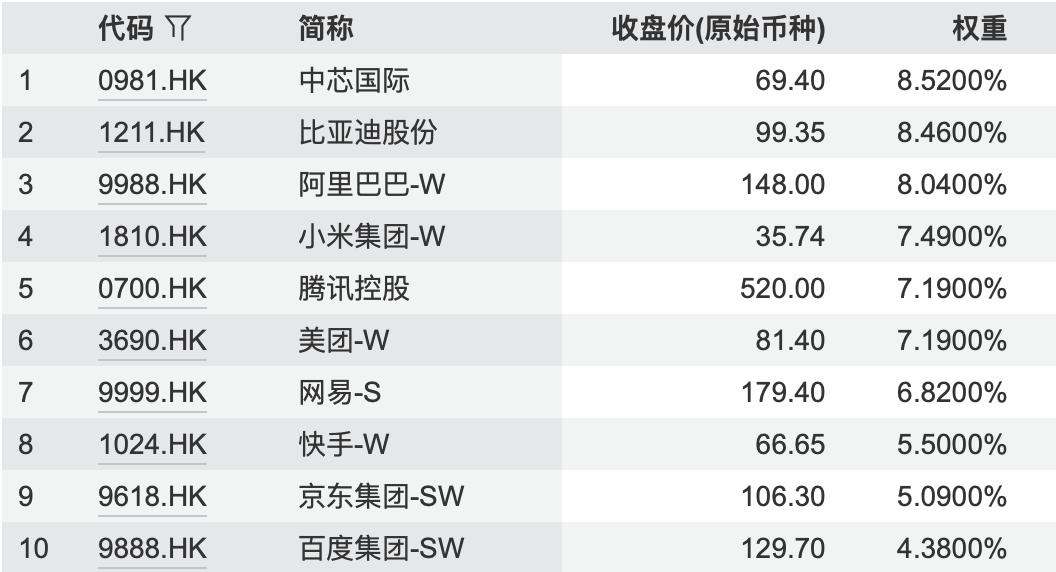
Core Viewpoint - The Hong Kong stock market is experiencing a significant divergence, with the Hang Seng Technology Index declining while AI companies like Zhiyu and MiniMax show strong performance, indicating a potential fundamental restructuring of investment logic in the market [1][3]. Group 1: Market Performance - The Hang Seng Technology Index has seen a cumulative decline of over 20% from its peak in October last year (6715.46 points) to February 24, 2023, with a drop of over 7% since February [1]. - Major tech stocks have underperformed, with Tencent down over 14%, Alibaba down over 12%, Baidu down over 15%, and Meituan down over 16% from early February to February 24 [1]. - The top ten weighted stocks in the Hang Seng Technology Index account for nearly 70% of the index, indicating high concentration and sensitivity to price movements of major players like Alibaba and Tencent [1][2]. Group 2: AI Companies Performance - AI companies such as Zhiyu and MiniMax have seen significant market capitalization increases, with Zhiyu rising from an issue price of 116.2 HKD to 628 HKD (over 440% increase) and MiniMax from 165 HKD to 880 HKD (over 430% increase) as of February 24 [2]. - Both companies have reached market capitalizations exceeding 300 billion HKD, positioning them as representatives of "new technology" in the Hong Kong market [2]. Group 3: Underlying Logic - The divergence in performance is attributed to three overlapping logics: macroeconomic factors, industry dynamics, and funding behavior [3][4]. - Macroeconomic concerns, particularly regarding global liquidity tightening due to the nomination of a new Federal Reserve chair, have negatively impacted tech stocks sensitive to liquidity [4]. - The industry logic reflects a shift in asset pricing as the market begins to reassess corporate value based on "technological generational differences," favoring AI companies over traditional internet giants [4][5]. Group 4: Investment Strategy - The current market sentiment indicates a preference for "new narratives," with funds gravitating towards AI companies that represent future potential rather than current performance [5][6]. - The investment logic is transitioning from "traffic economy" to "intelligent economy," suggesting a fundamental re-evaluation of technology asset valuations [6][7]. - Investors are advised to combine passive index investments to capture market beta with active management strategies to identify excess alpha opportunities in the evolving landscape [8][9].
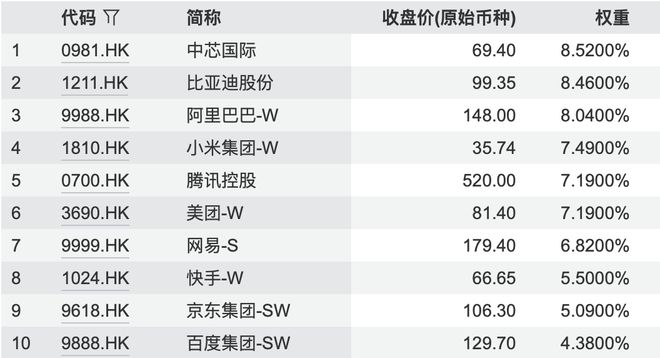
港股冰与火:智谱、MiniMax抢眼 互联网巨头为何“沉默”?
Zhong Guo Zheng Quan Bao· 2026-02-25 04:59
Group 1 - The Hong Kong stock market is experiencing significant divergence, with the Hang Seng Technology Index declining while AI companies like Zhizhu and MiniMax show strong performance and increased capital concentration [1][2] - The Hang Seng Technology Index has dropped over 20% since its peak in October 2022, with major companies like Tencent, Alibaba, Baidu, and Meituan seeing declines of over 12% to 16% [2][3] - The top ten weighted stocks in the Hang Seng Technology Index account for nearly 70% of the index, indicating that movements in a few major stocks can significantly impact the overall index [2][3] Group 2 - The divergence in performance between AI companies and traditional internet giants is attributed to macroeconomic, industry, and funding logic [5][6] - Concerns over tightening global liquidity due to the nomination of a new Federal Reserve chair have negatively impacted technology stocks sensitive to liquidity [5] - The market is shifting its valuation logic from "growth stocks" to "value stocks" for traditional internet companies, while AI companies are being valued based on their potential and technological advancements [6][8] Group 3 - AI companies like Zhizhu and MiniMax have seen substantial increases in market value, with Zhizhu rising over 440% and MiniMax over 430% since their respective IPOs [3][4] - The investment logic in the Hong Kong market is undergoing a fundamental restructuring, moving from "traffic economy" to "intelligent economy," reflecting a shift in how technology assets are valued [8][9] - The capital market is increasingly favoring companies that demonstrate core technological breakthroughs and rapid commercialization, leading to a re-evaluation of traditional business models [8][10]
述评:流量何以“破圈”?真诚永远是必杀技
Xin Lang Cai Jing· 2026-02-23 13:30
Core Viewpoint - The article highlights the positive impact of Taiwanese artist Wu Kequn's recent initiative to help farmers sell 30,000 pounds of unsold vegetables, emphasizing the importance of genuine actions over mere online popularity in the current digital age [1][2]. Group 1: Social Responsibility and Public Figures - Wu Kequn's actions reflect a shift from superficial engagement to meaningful contributions, focusing on helping vulnerable groups and addressing real issues faced by farmers [2]. - The initiative was not pre-planned; it arose from Wu's genuine concern after learning about the challenges faced by farmers in Guiyang, showcasing a commitment to social responsibility [2]. - The article argues that true influence for public figures lies not in trending topics but in their ability to connect with and uplift communities [2]. Group 2: Economic Impact and Long-term Solutions - Wu Kequn's efforts resulted in not only immediate sales of vegetables but also established long-term purchasing contracts between businesses and farmers, enhancing the economic stability of the farmers involved [2]. - The initiative transforms the concept of "traffic" in the digital economy into a meaningful "livelihood economy," where the focus is on sustainable benefits for the community [2]. - The article emphasizes that the value of traffic lies in its direction; when used to connect supply and demand, it gains significance and warmth [2]. Group 3: Cross-Strait Relations and Cultural Exchange - Wu Kequn's philanthropic actions serve as a bridge between Taiwan and mainland China, fostering understanding and goodwill through shared experiences and real-life interactions [3]. - The initiative has been positively received by officials, highlighting the importance of Taiwanese citizens engaging with and understanding mainland society [3]. - The article concludes with a call for deeper roots in community engagement, suggesting that true growth and recognition come from genuine connections and contributions to society [3].
知名网红被封杀,多次假装外国人欺骗粉丝,封杀后商业版图被曝光
Xin Lang Cai Jing· 2026-02-22 07:37
Core Viewpoint - The rise and fall of the internet celebrity "Nana" reflects the complexities of the influencer economy, where personal branding and commercial strategies intertwine, but ultimately, adherence to regulations and authenticity are crucial for long-term success [1][13]. Group 1: Personal Branding and Commercial Strategy - Initially, the influencer created a distinct identity using AI face-swapping and heavy filters to present a "foreign" persona, targeting the trust of middle-aged audiences with narratives of "mixed heritage" and "love for China" [3]. - The influencer's commercial model was built around identity recognition, linking "imported products" and "authenticity" to personal branding, creating a strong trust loop [3]. Group 2: Adaptation and Resilience - After being banned, the influencer quickly rebranded as "Naiyina," leveraging the viral success of the song "Love Like Fire" to convert controversy into popularity, maintaining a chain of content exposure, emotional resonance, and consumer conversion [5]. - The influencer's business operations were not isolated but formed a network of companies across various sectors, amplifying profits during favorable conditions but also increasing vulnerability during crises [11]. Group 3: Regulatory Challenges and Industry Implications - Regulatory authorities classified the influencer as a "bad artist," revoking performance licenses, which signifies a denial of commercial credibility and highlights the necessity of integrity and compliance in the entertainment industry [7]. - The incident underscores the risks within the influencer economy, where the industrialization of personal branding can blur ethical lines, emphasizing that sustainability relies on authenticity and compliance rather than sensationalism [13].

一座边境小城,如何接住千万级流量?|故乡里的中国
经济观察报· 2026-02-16 08:20
Core Viewpoint - Yanji, a small border city in Northeast China, is experiencing a unique transformation by embracing the flow economy while maintaining its traditional lifestyle and cultural essence [7][35]. Group 1: Economic Transformation - The water market in Yanji has evolved from a local morning market to a bustling hub attracting tourists, with significant changes observed over the past three years [4][5]. - The number of travelers at Yanji West Station has tripled, and the city is projected to receive 11.6 million tourists by 2025, generating a tourism revenue of 16.98 billion yuan [6][8]. - Local businesses have adapted to the influx of visitors, with traditional food stalls and shops transforming to cater to new demands, such as the rise of Korean traditional clothing experience stores [15][19]. Group 2: Cultural and Commercial Dynamics - Yanji's commercial landscape features a blend of modern and traditional elements, with over 500 registered coffee shops catering to a population of approximately 680,000, showcasing a high density of cafes compared to first-tier cities [23]. - The city maintains a vibrant atmosphere with a mix of traditional markets and modern establishments, creating a unique commercial charm that balances contemporary trends with local culture [24][25]. - The local community has embraced the changes brought by the flow economy, with residents adapting their businesses to meet the preferences of both locals and tourists [33]. Group 3: Community and Identity - Yanji's identity as a border city is reflected in its local slogan emphasizing shared experiences and community ties, highlighting its role as a gateway to Northeast China [30][32]. - The city has not rushed to expand but has instead focused on growing around the needs of its people, fostering a lifestyle that is both relaxed and engaged with ongoing changes [34]. - The story of Yanji illustrates how smaller cities can thrive amidst urbanization by leveraging their unique cultural heritage and adapting to new economic opportunities [35].

春节特刊|一座边境小城,如何接住千万级流量?
Jing Ji Guan Cha Bao· 2026-02-15 10:49
Core Insights - Yanji, a small border city in Northeast China, has transformed from a transit point for tourists to a popular destination, driven by the rise of social media and local cultural elements [2][15][25] - The city is projected to receive 11.6 million tourists by 2025, generating a total tourism revenue of 16.98 billion yuan [2] Group 1: Economic Transformation - The emergence of a "net celebrity wall" has significantly increased foot traffic, with daily passenger numbers at Yanji West Station tripling [2] - Local businesses have adapted to the influx of tourists, with traditional markets evolving into vibrant commercial spaces featuring local delicacies and cultural experiences [7][15] - The water market, once a local morning market, now attracts long queues, showcasing traditional Korean foods that have become popular on social media [7][15] Group 2: Cultural Integration - The city has successfully blended modern commercial practices with traditional cultural elements, maintaining a unique charm that appeals to both locals and tourists [20][25] - The presence of over 500 coffee shops in a city with a population of around 680,000 indicates a high density of modern commercial establishments, reflecting the integration of contemporary lifestyle trends [19] - Local residents have embraced the changes, with businesses adjusting their offerings based on tourist preferences, demonstrating a responsive and adaptive economic environment [24][25] Group 3: Community and Identity - Yanji's local slogan emphasizes community and shared experiences, reinforcing its identity as a border city and a cultural melting pot [21][22] - The city maintains a balance between modernity and tradition, allowing it to thrive in the competitive landscape of regional tourism [25] - The ongoing evolution of Yanji's commercial landscape illustrates a sustainable growth model that prioritizes local culture and community needs over rapid expansion [24][25]
历史正剧何以强势回潮
Xin Lang Cai Jing· 2026-02-13 04:51
Core Viewpoint - The historical drama "Tai Ping Nian" has achieved significant success with a viewership rating exceeding 2.696%, highlighting the enduring appeal of historical dramas in the current television market [1] Group 1: Historical Drama Market Trends - The rise of "Tai Ping Nian" indicates a resurgence in high-quality historical dramas, contrasting with the previous trend of low-quality productions that often relied on superficial storytelling and star power [1][2] - Historical dramas have faced challenges due to high production costs and the shift towards more commercially viable content, leading to a decline in the quality of many productions [1][2] - Despite the dominance of low-quality productions, there remains a strong audience demand for well-crafted historical narratives, as evidenced by the renewed interest in classics like "Da Ming Wang Chao 1566" [2] Group 2: Production Insights - "Tai Ping Nian" benefited from a rigorous development process, with three years dedicated to script refinement and a total production cycle of five years, underscoring the commitment required for quality historical storytelling [2] - The current generation shows a strong affinity for traditional culture, providing a substantial market for historical dramas that are both authentic and engaging [2] Group 3: Creative Challenges and Opportunities - The balance between historical accuracy and artistic interpretation remains a critical focus in historical drama production, with the potential for creative tension to enhance the genre's appeal [3] - There is a need for a supportive environment for historical drama creators to thrive, free from undue criticism that may arise from misinterpretations of historical narratives [3] - The industry is encouraged to foster a new wave of high-quality historical dramas that can resonate with contemporary audiences while honoring the depth of China's rich history [3]