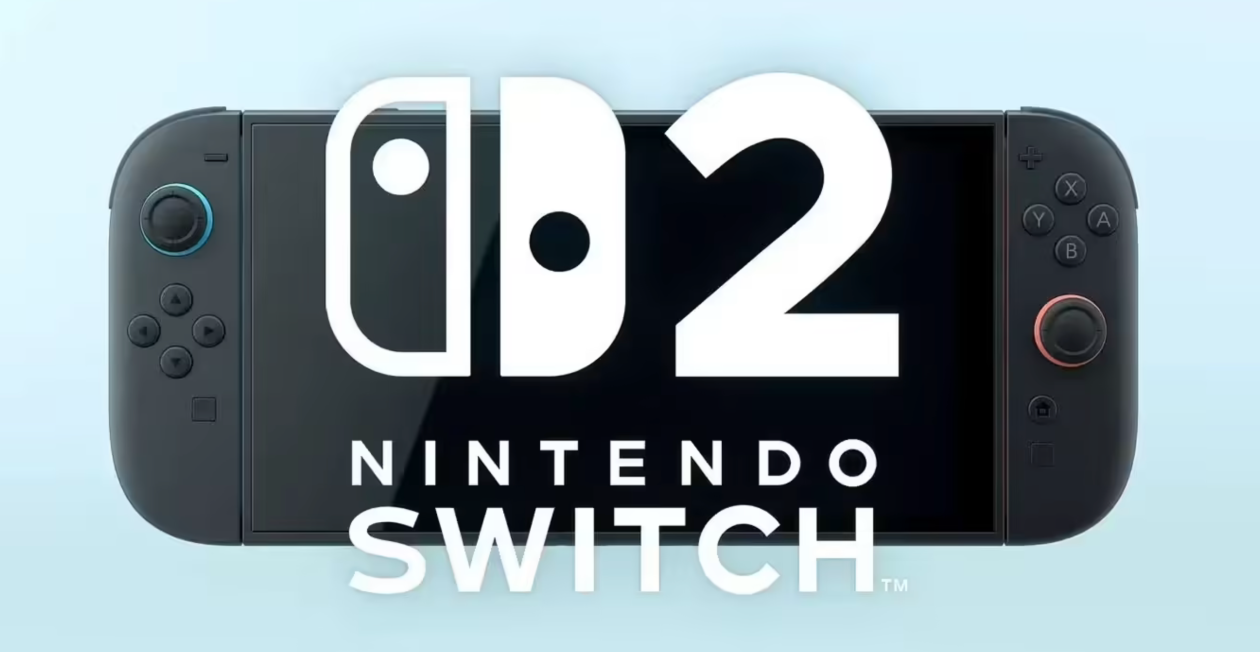
《马力欧》

Search documents
任天堂股价年内跌超 30%,Switch 2 定价与游戏阵容引发市场担忧
Xin Lang Cai Jing· 2026-01-14 14:08
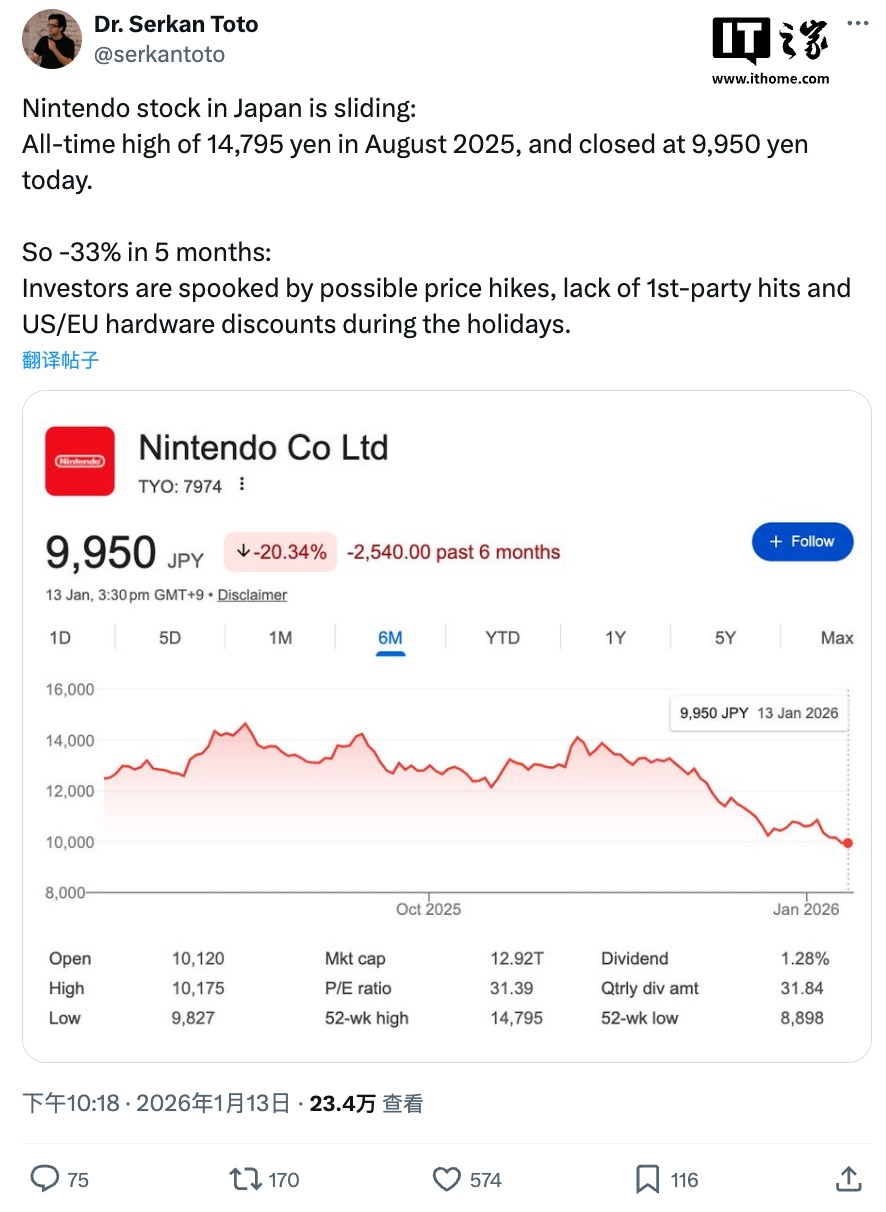
Core Insights - Nintendo's stock, once considered a stable investment, has seen a decline of over 30% from its peak, leading to cautious market sentiment regarding its performance in 2026 [1][6] - Investor concerns are primarily focused on potential price increases for the Switch 2 and a lack of compelling first-party game titles [1][6] Stock Performance - Nintendo's stock reached a high of 14,795 JPY (approximately 653.6 CNY) in August 2025 but has since fallen to 9,950 JPY (approximately 439.6 CNY), marking a decline of about 33% [1][6] - The slowdown in market penetration of the new console has contributed to declining investor sentiment [1][6] Market Sentiment - Industry analysts express concerns that 2026 may be a relatively weak year for Nintendo, with increasing difficulty in attracting new users [3][8] - The absence of seasonal promotions for the Switch 2 has exacerbated market hesitance [3][8] Game Lineup Concerns - There is growing dissatisfaction among players regarding the upcoming game lineup for Switch 2, with a focus on quantity over quality in Nintendo's strategy [5][9] - Although more than nine first-party games are expected to launch within the next year, few are anticipated to have "console killer" appeal, leading consumers to wait for major titles like new Mario or Zelda games before upgrading [5][9] Sales Performance - Traditionally, November and December are peak sales months for consoles, but 2025 has not seen strong performance for either PS5 or Switch 2, with sales lagging behind the original Switch's early performance in 2017 [5][9] - The overall economic environment is suppressing consumer spending, and a blockbuster new release could potentially boost Nintendo's performance [5][9] Promotional Strategies - Historical trends indicate that price discounts can drive consumer investment in gaming hardware, but current promotional efforts for Switch 2 remain limited [5][9] - Despite relatively stable sales in the Japanese market and flexible cross-region usage options, these factors have not effectively supported a recovery in Nintendo's stock price [5][9]

Switch 2的对手不只新PSP,还有每个人兜里的它
Hu Xiu· 2025-06-07 05:43
Group 1 - The core argument revolves around the ongoing debate about the Nintendo Switch 2, which is priced at 3000 yuan and has hardware that is considered five years behind the times, yet its sales may still perform well due to exclusive games [1][3][39] - Nintendo's strategy with the Switch 2 is primarily about maintaining its market position rather than innovating, focusing on exclusive titles like Mario, Zelda, and Pokémon to drive sales [5][6][8] - Despite criticisms regarding its launch lineup, the Switch 2 has generated significant pre-order interest globally, indicating strong market demand [9][10] Group 2 - Sony is reportedly developing a next-generation handheld console that will be able to run games locally, unlike the current PlayStation Portal, which only streams games [14][15] - The new Sony handheld is expected to target a more hardcore gaming audience, contrasting with Nintendo's broader market approach [18][19] - Microsoft is shifting its focus from developing a dedicated Xbox handheld to optimizing Windows 11 for gaming, indicating a strategic pivot towards software and services rather than hardware [22][27] Group 3 - The competition for Nintendo is not just from other gaming consoles but also from mobile gaming, which has significantly impacted the gaming landscape [40][41] - Nintendo aims to expand its gaming ecosystem to attract a wider audience, including casual gamers who may prefer mobile gaming experiences [42][44] - The company has diversified its revenue streams beyond gaming, positioning itself as an entertainment company while maintaining a strong focus on delivering enjoyable gaming experiences [49][50]
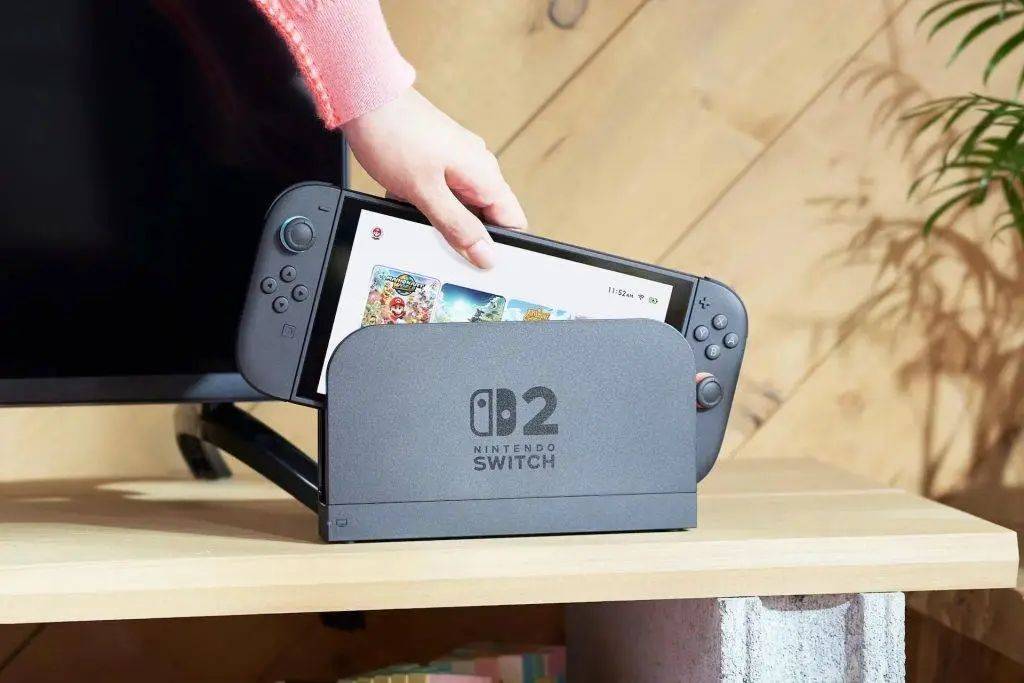
任天堂明确Switch 2实体游戏策略:第一方作品不采用密钥卡,延续传统卡带模式
Huan Qiu Wang· 2025-05-18 02:27
Core Viewpoint - Nintendo has confirmed that it will not adopt the "keycard" model for its first-party games on the upcoming Switch 2, maintaining traditional physical game cartridges to ensure players can experience games without additional downloads [1][3]. Group 1: Nintendo's Strategy - Nintendo's official response indicates a commitment to traditional physical game cartridges for first-party titles, ensuring a seamless gaming experience for players [1][3]. - Doug Bowser, President of Nintendo of America, emphasized that physical game cartridges remain a crucial part of the company's business model [4]. - The upcoming Switch 2 games, such as "The Legend of Zelda: Breath of the Wild" and "The Legend of Zelda: Tears of the Kingdom," will integrate original games with upgrade packs on a single dedicated cartridge, eliminating the need for download codes [4]. Group 2: Third-Party Game Distribution - Third-party developers may adopt different distribution methods, with some games like "Street Fighter 6" using the keycard model, while others like "Cyberpunk 2077: Ultimate Edition" will continue to use traditional full-data cartridges [4][5]. - Nintendo has reportedly provided third-party developers with three distribution formats: pure digital, 64GB capacity physical cartridges, and keycards, with the higher cost of 64GB cartridges leading some smaller developers to opt for keycards [4]. Group 3: Game Ecosystem Clarity - Several confirmed first-party Switch 2 upgrade games will utilize the integrated cartridge format, contributing to a clearer gaming ecosystem as more details emerge [5].