
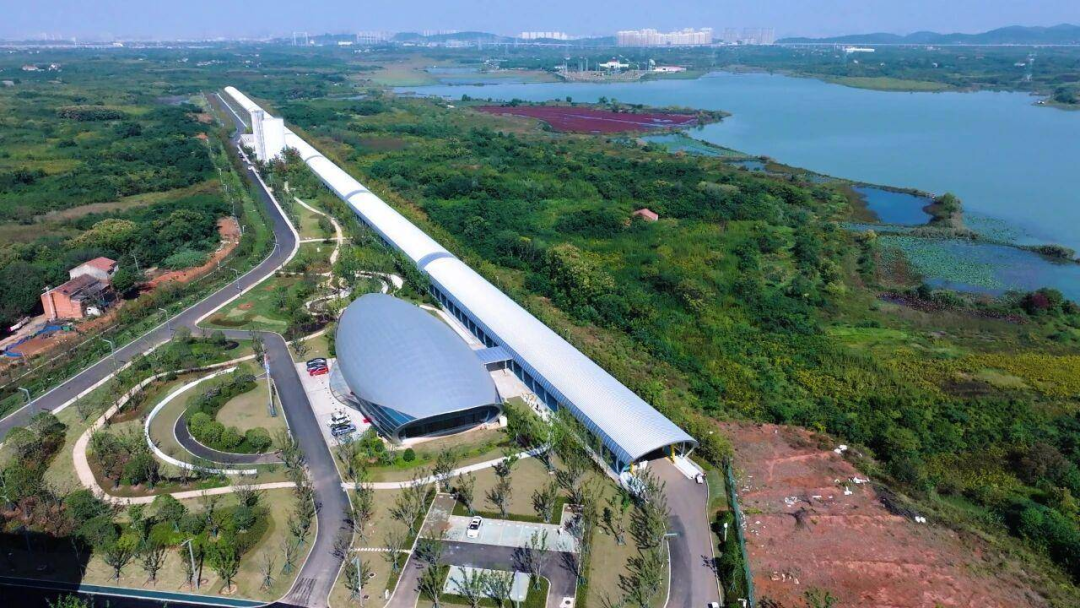
一公里高速磁悬浮测试线

Search documents
时速 800 公里!再创世界纪录!
Xin Lang Cai Jing· 2025-12-28 02:55
Group 1 - The Hubei East Lake Laboratory has set a new world record by accelerating a 1110 kg high-speed train model to 800 km/h in just 5.3 seconds, marking the third record-breaking achievement in six months [1][3] - The "one-kilometer high-speed magnetic levitation test line," developed by the laboratory, aims to achieve speeds of 800 km/h and has already surpassed previous records, reaching 650 km/h in June and 700 km/h in July [3][4] - The laboratory has conducted extensive testing to validate speed control precision, stability, efficiency, and reliability, confirming that all metrics meet design requirements [3] Group 2 - High-speed magnetic levitation technology has potential applications in various fields, including ultra-high-speed electromagnetic propulsion, high-speed rail transit, low-altitude economy, aerospace electromagnetic launch, and amusement facilities [4] - Once completed, the "one-kilometer high-speed magnetic levitation test line" will serve as an open platform for conducting aerodynamic, speed calibration, and overload impact tests in atmospheric conditions, supporting the next generation of high-speed rail and aerospace technologies [4]

时速800公里!再创世界纪录!
券商中国· 2025-12-27 23:25
Group 1 - The core achievement of the Hubei East Lake Laboratory is the acceleration of a 1110 kg high-speed train model to 800 km/h in just 5.3 seconds, marking the third world record broken in six months [1] - The "one-kilometer high-speed magnetic levitation test line" was publicly demonstrated on June 16, achieving a speed of 650 km/h with a 1030 kg test vehicle, which was the first world record set [1] - The laboratory aims to complete all construction tasks by the end of the year, with the design goal of achieving speeds of 800 km/h [1] Group 2 - High-speed magnetic levitation technology has potential applications in various fields, including ultra-high-speed electromagnetic sleds, high-speed magnetic levitation rail transit, low-altitude economy, aerospace electromagnetic launch, and amusement facilities [2] - Once completed, the "one-kilometer high-speed magnetic levitation test line" will serve as an open, cooperative, and shared platform for conducting various tests, providing robust support for next-generation high-speed magnetic levitation rail transit and other applications [2]
《经济日报》重磅聚焦:武汉“五谷”丰登产业图强
Jing Ji Ri Bao· 2025-12-22 03:25
Core Viewpoint - Wuhan is leveraging its "Five Valleys" innovation strategy to enhance its industrial competitiveness and drive economic growth through advancements in various high-tech sectors, including aerospace, automotive, digital security, and healthcare [1][5][10]. Group 1: Innovation and Technological Advancements - The "One Kilometer High-Speed Maglev Test Line" developed by the Wuhan Donghu Laboratory achieved a world record speed of 650 km/h, showcasing Wuhan's innovation capabilities [1]. - The Jiufengshan Laboratory has become a significant platform for research and testing in the compound semiconductor field, attracting over 50 upstream and downstream enterprises and more than 30,000 semiconductor talents [2]. - The automotive sector in Wuhan has seen rapid advancements, with the Lanzhou Automotive Smart Factory producing a new vehicle every 63 seconds and achieving breakthroughs in solid-state battery technology [3]. Group 2: Industrial Clusters and Economic Impact - The "Car Valley" has attracted 9 vehicle manufacturers and over 1,200 auto parts companies, significantly contributing to the transformation of traditional fuel vehicles to new energy vehicles [3]. - The "Star Valley" is recognized as the first national commercial aerospace industry base in China, capable of producing 50 rockets and 240 satellites annually, leading the country in launch frequency and satellite deployment [3]. - The "Network Valley" is projected to reach an industry scale of 25 billion yuan this year, with significant advancements in cybersecurity technologies [4]. Group 3: Collaborative Innovation and Talent Development - Wuhan is establishing a collaborative innovation mechanism across its "Five Valleys," with initiatives to support synergistic development among various sectors [6][8]. - The city has implemented talent attraction policies, resulting in a net inflow of over 300,000 university graduates annually, enhancing its workforce in high-tech industries [7]. - The high-tech industry’s value added to GDP is expected to rise from 26.2% to 30.4% during the 14th Five-Year Plan period, indicating robust growth in this sector [7]. Group 4: Regional Economic Integration - The automotive industry corridor extending from Wuhan to surrounding cities is evolving from a manufacturing to an innovation corridor, enhancing collaboration and efficiency across the region [10]. - The integration of industries such as display technology and semiconductor manufacturing is creating a "screen-chip" ecosystem in Wuhan, further solidifying its position in the high-tech landscape [10][11]. - The establishment of industry alliances and the deepening of industrial ecosystems in neighboring cities are contributing to the overall economic growth of Hubei province [11].
乘“五谷丰登”之势 武汉再登峰
Ren Min Wang· 2025-07-05 08:29
Core Insights - Wuhan has achieved a significant breakthrough with the world's first public demonstration of a one-kilometer high-speed magnetic levitation test line, reaching speeds of 650 kilometers per hour, which supports aerospace launches and low-altitude economic development [1] - The city is leveraging its "Five Valleys" innovation framework—Optics Valley, Automotive Valley, Aerospace Valley, Cybersecurity Valley, and Pharmaceutical Valley—to enhance its core competitiveness and drive economic growth [1][2] Group 1: Five Valleys Overview - Optics Valley is projected to grow from a scale of approximately 459.7 billion yuan in 2020 to 756.6 billion yuan by 2024, marking a 64.5% increase over four years [2] - Automotive Valley has transitioned from solely gasoline vehicles to a mix of gasoline and electric vehicles, with the share of new energy vehicles rising from 7% in 2021 to 41% last year [2] - Aerospace Valley has established a national aerospace industry base, completing over 50 satellite assembly and integration tests since its opening in 2021 [2] - Cybersecurity Valley has developed a network security talent pool, training over 3,000 professionals since the establishment of cybersecurity programs at local universities [2] - Pharmaceutical Valley has advanced from no innovative drugs in 2020 to four innovative drugs entering the market process by 2024, with 400 more in development [2] Group 2: Synergistic Development - The "Five Valleys" strategy promotes collaborative development among emerging industries, traditional industries, and future industries, enhancing Wuhan's industrial output and GDP growth potential [3] - The integration of technologies across the valleys, such as the collaboration between Cybersecurity Valley and Automotive Valley for vehicle network security, exemplifies the synergistic effects of the innovation ecosystem [3][4] - The interconnectedness of the valleys is fostering a complete industrial chain that includes research, manufacturing, services, and consumption [4] Group 3: Strategic Importance - Wuhan is positioning itself as a high-energy city with a modern industrial system, leveraging its advantages in digital economy infrastructure, automotive industry standards, aerospace economic positioning, data sovereignty, and life sciences [5] - The city is recognized as a leader in global technology innovation, with its innovation clusters ranking prominently among the world's top 100 [6] - The "Five Valleys" framework is seen as a critical driver for Wuhan's role in national strategic technology initiatives and its contribution to high-quality economic development [5][6]