一次性火箭

Search documents
商业航天进入密集催化期,本轮行情有何异同?
2025-12-26 02:12
Summary of Key Points from the Conference Call Industry Overview - The commercial aerospace industry is entering a critical catalytic phase, driven by reusable rocket technology, with multiple institutions conducting related experiments. It is expected that several reusable launch vehicles will have their maiden flights next year, significantly reducing costs and enhancing supply capabilities, thereby expanding market prospects for commercial aerospace [1][2]. Core Insights and Arguments - The current commercial aerospace market differs fundamentally from previous cycles, transitioning from a conceptual theme to a phase of industrial trends and real growth. The core of this cycle is the breakthrough in key technologies, particularly reusable rocket technology, which is expected to lower costs and improve supply capabilities [2]. - By 2030 and 2035, the cumulative space required for the construction of the Qianfan and Xingwang mega-constellations is estimated to reach between 300 billion to 400 billion RMB, with the rocket launch market size projected to be between 80 billion to over 130 billion RMB [3]. - The market for commercial aerospace is expected to grow two to three times by 2026 compared to 2025, with over 800 satellites expected to be launched, and the satellite market size projected to reach 31.4 billion RMB [3][20]. Technological Developments - Reusable rocket technology is a significant catalyst in the current market. For instance, the successful maiden flight of the Zhuque-3 rocket by Blue Arrow Aerospace marks a milestone in China's private aerospace sector [4]. - Progress has also been made in expendable rockets, with new models like the Long March 8 and Long March 12 being developed and utilized, capable of providing 60 to 80 commercial launches annually [5]. Satellite Manufacturing and Cost Reduction - China is reducing satellite manufacturing costs through industry chain collaboration and mass production techniques. When satellite production exceeds 300 units, costs can be halved. Current and planned domestic satellite production capacity can meet future demand of over 3,000 satellites [6][7]. Global Competition and Strategic Importance - The global competition for space resources is intensifying, primarily led by the US and China. The US Starlink program has launched over 10,000 satellites, and SpaceX's Starship will further enhance its capabilities, prompting domestic acceleration in commercial aerospace development [8]. - The importance of satellite internet has been underscored by its role in modern warfare, as demonstrated during the Ukraine conflict, highlighting the need for reliable communication systems [18][19]. Policy Support and Market Opportunities - Government support for commercial aerospace has significantly increased, with mentions in recent work reports and policy documents emphasizing the importance of building a strong aerospace nation [13]. - Investors are advised to focus on upstream opportunities in space infrastructure construction, as the industry is still in its early stages, and upstream investments are expected to yield returns sooner [14]. Future Projections and Events - The commercial aerospace sector is expected to see numerous important developments in 2026, including the testing of reusable rockets and the launch of large-capacity rockets, which will enhance satellite networking progress [26][27]. - The satellite market is projected to grow significantly, with the potential for a compound annual growth rate of 123% for the new network by 2025 and 2030 [17]. Conclusion - The commercial aerospace industry is poised for substantial growth driven by technological advancements, government support, and increasing global competition. Investors should remain vigilant and focus on sectors with strong fundamentals and clear benefits from the ongoing developments in this rapidly evolving market [23][25].
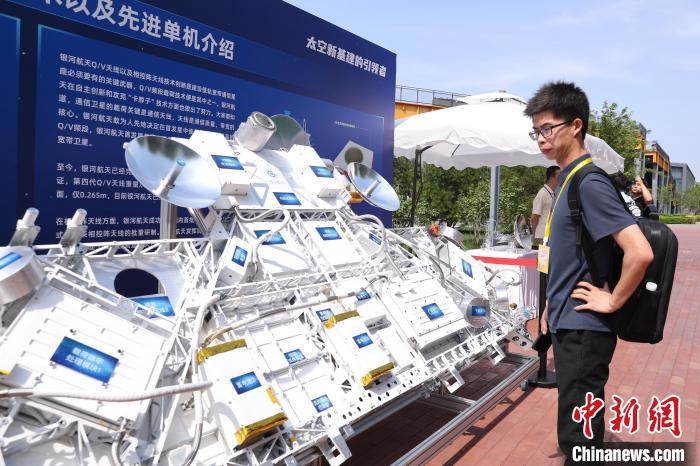
“群星”闪耀 北京商业航天产业集群加速升空
Zhong Guo Xin Wen Wang· 2025-06-18 23:50
Core Insights - Beijing is emerging as a significant hub for commercial aerospace, with abundant innovation resources and a leading industrial foundation in China [1][2] - The city aims to enhance its global influence in commercial aerospace through various strategies, including tackling core technology bottlenecks and optimizing industrial layout [1] Industry Overview - Beijing is home to over 300 high-tech enterprises in the commercial aerospace sector, accounting for more than half of the national core R&D units and a majority of the country's aerospace infrastructure and specialized talent [2][3] - The commercial aerospace industry in Beijing encompasses the entire value chain, including rocket launch, satellite manufacturing, ground systems, and satellite application services, making it the most comprehensive in the country [3] Achievements and Innovations - In rocket launches, significant breakthroughs have been made, such as the successful vertical takeoff and landing test by Blue Arrow Aerospace and the normalization of disposable rocket launches, with 12 commercial rocket launches planned for 2024 [2][3] - Beijing has released plans for over 10 commercial satellite constellations, with Galaxy Aerospace successfully launching 8 low-orbit broadband communication satellites, marking a significant step in satellite internet applications [2][3] Market Potential - The commercial aerospace market is vast, with Galaxy Aerospace being the first unicorn in China's commercial aerospace and satellite internet sector, achieving multiple technological breakthroughs [4][6] - Galaxy Aerospace has successfully launched 25 advanced satellites, including China's first satellite with flexible solar wings, and is focused on reducing user costs through innovative technology [6][7] Future Directions - The development of space infrastructure is seen as a new engine for global economic growth, with satellite internet construction accelerating the arrival of the 6G era [7][8] - Galaxy Aerospace is advancing the research and development of satellite internet technology that allows direct mobile phone connections to satellites, creating significant market opportunities [7][8]