
万家强化收益

Search documents
南方碳中和A今年涨71%也清盘?年内超280只产品离场,业绩好坏均难逃规模“生死线”
Xin Lang Cai Jing· 2025-12-29 08:07
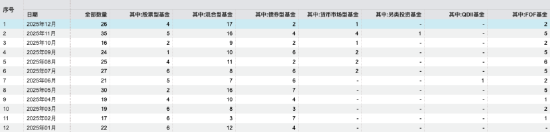
Core Insights - The public fund industry is experiencing a normalization of fund liquidations, with over 280 funds entering liquidation procedures by December 29, 2025, which is comparable to the 293 funds liquidated in 2024, indicating a trend of survival of the fittest within the industry [10][1][3] Fund Liquidation Structure - Among the 281 funds liquidated, mixed funds accounted for the largest share with 127 funds, representing over 45% of the total; followed by bond funds (53) and equity funds (51), with 36 FOF funds also liquidated [3][12] - The distribution of liquidated funds shows significant differentiation among fund management companies, with Bosera Fund leading with 16 liquidations, followed by Haifutong, Huaan, Huabao, and Nanfang Funds, each with 9 liquidations [3][12] Fund Age and Performance - The liquidated funds include both long-standing funds, such as those over ten years old, and newly established funds, with some funds like Huabao Yuan Shi A being liquidated within six months despite achieving a positive return of 11.35% [4][14] - A total of 235 out of 281 liquidated funds triggered termination clauses primarily due to asset sizes falling below 50 million yuan, highlighting that both performance and size are critical for fund survival [5][14] Performance Insights - Notably, some funds with strong performance, such as Nanfang Carbon Neutral A with a return of 71.03% this year, still faced liquidation due to not meeting asset thresholds, indicating a trend where investors redeem funds after achieving returns, leading to rapid size declines [6][15] - Conversely, funds with poor performance, such as Huabao Zhongzheng 1000 A, which has a cumulative return of -63.95%, also faced liquidation, reflecting a lack of sustainable operational capability [6][15] Industry Implications - The trend of liquidations is seen as a natural outcome of market evolution, with industry experts suggesting that investors should prioritize funds of moderate size and avoid those with high institutional ownership [8][17] - The reduction in the "shell" value of funds, due to lower approval and issuance thresholds, has led to a market environment where underperforming funds are not maintained, indicating a shift from a focus on initial launches to ongoing operational sustainability [8][17]

年内超280只基金清盘!混合型127只占半壁江山,博时基金共16只成“清盘王”,多只绩优基金亦难幸免
Xin Lang Cai Jing· 2025-12-29 07:56
Core Insights - The public fund industry is experiencing a normalization of fund liquidations, with over 280 funds entering liquidation by December 29, 2025, which is comparable to the 293 funds liquidated in 2024, indicating a trend of survival of the fittest in the industry [12][10][20] Fund Liquidation Overview - Among the 281 liquidated funds, mixed funds lead with 127 funds, accounting for over 45%, followed by bond funds (53) and equity funds (51) [3][14] - The distribution of liquidated funds shows significant differentiation among institutions, with Bosera Fund having the highest number of liquidations at 16, followed by several others with 9 and 8 liquidations [3][14] Fund Age and Performance - The liquidated funds include both long-standing funds over ten years old and newly established funds under one year, highlighting a diverse age range [4][15] - Notably, some funds, despite achieving positive returns, were still liquidated due to insufficient asset size, such as Huabao Yuanxi A, which had a return of 11.35% but was terminated due to net asset value falling below 50 million [6][16] Reasons for Liquidation - A significant majority of the liquidated funds, 235 out of 281, were forced to liquidate due to triggering contract termination clauses, primarily because their size remained below 50 million [7][17] - Even high-performing funds like Southern Carbon Neutral A, which had a return of 71.03%, faced liquidation due to not meeting asset size requirements, indicating a trend where investors redeem funds after achieving returns, leading to rapid size decline [8][18] Industry Implications - The trend of fund liquidations reflects a shift in the industry from a focus on initial launches to an emphasis on sustained performance, with investors encouraged to select funds with moderate sizes and avoid those with high institutional ownership [10][20] - The reduction in the "shell" value of funds, due to lower approval and issuance thresholds, has led to a market environment where underperforming funds are not maintained, resulting in a natural selection process within the industry [10][20]