三方通用抵押利率(TGCR)

Search documents
华尔街热议!曾精准预见缩表与加息路径,美联储“权威官员”抛出历史性变革提案
Zhi Tong Cai Jing· 2025-09-30 13:41
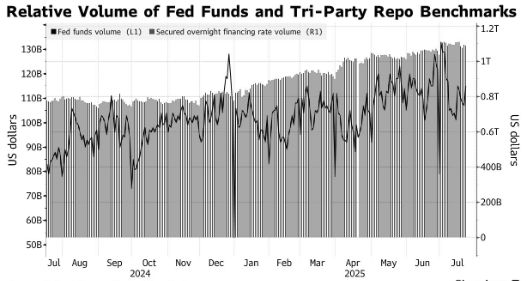
Core Viewpoint - A proposal by Dallas Fed President Logan to abandon the federal funds rate as a primary policy tool has surprised Wall Street, indicating a potential shift in monetary policy discussions [1][4]. Group 1: Logan's Influence and Background - Logan, previously a key figure at the New York Fed, is viewed as a top market expert and a potential successor to the New York Fed President [1][2]. - Her background in market operations and asset-liability management has made her comments particularly significant to market participants [2][3]. - Logan's recent remarks are part of a series of influential statements that have historically impacted market trends [3]. Group 2: Shift in Monetary Policy Discussion - Observers are beginning to consider whether Logan is initiating an important discussion about the future of the federal funds rate [4]. - The federal funds market has significantly shrunk over the past 15 years, being replaced by the more robust repurchase agreement market, which may better reflect monetary policy transmission [4][5]. - Transitioning to a benchmark rate based on repurchase transactions could enhance the effectiveness of monetary policy [4]. Group 3: Market Dynamics and Concerns - Concerns exist that moving away from the federal funds market could destabilize the overnight financing market [5][7]. - The rapid changes in the money market and federal funds market have prompted calls for a reassessment of current practices [7]. - Logan's proactive approach is seen as crucial, especially while the federal funds market remains stable [7][8]. Group 4: Proposed Alternatives - Logan suggests that the Tri-Party General Collateral Rate (TGCR) could serve as a more effective benchmark than the federal funds rate, given its representation of a more stable lending market [8][9]. - TGCR, with daily transaction volumes exceeding $1 trillion, could facilitate smoother monetary policy transmission compared to the federal funds market, which averages less than $100 billion in transactions [8][9].