
资产负债表政策

Search documents
为什么比特币近期对流动性状况的反应大于对降息的反应?
Sou Hu Cai Jing· 2026-02-13 04:50
Core Viewpoint - The relationship between interest rate cuts by the Federal Reserve and Bitcoin (BTC) price movements has weakened, with Bitcoin's volatility increasingly reflecting actual liquidity in the financial system rather than just changes in borrowing costs [2][4]. Group 1: Interest Rates vs. Liquidity - Bitcoin's recent price changes are more influenced by actual cash supply and risk capital in the system rather than solely by interest rate adjustments [4]. - Liquidity and interest rates are distinct; liquidity reflects the total amount and flow of money in the market, while interest rates measure the cost of funds [4][11]. - Even when interest rates are lowered, if liquidity is being drained through other channels, such as quantitative tightening or U.S. Treasury operations, overall liquidity can still tighten [2][4]. Group 2: Market Dynamics - Bitcoin is increasingly seen as a "canary asset" that signals tightening liquidity ahead of traditional markets, often leading to declines in stocks and commodities [3]. - During periods of ample liquidity, risk appetite expands, leading to higher Bitcoin prices; conversely, when liquidity tightens, rapid deleveraging occurs, often resulting in simultaneous declines across Bitcoin, stocks, and commodities [10][11]. - The market's response to liquidity changes is more pronounced than to marginal changes in interest rates, indicating that Bitcoin acts as a real-time barometer of liquidity conditions [6][13]. Group 3: Federal Reserve and Treasury Actions - The Federal Reserve's balance sheet policies and the U.S. Treasury's cash management directly influence liquidity, often having a greater impact on Bitcoin than interest rate changes [11][13]. - Unexpected liquidity shocks can have a more significant effect on the market than anticipated interest rate changes, as liquidity changes are less predictable and transparent [11][13]. - The Treasury General Account (TGA) balance and cash flow from the Treasury serve as indicators of liquidity pressure or easing in the market [14].


FPG财盛国际:流动性周期成比特币核心驱动力
Xin Lang Cai Jing· 2026-02-12 13:30
Core Insights - The price trend of Bitcoin is undergoing a significant paradigm shift, with market reactions to liquidity pressures surpassing concerns over the Federal Reserve's interest rate cuts [1][3] - Bitcoin is evolving from a mere "inflation hedge" to a real-time barometer of the global financial environment [2][4] Group 1: Market Dynamics - Investors must distinguish between "currency price" (interest rates) and "currency quantity" (liquidity), as recent data shows that even with interest rate cut expectations, Bitcoin may face downward pressure if global liquidity tightens due to quantitative tightening (QT) or Treasury cash management tools [1][3] - Bitcoin exhibits "canary asset" characteristics, reacting to liquidity shortages before traditional markets do, due to its high dependence on leverage [1][3] Group 2: Key Influencing Factors - The Federal Reserve's balance sheet reduction plan, the pace of Treasury issuance, and changes in the scale of overnight reverse repurchase agreements (ON RRP) are critical factors determining Bitcoin's price ceiling [1][3] - These hidden "financial pipeline" changes are more sudden and destructive compared to the frequently repriced interest rate paths [1][3]

美联储理事米兰:今年需要降息不止100个基点,很期待沃什接下来的表现
Hua Er Jie Jian Wen· 2026-02-03 13:07
Group 1 - The core viewpoint is that the Federal Reserve needs to lower interest rates by more than 100 basis points this year, as stated by Stephen Miran, a Trump-appointed director [1] - Miran emphasizes that potential inflation is not a concern and that there is not much strong price pressure observed in the economy, which supports his call for significant rate cuts [1] - He points out that better economic growth in the future does not require higher interest rates, indicating that the rise in long-term yields is partly due to improved growth expectations rather than increased inflation fears [1] Group 2 - Miran expresses anticipation for Kevin Warsh's performance as the next Federal Reserve Chair, following Trump's nomination of Warsh [1] - The market is speculating on a more hawkish balance sheet policy under Warsh's leadership, reflecting a shift in expectations regarding monetary policy [1]
美联储2026年1月29日FOMC会议总结
Sou Hu Cai Jing· 2026-01-28 20:29
Group 1 - The Federal Reserve maintains the federal funds rate target range at 3.50%-3.75%, ending a three-meeting rate cut streak that began in September 2025 [1] - The decision was passed with a vote of 10 in favor and 2 against, with dissenting votes from Governors Stephen Milan and Christopher Waller, who advocated for a 25 basis point cut [1] - The economic assessment indicates steady expansion in U.S. economic activity, with signs of stabilization in the labor market as the Fed removed previous language about rising employment downside risks [1] Group 2 - Inflation remains elevated, with the Fed reaffirming its commitment to the 2% long-term target, despite a significant decline from peak levels [1] - The Fed continues its asset-liability management policy, maintaining liquidity by purchasing short-term Treasury securities and reinvesting principal from agency securities into Treasury bills [1] - Market reactions were moderate, with a slight strengthening of the dollar and a 4 basis point increase in the 10-year Treasury yield to 4.263%; expectations for rate cuts later in the year were adjusted slightly, with a 28% probability for a cut in April [1]
美联储12月会议纪要显示降息意见分歧加大:一季度降息预期下降
Haitong Securities International· 2026-01-05 15:21
Rate Decision Insights - The Federal Reserve's December FOMC minutes revealed a significant internal split, with a 9-3 vote to cut the federal funds rate by 25 basis points to a target range of 3.5%-3.75%[1] - The dissenting votes included two members advocating for no change and one member calling for a more aggressive 50 basis point cut[1] - The majority favored the rate cut due to increased downside risks to employment and stable inflation risks, suggesting further cuts may be appropriate if inflation trends downward[2] Economic Conditions - Overall PCE inflation and core PCE inflation both stood at 2.8%, with goods inflation influenced by tariffs and service inflation showing signs of moderation[2] - The unemployment rate increased slightly to 4.4%, indicating a softening labor market, while hiring activity remained weak[2] Market Expectations - Prior to the meeting, options markets anticipated a 25 basis point cut and projected two additional cuts in 2026[2] - Following the release of the minutes, equity markets experienced a slight decline, with traders increasing bets on a potential rate cut in April[4] Future Policy Guidance - All participants agreed that future policy decisions will depend on incoming data and evolving economic conditions, with no predetermined path[9] - The uncertainty surrounding the selection of the next Fed Chair adds additional variables to the Fed's independence and future policy direction[10]
威廉姆斯称资产负债表工具的使用并非 “非常规操作”
Sou Hu Cai Jing· 2025-10-03 10:17
Core Viewpoint - John Williams, President of the New York Federal Reserve Bank, argues that central banks' use of balance sheet policies should not be viewed as "unconventional tools" [1] Group 1: Monetary Policy Understanding - Williams emphasizes that the common understanding of monetary policy is too narrow, focusing primarily on setting short-term interest rates [1] - He states that this limited view contradicts the historical practices of central banks and monetary economics [1] Group 2: Criticism of Asset Purchases - The Federal Reserve faces criticism regarding its asset purchases and the overall size of its balance sheet, which is currently approximately $6.6 trillion [1] - Scott Bessent, U.S. Treasury Secretary, describes large-scale asset purchases as distorting the market and interfering with the Fed's independence [1] - Kevin Warsh, a former Fed governor and potential candidate for the next Fed chair, has consistently criticized the Fed's bond-buying programs, especially during non-crisis periods [1] Group 3: Effectiveness of Asset Purchases - Williams cites economic research indicating that asset purchases remain effective even when short-term interest rates are very low [1] - He asserts that these policies are not merely "emergency" or "crisis-response" measures but align with long-standing monetary policy theory and practice [1] - The timing and manner of implementing these policies depend on specific circumstances and the risks faced by policymakers, which is a matter of strategy and execution rather than principle [1]
华尔街热议!曾精准预见缩表与加息路径,美联储“权威官员”抛出历史性变革提案
Zhi Tong Cai Jing· 2025-09-30 13:41
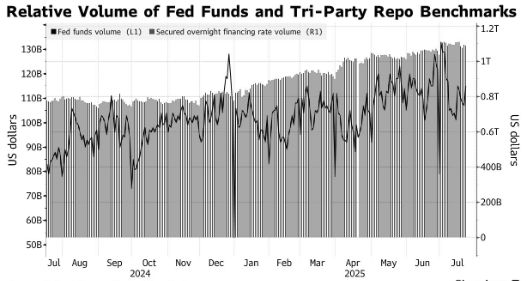
Core Viewpoint - A proposal by Dallas Fed President Logan to abandon the federal funds rate as a primary policy tool has surprised Wall Street, indicating a potential shift in monetary policy discussions [1][4]. Group 1: Logan's Influence and Background - Logan, previously a key figure at the New York Fed, is viewed as a top market expert and a potential successor to the New York Fed President [1][2]. - Her background in market operations and asset-liability management has made her comments particularly significant to market participants [2][3]. - Logan's recent remarks are part of a series of influential statements that have historically impacted market trends [3]. Group 2: Shift in Monetary Policy Discussion - Observers are beginning to consider whether Logan is initiating an important discussion about the future of the federal funds rate [4]. - The federal funds market has significantly shrunk over the past 15 years, being replaced by the more robust repurchase agreement market, which may better reflect monetary policy transmission [4][5]. - Transitioning to a benchmark rate based on repurchase transactions could enhance the effectiveness of monetary policy [4]. Group 3: Market Dynamics and Concerns - Concerns exist that moving away from the federal funds market could destabilize the overnight financing market [5][7]. - The rapid changes in the money market and federal funds market have prompted calls for a reassessment of current practices [7]. - Logan's proactive approach is seen as crucial, especially while the federal funds market remains stable [7][8]. Group 4: Proposed Alternatives - Logan suggests that the Tri-Party General Collateral Rate (TGCR) could serve as a more effective benchmark than the federal funds rate, given its representation of a more stable lending market [8][9]. - TGCR, with daily transaction volumes exceeding $1 trillion, could facilitate smoother monetary policy transmission compared to the federal funds market, which averages less than $100 billion in transactions [8][9].
Fed Was Right to Cut Rates by Quarter Point, James Bullard Says
Youtube· 2025-09-19 12:30
Core Insights - The Federal Reserve is currently navigating a complex economic landscape, with discussions around interest rate adjustments and labor market conditions being central to their decision-making process [3][4][12]. Economic Outlook - The Fed's recent decisions reflect a cautious approach, with a focus on data dependency and concerns over labor market weakness, particularly highlighted by the nonfarm payrolls report [4][5]. - There is a potential for three interest rate moves by the end of the year, with markets pricing in a 75 basis point increase, indicating a significant shift in monetary policy [5][12]. Inflation and Monetary Policy - The Fed remains committed to its 2% inflation target, viewing it as essential for maintaining international credibility and economic stability [9][10]. - Despite current inflation being closer to 3%, the Fed plans to look through temporary price adjustments and expects inflation to resume its downward trend [14][15]. Balance Sheet Management - The Fed's balance sheet policy is currently focused on gradually reducing the size of its holdings, particularly in mortgage-backed securities, which were significantly increased during the pandemic [18][20]. - The committee is satisfied with the current pace of balance sheet reduction and aims to reach an ample reserves level [18]. Decision-Making Process - The decision-making process within the Fed involves extensive negotiations and discussions among committee members, emphasizing the importance of consensus on future monetary policy directions [22][23]. - There is a recognition that the dot plot forecasting method may need improvement, with suggestions for a more standardized quarterly report to enhance transparency and communication [24][25][26].
美联储哈玛克:宽泛的资产负债表政策不在美联储框架审查的范围之内。
news flash· 2025-05-10 01:21
Core Viewpoint - The Federal Reserve's broad asset-liability management policy is not under review within the framework of the Federal Reserve [1] Group 1 - The Federal Reserve, represented by Harker, emphasizes that the current asset-liability management policy will not be part of the ongoing framework review [1]
美联储哈玛克:要提高资产负债表政策的透明度。
news flash· 2025-05-10 01:21
Core Viewpoint - The Federal Reserve's Hamak emphasized the need to enhance the transparency of the balance sheet policy [1] Group 1 - The Federal Reserve aims to improve communication regarding its balance sheet management strategies [1] - Increased transparency is expected to help market participants better understand the Fed's policy intentions [1] - The focus on transparency may lead to more predictable monetary policy outcomes [1]