联邦基金利率

Search documents
一图解读美联储3月决议:如期“按兵不动”,年内料仅降息一次!
美股IPO· 2026-03-19 00:04
Core Viewpoint - The Federal Reserve maintained the federal funds rate target range at 3.5% to 3.75%, marking the second consecutive meeting without a change, amid rising oil prices due to escalating Middle East conflicts [1][6][20]. Summary by Sections Federal Reserve Decision - The FOMC voted 11-1 to keep the interest rate unchanged, with a slight upward adjustment in economic growth and inflation forecasts for 2026 [20][24]. - The decision reflects concerns over inflation and economic uncertainty, particularly due to geopolitical tensions in the Middle East [24][29]. Economic Forecasts - The Fed's median projections for real GDP growth are 2.4% for 2026 and 2.3% for 2027, slightly higher than previous estimates [15][25]. - The unemployment rate is expected to remain stable at 4.4% for 2026, with inflation projections for the PCE index at 2.7% [15][25]. Inflation and Economic Risks - The Fed acknowledged rising inflation expectations, particularly due to higher energy prices, which could push overall inflation above the 2% target [18][30]. - The uncertainty surrounding the Middle East situation and its potential impact on the economy was highlighted, with officials noting that the effects are still unclear [18][24]. Market Reactions - Following the Fed's announcement, U.S. stock indices saw a slight increase, while gold prices rose by $10, and the dollar index remained stable [19]. Internal Dynamics - There was a division among FOMC members regarding future rate cuts, with some members predicting no cuts this year, while others anticipate a potential cut in 2027 [24][25]. - The Fed's decision-making process is influenced by external pressures, including political dynamics and ongoing legal challenges faced by the Fed Chair [27][28].

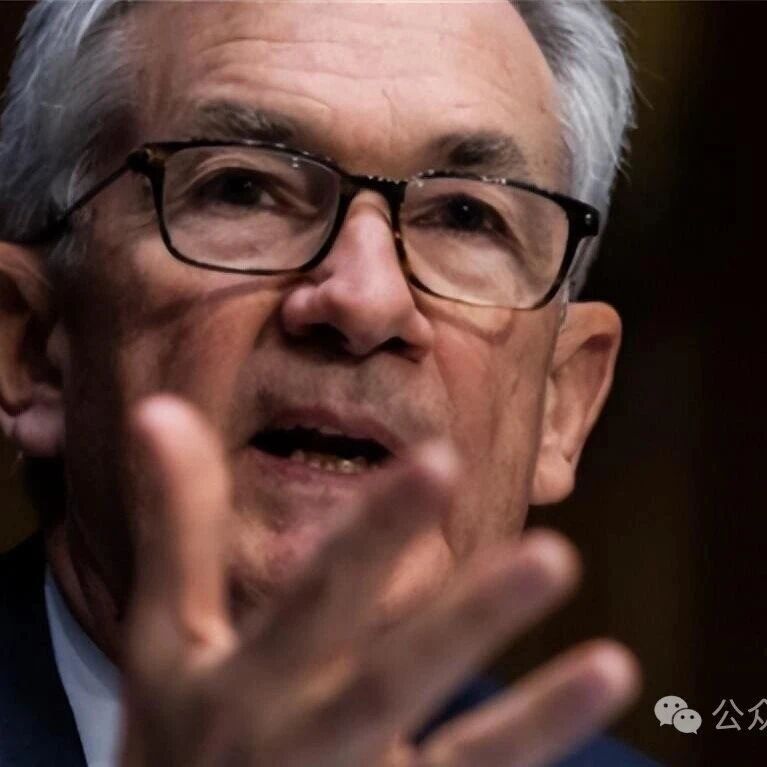
Looming Fed meeting shifts bets for 2026 interest-rate cuts
Yahoo Finance· 2026-03-15 15:07
Core Insights - The Federal Reserve is expected to maintain the federal funds rate steady amid various economic pressures, including inflation expectations and labor market concerns [3][4] - The anticipated Summary of Economic Projections (SEP) will provide insights into the Fed's interpretation of the Iran War's impact on inflation over different time frames [4] - Recent adjustments in economic forecasts have led some analysts to doubt the likelihood of rate cuts in 2026 [5] Group 1: Federal Reserve Actions - The Federal Open Market Committee (FOMC) voted 10-2 to hold interest rates steady at 3.50% to 3.75% in January after three consecutive quarter-point cuts in 2025 [10] - The decision to pause rate cuts was influenced by data indicating a weakening labor market and cooling inflation, although inflation remains persistent [11] - The Fed's dual mandate requires balancing full employment and price stability, which often conflict due to unpredictable global events [6][7] Group 2: Economic Implications - A delayed rate cut could lead to higher borrowing costs for consumers, exacerbating affordability issues in a challenging economic environment [2] - The impact of the federal funds rate extends to various consumer loans, including auto, student, and home-equity loans, as well as credit cards [1][2] - The current economic climate is characterized by a "low-hire, low-fire" labor market, affecting consumer spending on essential goods and services [2]
美联储宣布:不降息
财联社· 2026-01-28 23:29
Core Viewpoint - The Federal Reserve decided to maintain the federal funds rate target range at 3.5% to 3.75%, aligning with market expectations, after previously lowering rates by 25 basis points in three consecutive meetings [1][3][13]. Economic Indicators - Current indicators suggest that U.S. economic activity continues to expand at a moderate pace, with signs of stabilization in the labor market and a slight increase in the unemployment rate as of September [6][18]. - Inflation remains relatively high, with the core PCE slightly above 2% after excluding the impact of tariffs, which are expected to peak and then decline this year [11][18]. Federal Open Market Committee (FOMC) Decision - The FOMC reaffirmed its commitment to achieving maximum employment and a 2% inflation target, acknowledging the high uncertainty in the current economic outlook [18]. - The decision to keep the interest rate unchanged reflects a careful assessment of the latest data and economic risks, with readiness to adjust monetary policy if necessary [18]. Voting Dynamics - Two members of the FOMC, Stephen Miran and Christopher Waller, voted against the decision to maintain the rate, advocating for a 25 basis point cut [15]. - The voting dynamics indicate differing views within the committee regarding the appropriate monetary policy stance [8][15]. Market Reaction - Following the announcement, the U.S. dollar index saw an increase of up to 1%, while major U.S. stock indices experienced minimal fluctuations [17].

总统对美联储及利率的掌控力究竟有多大?
Xin Lang Cai Jing· 2026-01-12 16:27
Core Viewpoint - The Federal Reserve is expected to lower the federal funds rate multiple times in 2025, amidst economic uncertainties and pressure from President Trump for further rate cuts [1][10]. Group 1: Federal Reserve's Actions - The Federal Reserve will maintain a stable interest rate for most of 2025, following a series of rate cuts at the end of 2024 and additional cuts in September, October, and December 2025 [1][10]. - Federal Reserve officials emphasize the need for patience and clarity in economic data before making any rate adjustments [1][10]. Group 2: Presidential Influence - President Trump has publicly opposed the Federal Reserve's decision to maintain stable interest rates and has pressured for further cuts in 2025 [1][10]. - Trump has criticized Federal Reserve Chairman Jerome Powell, labeling him as "stubborn" and suggesting his removal from office [1][10]. - In August 2025, Trump announced the dismissal of Federal Reserve Governor Lisa Cook, which critics argue may be illegal [1][10][7]. Group 3: Legal and Investigative Context - On January 11, Powell stated that a criminal investigation had been initiated against the Federal Reserve, related to his testimony about renovations at the Washington headquarters [1][11]. - Powell indicated that the criminal investigation and threats of charges should be viewed in the context of ongoing pressure from the Trump administration regarding interest rates [11]. Group 4: Federal Reserve's Independence - The Federal Reserve operates independently of direct presidential control, although the president has the authority to appoint and dismiss key officials [4][5]. - The president can nominate members of the Federal Reserve Board, who serve on the Federal Open Market Committee, but cannot dismiss them without just cause [6][15]. - Despite the Federal Reserve's design for independence, public statements from the president can influence market expectations and indirectly affect policy decisions [9][18].
货币政策如何扩大内需
Sou Hu Cai Jing· 2026-01-10 09:46
Group 1 - The core argument is that monetary policy can expand domestic demand by changing the interaction behaviors of countless micro-individuals, focusing on altering market expectations and ensuring that businesses and residents can calculate their benefits [2][9][16] - The effectiveness of monetary policy relies on the central bank's commitment to a clear inflation target and significantly lowering policy interest rates to stimulate investment and consumption [2][10][16] - Historical examples, such as the actions taken by the Federal Reserve during the 2008 financial crisis and the Bank of Japan under Kuroda, illustrate how aggressive monetary policies can lead to economic recovery and increased consumer confidence [4][6][7][16] Group 2 - In China, the economy faces challenges of insufficient demand, with private fixed asset investment experiencing negative growth for the first time since 2005, indicating a lack of confidence among businesses and consumers [13][14] - The low return on assets (ROA) for listed companies and the minimal difference between ROA and long-term financing rates suggest that investment attractiveness is currently very low, impacting private investment decisions [15] - The current housing market dynamics show that despite low mortgage rates, the negative growth in housing prices makes buying less attractive compared to renting, which puts downward pressure on property prices [15][16]

张斌:货币政策如何扩大内需
3 6 Ke· 2026-01-07 11:10
Group 1: Monetary Policy and Demand Expansion - Monetary policy can expand domestic demand by changing the interaction behaviors of countless micro-individuals, encouraging businesses to invest and residents to buy homes and consume [1][7] - The key to achieving these changes lies in the central bank's firm stance on inflation targets and significantly lowering policy interest rates [1][14] - Fiscal policy complements monetary policy by increasing government spending and leveraging its multiplier effect to expand domestic demand [1] Group 2: Historical Context and Examples - Since the 1990s, central banks have been the main force behind policies to expand domestic demand, often relying solely on monetary policy [1] - During the 2008 financial crisis, the Federal Reserve, under Bernanke, lowered the federal funds rate from 5.25% to 0.25%, a reduction of 500 basis points, which led to a significant rebound in the S&P 500 index [3] - Japan's central bank, under Kuroda, adopted aggressive monetary policies, including quantitative easing and negative interest rates, which resulted in a substantial increase in the Nikkei 225 index and a recovery in housing prices [5][6] Group 3: Current Economic Challenges in China - China's economy is currently facing challenges of insufficient demand, with private fixed asset investment experiencing negative growth for the first time since 2005, at -0.4% in 2023 [12][13] - Consumer confidence remains low despite some recovery in capital markets and a slight improvement in expectations following proactive counter-cyclical policies [12] - The attractiveness of private investment is low, with the difference between return on assets (ROA) and long-term financing rates at only 0.2% in 2024, the worst level in 20 years [13] Group 4: Mechanisms for Stimulating Investment and Consumption - To stimulate investment and consumption, the central bank must clearly communicate future inflation targets and further reduce policy interest rates, making investments and home purchases more attractive [14] - The relationship between interest rates and housing prices is significant; even a small decrease in interest rates can create substantial upward pressure on housing prices [10][11] - For businesses, lower interest rates reduce financing costs, while for residents, they influence the decision to buy or rent, impacting overall demand [9][10]
美联储会议纪要:多数决策者支持明年在通胀下降的前提下继续降息
Sou Hu Cai Jing· 2025-12-31 02:02
Core Viewpoint - The Federal Reserve's December meeting minutes reveal significant divisions among policymakers regarding whether inflation or unemployment poses a greater risk to the U.S. economy [1] Group 1: Federal Reserve Policy Decisions - The Federal Reserve lowered the federal funds rate target range to 3.50%-3.75% during its third rate cut of the year, with only 3 out of 12 policymakers voting against the decision [1] - Chairman Powell indicated that the current rate is sufficient to prevent severe deterioration in the labor market while still applying pressure on inflation [1] - Most officials believe that the risks to the labor market are skewed to the downside, while inflation risks are viewed as skewed to the upside [1] Group 2: Future Rate Expectations - The dot plot indicates that policymakers still expect one rate cut next year, with inflation projected to slow to around 2.4% by the end of the year [1] - According to CME's "FedWatch," the probability of a 25 basis point rate cut in January is 14.9%, while the probability of maintaining the current rate is 85.1% [3] - By March, the cumulative probability of a 25 basis point cut rises to 45.2%, with a 48.3% chance of no change and a 6.5% chance of a 50 basis point cut [3] Group 3: Leadership Changes - President Trump is expected to announce his choice for the next Federal Reserve Chair in January, with former Fed Governor Warsh and NEC Director Hassett as top candidates [3] - Warsh advocates for maintaining the Fed's policy independence and supports reforms such as balance sheet reduction and deeper rate cuts [4] - Hassett favors monetary easing to stimulate growth and is inclined towards aggressive rate cuts if appointed [4]
美联储会议纪要:多数官员支持进一步降息,但政策路径分歧显著
Feng Huang Wang· 2025-12-30 22:37
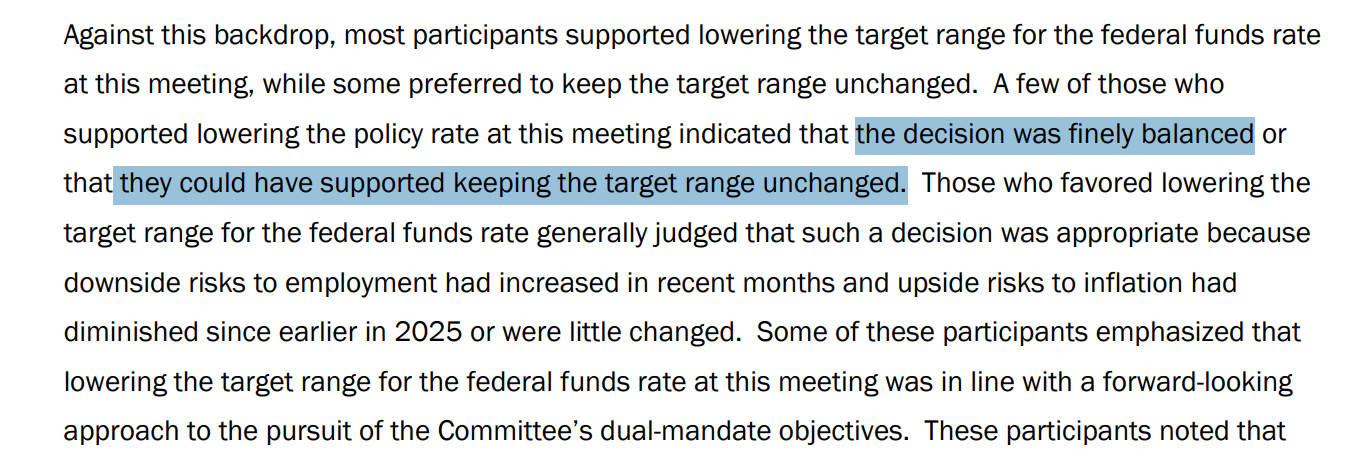
Group 1 - The Federal Reserve's December meeting minutes reveal significant internal divisions, with a 9-3 vote for a 25 basis point rate cut, the highest dissent since 2019 [1] - Some officials expressed that the decision to lower rates was delicate, with some indicating they could have supported maintaining the current rate [1] - The uncertainty surrounding inflation and employment data due to a government shutdown has complicated decision-making, with more data expected before the January meeting [1] Group 2 - The minutes indicate a split on the 2026 rate cut expectations, with most participants believing further cuts may be appropriate if inflation decreases as anticipated [2] - Some officials suggested maintaining the target range for a period after the recent cut, reflecting differing economic outlooks [2] - The average expectation among 19 officials is for a 25 basis point cut in 2026, followed by another cut in 2027, bringing the rate close to 3% [2] Group 3 - The minutes highlight a debate on whether inflation or unemployment poses a greater risk to the economy, with most participants favoring a neutral policy stance to prevent labor market deterioration [3] - Concerns were raised about the risks of high and persistent inflation, suggesting that further rate cuts could be misinterpreted as a weakening commitment to the 2% inflation target [3] - Recommendations were made for maintaining a high pace of net purchases of short-term Treasury securities to avoid a drop in reserves below the "ample range" [3] Group 4 - The next Federal Reserve meeting is scheduled for January 27-28, where more economic data will be available and the nomination for the next Fed chair is likely to be announced [4]
美国 12 月 FOMC 会议点评:中性降息落地,技术性扩表重启
Guoxin Securities· 2025-12-15 06:29
Interest Rate Changes - The Federal Reserve announced a 25 basis point rate cut, lowering the federal funds rate target range from 4.00%-4.25% to 3.75%-3.50%[2] - The decision reflects a shift to a neutral monetary policy stance, with the committee indicating that the banking system's reserve levels are now adequate[4] Economic Outlook - The Fed raised its GDP growth forecast for 2025 to 1.7% and for 2026 to 2.3%, suggesting a baseline scenario of a soft landing for the U.S. economy[14] - Unemployment is projected to gradually decrease from the current rate of 4.5% to 4.2% by 2028, indicating a stable labor market despite recent cooling[17] Inflation and Employment - Inflation has risen since early this year but remains somewhat elevated, with the core PCE inflation forecast adjusted down to 2.5% for 2026[17] - Employment growth has slowed, with the unemployment rate slightly increasing, reflecting concerns about job market stability[4] Internal Disagreements - There is significant internal division within the FOMC, with three dissenting votes during the recent meeting, the highest level of disagreement since 2019[5] - The distribution of rate expectations in the dot plot has become more dispersed, indicating increasing uncertainty among committee members regarding future policy directions[5] Balance Sheet Management - The Fed will restart short-term Treasury purchases at an initial pace of approximately $40 billion per month to maintain adequate liquidity in the banking system[6] - This action is characterized as a technical operation, distinct from broader monetary policy adjustments[6] Future Rate Cuts - The Fed is expected to implement two additional rate cuts in 2026, likely in March and July, influenced by upcoming changes in FOMC leadership and potential political motivations[9] - The anticipated new chair, Hassett, may align with political pressures for earlier rate cuts, although significant caution is expected in the approach[10]
观天下丨日本一客机单发失效紧急降落;世卫组织报告称全球流感活动增加
Sou Hu Cai Jing· 2025-12-12 08:26
Core Viewpoint - The Federal Reserve has lowered the federal funds rate by 25 basis points to a target range of 3.5% to 3.75%, marking the third consecutive rate cut since September 2023, amid a cooling labor market and declining inflation [3][4][5]. Summary by Sections Federal Reserve's Decision - The Federal Reserve's decision to cut rates aligns with market expectations, reflecting internal divisions within the Federal Open Market Committee, where 9 out of 12 members supported the cut, while 3 opposed it [6]. - Powell emphasized the need to balance maximum employment and price stability, noting that the current federal funds rate is within a neutral range, allowing for a wait-and-see approach [3][6]. Economic Indicators - Recent data shows that the number of job openings in the U.S. was 7.67 million in October, slightly up from 7.615 million a year earlier, while layoffs reached 1.854 million, the highest since January 2023 [5]. - The personal consumption expenditure price index rose by 2.8% year-on-year in September, up from 2.7% in August, indicating persistent inflationary pressures [5]. Market Expectations and Future Outlook - The market widely anticipated the Fed's rate cut, but Powell faces ongoing challenges in balancing inflation control and employment stability, with expectations of a potential rate cut in 2024 [6]. - President Trump criticized the Fed for not cutting rates more aggressively, indicating ongoing political pressure on Powell and the Fed's decision-making process [4][6].