数字孪生系统

Search documents
哈工大多项硬核科技亮相春晚
Xin Lang Cai Jing· 2026-02-17 22:46
Group 1 - The 2026 Spring Festival Gala featured multiple scientific achievements from Harbin Institute of Technology (HIT), showcasing a technological feast for the audience [1] - The satellite technology research team at HIT developed a super-wide micro-nano satellite that transmitted the melody of "The East is Red" from space, celebrating the 70th anniversary of China's space industry [1][2] - The satellite was able to play music by encoding the song and transmitting it back to Earth, utilizing in-orbit programming technology that the team pioneered in 2004 [2] Group 2 - The satellite achieved a stability control of 0.01 degrees per second, allowing for rapid imaging coverage of the ground, capturing images of the entire Heilongjiang Province within 20 seconds [2] - The digital twin system in the satellite technology research lab simulates the satellite's operations in real-time, ensuring that all commands are validated before being sent to the actual satellite [2] - The "HIT Star," a landmark of HIT, was featured in the gala, recognizing the university's contributions to the FAST project, which led to the naming of a discovered asteroid after the institution [3] Group 3 - HIT's research team developed lighting control technology that enhanced the visual effects of ice sculptures at the Harbin Ice and Snow World, enabling dynamic lighting even in extreme cold [3] - The architectural and design team at HIT created a dynamic lighting display for Central Street, transforming the landscape with programmable lighting effects that adapt to the environment [3]
超大城市现代化治理藏在这些细节里
Xin Lang Cai Jing· 2026-01-28 18:54
Core Viewpoint - The concept of a "15-minute high-quality living service circle" is based on ergonomic, urban planning, and public service efficiency principles, aiming to enhance residents' quality of life by ensuring essential services are within a 15-minute walking distance [5]. Group 1: Urban Planning and Development - The "15-minute" standard is derived from people's willingness to walk approximately one kilometer, balancing accessibility and convenience for daily activities [5]. - The planning aims to optimize urban resources, ensuring that essential facilities like markets and clinics are accessible without excessive construction costs or inconvenience [5]. - The concept supports a sustainable community structure, allowing for a diverse range of services to thrive within the designated area, thus enhancing local economies [5]. Group 2: Urban Governance and Management - Two Rivers New Area has a high urbanization rate of 94.51%, with a focus on modern governance to provide demonstrative cases for urban management in the western region of China [7]. - The area aims to enhance urban governance efficiency through digital integration, with plans for comprehensive digital oversight of urban management [7]. Group 3: Infrastructure and Safety - The city has over 230,000 kilometers of underground pipelines, which are being managed through a digital twin system to improve visibility and proactive risk management [8]. - The city aims to reduce pipeline damage incidents by 70% by 2025, enhancing emergency response efficiency and overall urban safety [8]. Group 4: Environmental Quality - The water quality in the Yangtze River basin has improved significantly, with the proportion of good water quality rising from 67% to 96.5% over the past decade [9]. - Air quality monitoring indicates that the number of days with good air quality has remained above 325 for six consecutive years, reflecting successful environmental management efforts [9]. Group 5: Community Services and Quality of Life - The initiative includes the establishment of 65 "15-minute high-quality living service circles," focusing on the needs of the elderly and children, with significant increases in community services such as senior dining facilities and childcare options [13]. - The city has launched numerous urban renewal projects, benefiting over 300,000 households by improving living conditions and community infrastructure [12].

从“那时”到“这时”丨从“忧患河”到“幸福河”
He Nan Ri Bao· 2026-01-26 23:42
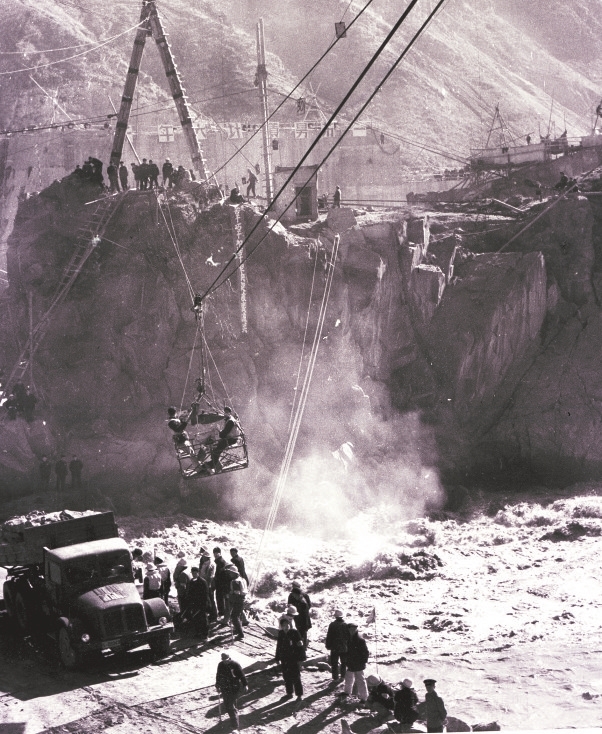
Core Insights - The article highlights the historical significance and modern transformation of the Sanmenxia Water Conservancy Project on the Yellow River, emphasizing its role in flood control, ecological protection, and smart water management [3][4]. Group 1: Historical Context - The Sanmenxia Water Conservancy Project, initiated in 1957, was the first large-scale water conservancy project built on the Yellow River in New China, constructed by thousands of workers under challenging conditions [3]. - The dam, measuring 713 meters in length and 106 meters in height, controls 91.5% of the Yellow River's watershed area, providing safety for 170 million people downstream [3]. Group 2: Ecological and Technological Advancements - Since 2009, the region has developed a 1,194-kilometer composite ecological corridor along the Yellow River, addressing soil erosion over an area of 6,779 square kilometers, with the river's water quality stabilizing at Class II [4]. - The Sanmenxia reservoir has created over 100 square kilometers of wetlands, increasing bird species from 175 to 315, attracting thousands of swans for wintering [4]. Group 3: Modern Water Management - The project has evolved from "engineering water management" to "ecological river protection," integrating safety, ecology, and intelligence into a modern water management system [4]. - The dam features 354 monitoring points forming a "nerve network," with robots conducting 24-hour inspections, achieving millimeter-level data precision [4]. - AI algorithms can forecast water conditions 72 hours in advance with over 95% accuracy, and during the 2025 water and sediment regulation period, the reservoir will provide 475 million cubic meters of water for sediment flushing [4]. Group 4: Future Recommendations - Suggestions for enhancing Yellow River protection include improving regional collaboration mechanisms, establishing cross-provincial compensation systems, and innovating cultural tourism linkages to promote the Yellow River's story globally [6].
二道河水库开工建设
Xin Lang Cai Jing· 2026-01-26 16:55
Core Viewpoint - The construction of the Erdao River Reservoir in Fangshan District is a significant project aimed at enhancing flood control capabilities in the Dashi River basin, with the reservoir expected to be completed by the end of 2030 [1][2]. Group 1: Project Overview - The Erdao River Reservoir will be the highest dam in Beijing, with a total storage capacity of 76.32 million cubic meters, and is classified as a medium-sized reservoir [1]. - The main dam will be a roller-compacted concrete gravity dam, standing at 100 meters high, and will primarily focus on flood control [1][2]. - The project will utilize advanced technologies such as intelligent compaction and temperature control, aiming to create an intelligent and eco-friendly dam [2]. Group 2: Flood Control Capabilities - Once completed, the reservoir will effectively control 75% of the mountainous watershed area of the Dashi River, designed to withstand a maximum flood flow of 5,300 cubic meters per second, which is equivalent to the highest recorded flood peak [2]. - The construction is part of a broader initiative to enhance the flood control infrastructure in the region, including other major water conservancy projects [2].
千年都江堰,何以持续“生长”?丨水润蜀乡
Xin Lang Cai Jing· 2026-01-06 12:16
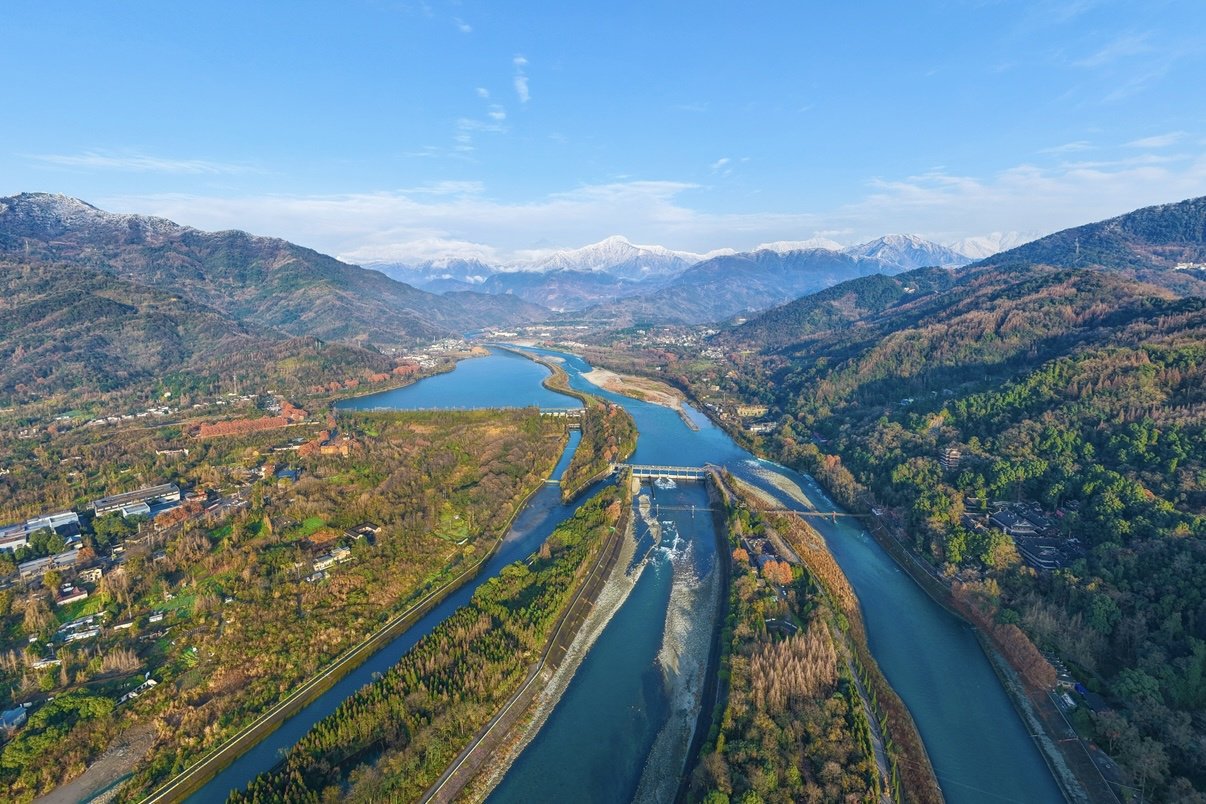
Core Viewpoint - The Dujiangyan irrigation system, an ancient water conservancy project, has evolved into a modern and efficient water management system, integrating traditional wisdom with contemporary development practices [1][4]. Group 1: Maintenance and Modernization - The annual maintenance, known as "yearly repair," is crucial for the longevity of the Dujiangyan irrigation system, focusing on tasks such as dredging and equipment upkeep [6][4]. - The maintenance work has become more sophisticated, incorporating modern techniques such as drone inspections and digital management systems to enhance operational efficiency [6][4]. Group 2: Water Resource Management - The Dujiangyan irrigation area covers 41 counties in 8 cities, serving over 30 million people, making it one of China's three major irrigation districts [7][8]. - The modernization of the irrigation system has reduced water distribution response times from hours to minutes, with a precision control of ±5% in water allocation [8][7]. - The digital twin system allows for data-driven water resource management, significantly improving flood risk predictions and irrigation efficiency [8][7]. Group 3: Hydrological Monitoring - The Dujiangyan hydrological station has been upgraded to enhance monitoring capabilities, with data now uploaded every five minutes using advanced technologies [11][12]. - New radar systems have been implemented to monitor rainfall and river flow, improving the ability to predict and respond to extreme weather events [12][11].
淮河水利委员会专题研究推进水资源管理与调配业务应用系统建设工作
Shui Li Bu Wang Zhan· 2026-01-04 00:18
Core Viewpoint - The Huai River Water Resources Commission is advancing the construction of a water resource management and allocation application system to enhance water resource scheduling and monitoring in the Huai River basin [1] Group 1: System Development and Implementation - The water resource management and allocation application system has been preliminarily established and can effectively support water resource scheduling and monitoring in the Huai River system [1] - The system is expected to go live soon, with a focus on dynamic simulation and continuous optimization of scheduling models and system functions during actual application [1] - The commission emphasizes the importance of strengthening water resource monitoring capabilities to support the system's foundational data [1] Group 2: Integration and Functionality - The system will enhance the dynamic scheduling and monitoring of water resources across the entire Huai River basin, integrating with flood prevention systems and other major water projects [1] - The application system has achieved a comprehensive connection for water resource scheduling across 15 tributaries, including the main Huai River and the Sha Ying River, with capabilities for scheduling plan formulation, regulatory oversight, and real-time scheduling [1] - The level of intelligence in unified water resource scheduling within the basin is continuously improving [1]
制造企业“以智应变”更新赛道 老旧电梯“焕新”让居民幸福感“一键直达”
Yang Shi Wang· 2025-12-11 10:33
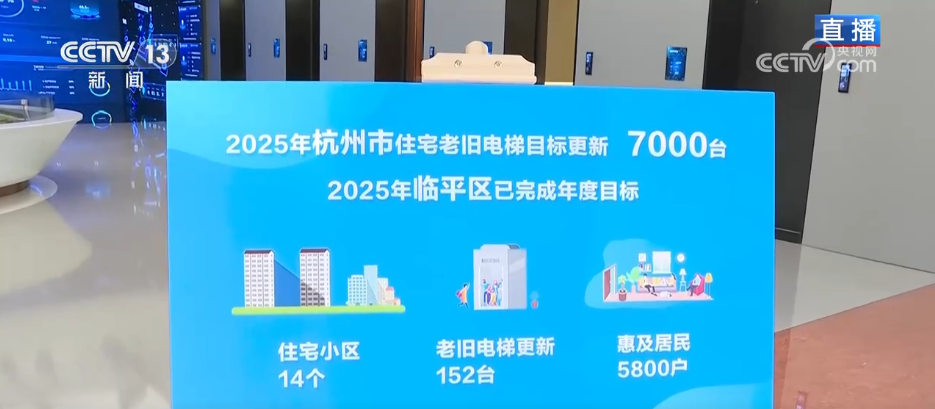
Group 1 - The core theme of the news is the "update" trend in China's economy, particularly focusing on the modernization of old elevators supported by government policies, which is creating new business opportunities for elevator manufacturing companies [1] - The government has set a target of updating 7,000 old residential elevators in Hangzhou this year, with 152 elevators already updated in 14 residential communities, benefiting 5,800 households [2] - The updated elevators feature enhanced safety through the integration of IoT sensors that allow real-time monitoring of operational status, providing a significant improvement in safety measures [4][6] Group 2 - The new elevators also offer improved user experience, including a digital display that consolidates information and provides timely updates, enhancing passenger comfort and communication during faults [8] - Elevator manufacturing companies are expanding into the "old elevator update" business, which has become a core revenue source, with one company establishing a subsidiary dedicated to this market [10][12] - The customization of elevator updates is becoming more precise, with companies now addressing individual building units rather than just entire communities, allowing for tailored solutions to meet diverse resident needs [13]
解锁“聪明”的“钢铁丛林” 看全流程智能决策领航传统产业转型升级
Yang Shi Wang· 2025-11-28 13:18
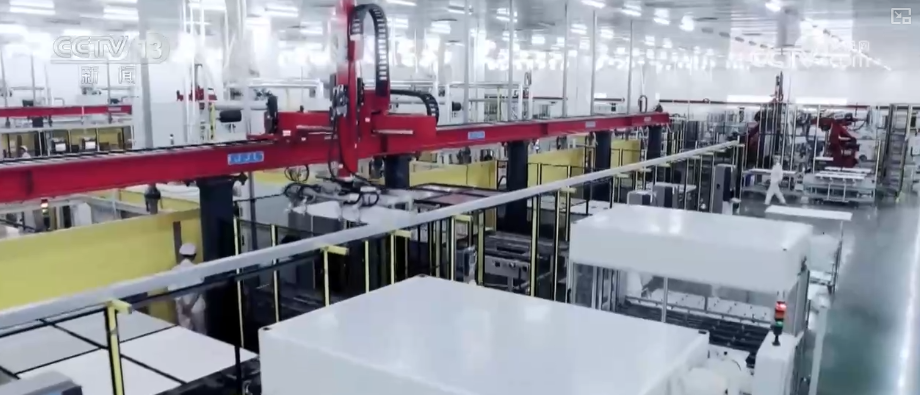
Core Viewpoint - The establishment of the first batch of leading intelligent factories in China marks a significant advancement in the manufacturing sector, showcasing the highest level of development and serving as a benchmark for industry transformation and upgrading [1][3]. Group 1: Intelligent Factory Development - China has built over 7,000 advanced factories and 504 excellent factories, with 15 selected as leading intelligent factories [1]. - Leading intelligent factories demonstrate "full-process intelligent decision-making" capabilities across various sectors, driving collaborative development in the supply chain [5][7]. - Each leading intelligent factory has reportedly replicated and promoted its model to over 100 other factories, becoming a driving force for industry transformation [7]. Group 2: Technological Innovations - The intelligent factories utilize a comprehensive digital twin system that integrates 26 production lines, allowing for detailed tracking of production processes and material relationships [10]. - The digital twin system has significantly reduced inventory days from 15 to 5, alleviating financial burdens associated with excess raw material and finished goods [11]. - Advanced AI models are embedded in production processes, enabling automated control and analysis of material properties, thus enhancing production efficiency [12][16]. Group 3: Quality Control and Efficiency - A multi-modal data perception system has achieved 100% digital control of key processes and equipment, resulting in cost savings exceeding 500 million RMB for companies [16]. - The implementation of 165 different intelligent models across production lines has improved order fulfillment rates to 98.5% and reduced total industry costs by 9% [17].
MIT:AI已取代约12%美国劳动力
3 6 Ke· 2025-11-28 10:02
Core Insights - A study by MIT reveals that artificial intelligence (AI) could replace 11.7% of the U.S. labor market, equating to a wage scale of $1.2 trillion in sectors like finance, healthcare, and professional services [1][2] - The research utilizes the "Iceberg Index," a labor simulation tool developed by MIT and Oak Ridge National Laboratory, to model interactions among 151 million workers and assess the impact of AI [1] - The index highlights that the most affected sectors are often overlooked by traditional automation predictions, with significant wage impacts in human resources, logistics, finance, and administrative roles [2] Labor Market Impact - The study indicates that the visible job losses in tech and IT sectors account for only 2.2% of the total wage impact, approximately $211 billion, while the hidden impacts in other sectors are much larger [2] - The Iceberg Index is not a predictive tool for job losses but provides a skills-centered overview of what current AI systems can accomplish, aiding policymakers in exploring hypothetical scenarios before making financial commitments [2] Collaboration with State Governments - Researchers are collaborating with state governments, including Tennessee, North Carolina, and Utah, to validate the model using local labor data and to develop policy scenarios [3] - Tennessee has already incorporated the Iceberg Index into its official AI workforce action plan, while Utah is preparing a similar report based on the model [3] Interactive Simulation Environment - The research team has created an interactive simulation environment that allows states to test various policy levers, such as reallocating workforce funds and adjusting training programs [4] - The Iceberg Index serves as a "sandbox" for decision-makers to prepare for the impacts of AI on labor, enabling them to identify risk hotspots and prioritize training and infrastructure investments [4]

175米,第14次实现蓄满目标!三峡水库为今冬明春“水安全”奠定坚实基础
Yang Shi Wang· 2025-10-24 06:53
Core Points - The Three Gorges Reservoir has achieved its 2025 goal of reaching a water level of 175 meters, with an effective storage capacity of 22.15 billion cubic meters, marking the 14th time since 2010 that this target has been met [1][2] - Reaching the 175-meter level is crucial for ensuring sufficient water resources during the dry season, as over 60% of the annual inflow occurs during the flood season [6][4] - The reservoir's management has effectively utilized a digital twin system for precise water level control, balancing water storage and flood safety [14][12] Group 1 - The 175-meter water level is the maximum operational height for the Three Gorges Reservoir, essential for flood control and water resource management in the Yangtze River basin [2][4] - The reservoir's ability to reach this level significantly alleviates flood pressure on downstream areas, ensuring a stable water supply for both ecological and human needs [4][8] - From November last year to April this year, the reservoir released a total of 11.67 billion cubic meters of water to downstream areas, equivalent to a year's water supply for over 15 million people [6][8] Group 2 - The management of the reservoir involved coordinated operations among 58 control reservoirs in the Yangtze River basin, emphasizing the complexity of water storage and release strategies [10][16] - The water management team has been monitoring real-time data to optimize water flow, especially during periods of reduced inflow from upstream [8][14] - The effective storage capacity of the control reservoirs has surpassed 100 billion cubic meters, setting a new historical record and providing robust water source assurance for the upcoming dry season [16][17]