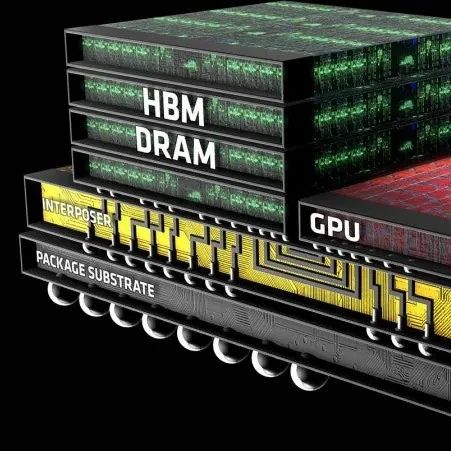
下一代HBM产品线

Search documents
错过HBM,重创芯片巨头
半导体芯闻· 2025-07-08 10:23
Core Viewpoint - Samsung Electronics' second-quarter financial results have raised concerns among investors regarding its position in high-performance memory and advanced chip manufacturing, particularly in the context of competition with SK Hynix and Micron, which have shown robust performance despite a weak overall memory market [1][2]. Financial Performance - Samsung reported Q2 revenue of 74 trillion KRW (approximately 531 billion USD) and an operating profit of 4.6 trillion KRW (around 33 billion USD), reflecting a year-on-year decline of 0.1% and 55.9%, respectively, falling short of market expectations [1][2]. HBM Challenges - Analysts attribute the disappointing earnings primarily to Samsung's insufficient execution in HBM production, with delays in certification for its 12-layer HBM3E by major buyer Nvidia leading to increased inventory and storage costs [2][4]. - The expected shipment volume for HBM remains low, estimated between 500 to 600 gigabits, significantly below targets [2]. NAND Flash Business - Despite significant production cuts, Samsung's NAND flash business failed to achieve profitability in Q2, with losses projected to exceed 300 billion KRW (approximately 216 million USD) due to reliance on the commoditized NAND sector amid weak demand [4]. Foundry and LSI Losses - The foundry and LSI sectors are experiencing deepening losses, with total losses estimated at 23 trillion KRW (around 16.5 billion USD), and individual foundry losses exceeding 21 trillion KRW [5]. - Samsung struggles to attract advanced node customers for 3nm and 5nm processes, with its yield rates significantly lagging behind TSMC [5]. DRAM Market Pressures - Samsung's DRAM business, its largest revenue source, is expected to face pricing pressures, with potential declines in Q4 due to diminishing demand for DDR4 and shrinking premium space for DDR5 [7]. - The company is pinning hopes on the launch of its sixth-generation 10nm DRAM and next-generation HBM products, although this transition carries substantial execution risks [7]. Competitive Landscape - Industry experts indicate that Samsung's poor performance in HBM and foundry sectors may be difficult to reverse, with significant delays in Nvidia certification highlighting its lag behind competitors SK Hynix and Micron [8].