
秘色瓷

Search documents
吴越秘色瓷:轻旋薄冰盛绿云
Xin Lang Cai Jing· 2026-02-27 19:29
Core Viewpoint - The recent archaeological discoveries in the Zhejiang province, particularly related to the production of "Misei" porcelain, indicate a revival of this high-quality ceramic during the Northern Song Dynasty, challenging previous assumptions about its decline [12][15]. Archaeological Discoveries - Excavations at the Meipu kiln site in Linhai City have revealed evidence of a porcelain production hub that emerged around 150 kilometers south of the original production area at the Shanglin Lake during the Northern Song period [13]. - The Meipu kiln site has been identified as a significant location for the production of "Misei" porcelain, with findings including high-quality porcelain fragments and kiln tools, indicating advanced production techniques [13][15]. Historical Context - "Misei" porcelain, known for its exquisite quality, was produced at the Yue kiln in the Shanglin Lake area during the late Tang to early Song periods, but its production records became increasingly vague after the Song Dynasty [12]. - The discovery of "Misei" porcelain in various tombs across different dynasties, including the Northern Song and Liao, has helped clarify its historical significance and production locations [12]. Production Techniques - The use of glazed porcelain crucibles for firing "Misei" porcelain was a notable technique that allowed for high-quality production, which was not commonly used in other kilns during the same period [14][15]. - The archaeological findings suggest that the revival of "Misei" porcelain production at the Meipu kiln involved advanced techniques that were previously thought to have been abandoned [15]. Trade and Distribution - The Meipu kiln area is believed to have been a crucial center for porcelain trade during the Northern Song period, with evidence of a variety of ceramics from different regions found at the excavation site [16]. - The discovery of a dock area at the kiln site indicates that it may have served as a significant distribution point for porcelain, contributing to the understanding of the "Maritime Silk Road" during the Song Dynasty [16]. Regional Development - The archaeological work at the Meipu kiln and surrounding areas has helped to fill gaps in the historical narrative of porcelain production in Zhejiang, linking the development of the Yue kiln and the Longquan kiln [17]. - The findings from the Meipu and Shabu kilns illustrate a continuous evolution in porcelain production techniques and styles, highlighting the interconnectedness of different regional kilns in ancient China [17].

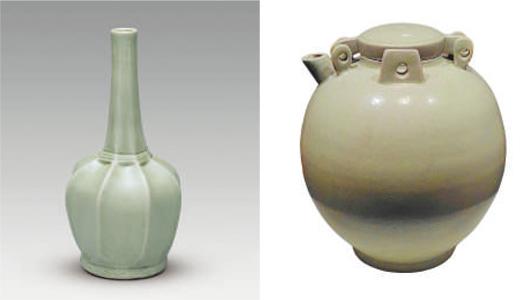
一抹天青传千年——关于五代时期吴越国秘色瓷
Ren Min Ri Bao· 2026-02-07 03:15
Core Viewpoint - The article highlights the significance of "Misei Porcelain" as a pinnacle of craftsmanship and aesthetic during the Wu-Yue Kingdom, emphasizing its role in cultural heritage and political diplomacy through its use as royal gifts and ceremonial items [2][3][4]. Group 1: Historical Context - Misei Porcelain was produced specifically for the royal court of the Wu-Yue Kingdom during the late Tang to early Song periods, serving both daily and ceremonial purposes [3]. - The porcelain was extensively used as "national gifts" to the Central Plains, showcasing the wealth and cultural sophistication of the Wu-Yue royal family [3]. - Excavations at the He Si Ao kiln site in Zhejiang confirmed it as a core production site for Misei Porcelain, establishing a complete production and usage chain [3]. Group 2: Aesthetic and Craftsmanship - Misei Porcelain represents a perfect blend of craftsmanship and aesthetics, characterized by its simple yet elegant designs and soft, warm glazes [4]. - The variety of shapes includes bowls, plates, and jars, all reflecting meticulous craftsmanship and a focus on simplicity [4]. - The innovative technique of using porcelain boxes for glazing and single-piece firing ensured the purity and perfection of the glaze [4]. Group 3: Cultural Impact - Misei Porcelain established a high-end aesthetic paradigm in celadon, influencing later ceramics such as Ru kiln and Southern Song official kilns [5]. - The unique historical context of the Wu-Yue Kingdom, which enjoyed relative stability during a time of chaos, allowed for the flourishing of craftsmanship and the establishment of an early "official kiln" system [5]. - The production of Misei Porcelain was institutionalized, with evidence of official production practices found at the He Si Ao kiln site [5]. Group 4: Legacy - Today, Misei Porcelain continues to be a symbol of the cultural and artistic achievements of the Wu-Yue Kingdom, representing a dialogue between artisans and poets [6]. - It remains a significant part of Chinese civilization, influencing the brilliance of Song porcelain and enduring through centuries of cultural transmission [6].
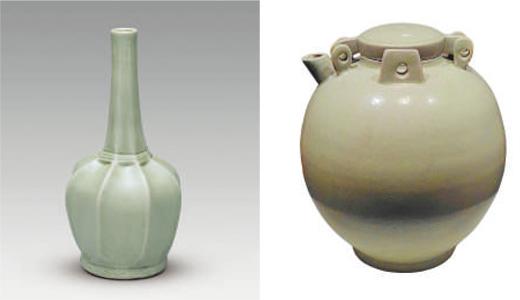
一抹天青传千年
Ren Min Ri Bao· 2026-02-07 02:27
Core Viewpoint - The article highlights the significance of secret color porcelain (秘色瓷) as a pinnacle of craftsmanship and aesthetic during the Wu-Yue Kingdom, emphasizing its role as both a material testament to the kingdom's culture and a symbol of Jiangnan's refined spirit [4][5]. Group 1: Historical Context - Secret color porcelain served the royal family of the Wu-Yue Kingdom and was a significant tribute to the Central Plains, showcasing the luxury and ceremonial norms of the royal court [5]. - The discovery of 13 pieces of celadon in the Famen Temple's underground palace in 1987 confirmed historical records of secret color porcelain, dispelling myths surrounding its existence [4]. Group 2: Artistic and Craftsmanship Aspects - The aesthetic core of secret color porcelain lies in its simplicity, with a focus on elegant shapes and subtle glaze colors, reflecting the refined and understated beauty valued in Jiangnan culture since the Tang Dynasty [6]. - Craftsmen developed innovative techniques, such as using porcelain boxes for glazing, to achieve pure and perfect glaze colors, demonstrating the high standards of craftsmanship associated with court porcelain [6][7]. Group 3: Influence and Legacy - Secret color porcelain established a high-end aesthetic paradigm in celadon, influencing later ceramics like Ru kiln and Southern Song official kilns, and impacting the aesthetic direction of Longquan kilns and Korean celadon [7]. - The unique historical context of the Wu-Yue Kingdom, characterized by relative stability during a time of chaos, allowed for the flourishing of craftsmanship and the establishment of an early "official kiln" system, which laid the foundation for the exquisite quality of secret color porcelain [7]. Group 4: Cultural Significance - Today, secret color porcelain continues to narrate the story of a dynasty, reflecting the wisdom of a family and the aesthetic values of an era, symbolizing a vibrant cultural legacy that transcends the fall of the Wu-Yue Kingdom [8].
筑塘伏海建伟业 陌上花开显柔情
Qi Lu Wan Bao· 2026-02-06 16:26
Core Viewpoint The historical drama "Taiping Year" vividly illustrates the significant decision of the Wu-Yue Kingdom to "submit to Song" and maintain peace during the tumultuous period between the fall of the Tang Dynasty and the rise of the Song Dynasty, highlighting the historical significance of peaceful unification. Group 1: Historical Context - The Wu-Yue Kingdom was the longest-lasting regime during the chaotic Five Dynasties and Ten Kingdoms period, existing from 907 to 978 AD, under the rule of five kings across three generations [3]. - The kingdom's stability allowed for the flourishing of culture and economy, as reflected in the saying "Above there is heaven, below there are Su and Hang" [3]. Group 2: Contributions of Qian Liu - Qian Liu, the founder of the Wu-Yue Kingdom, implemented the national policy of "serving China well" and "protecting the territory and the people," achieving significant accomplishments, particularly in water conservancy [5]. - He mobilized 200,000 laborers to construct hundreds of miles of sea dikes to combat frequent flooding, which transformed previously flood-prone areas into fertile land [5][6]. - Qian Liu established the "Du Shui Ying Tian Si" to oversee river management and irrigation, leading to consistent agricultural harvests and a significant reduction in rice prices [6]. Group 3: Economic Development - The Wu-Yue Kingdom's silk and textile industries thrived, with a notable increase in sericulture and silk production, evidenced by the large number of weavers in official workshops [8][9]. - The kingdom was known for its high-quality ceramics, particularly the "secret color porcelain" from the Yue kiln, which gained fame during the late Tang and Five Dynasties periods [9]. - Trade flourished, with the Wu-Yue Kingdom engaging in commerce with various regions, including the Central Plains and overseas countries like Japan and Korea, facilitating cultural exchanges and economic prosperity [10][11].

《太平年》热播背后,吴越国“遗产”如何守护?
Xin Lang Cai Jing· 2026-02-05 07:52
Core Viewpoint - The recent popularity of the historical drama "Tai Ping Nian" has sparked public interest in the cultural heritage of the Wu-Yue Kingdom during the Five Dynasties and Ten Kingdoms period, prompting discussions on enhancing the influence of Wu-Yue culture through research, preservation, and dissemination [1][4]. Group 1: Cultural Heritage and Preservation - The Wu-Yue Kingdom period is recognized as a significant phase in the socio-economic development of ancient Hangzhou, establishing the city's foundational layout, with numerous relics such as urban sites, tombs, temples, and caves still present [3][4]. - A proposal was made to create a comprehensive narrative of Wu-Yue relics by connecting various sites through multiple perspectives, including urban development, water management, and Buddhist art, to form an experiential cultural display system [3][4]. - The establishment of a "Wu-Yue Kingdom Place Name Cultural Database" and themed tours was suggested to utilize place names as cultural links that narrate Hangzhou's stories and connect past and present [4]. Group 2: Active Cultural Transmission - The Wu-Yue Kingdom maintained peace and prosperity for nearly a century, leading to significant cultural development characterized by regional and temporal features [5]. - Suggestions were made to extract themes such as "civilizational transmission," "ecological wisdom," and "craftsmanship" from Wu-Yue culture to integrate local culture into global narratives, achieving "active transmission" of Wu-Yue culture [5]. - The importance of transforming Wu-Yue cultural heritage into modern consumer experiences was emphasized, with proposals for developing products like secret color porcelain and Wu-Yue silk to enhance cultural relevance in contemporary life [5][6]. Group 3: Challenges and Solutions in Cultural Heritage - Despite the rich physical remains and clear historical records of secret color porcelain, challenges such as the loss of core techniques, limited protective materials, and shortages of talent and funding hinder research and preservation efforts [6]. - Recommendations include establishing a specialized evaluation system for protective agents for secret color porcelain and fostering collaboration between universities, research institutions, and museums to cultivate a professional talent pool [6]. - The use of digital technology for the protection, detection, and research of Wu-Yue stone carvings was proposed, along with the creation of a digital display museum to enhance public engagement and cultural value dissemination [6].
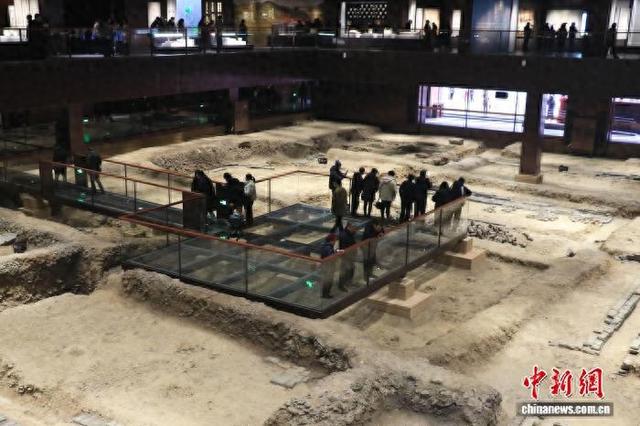
五千年前就有烧盐生产线?越国都城在哪?多个考古重磅发现公布
Yang Shi Wang· 2026-02-02 15:38
Group 1: Archaeological Discoveries - The discovery of a complete salt production line from the Liangzhu culture, dating back 4,800 to 4,600 years, showcases advanced organization and management of handcraft production in ancient times [1] - The excavation of the capital city of the Yue Kingdom in Shaoxing, along with the discovery of official documents from the Han and Six Dynasties, provides critical evidence for understanding the administrative structure of the region [2] - The identification of a high-level sacrificial site, likely the national altar of the Yue Kingdom, reveals significant insights into the religious practices and societal structure of the time [3] Group 2: Ceramic Technology Advancements - The discovery of a large "super dragon kiln" from the Eastern Han period in Ningbo, which is the largest and steepest of its kind in Zhejiang, offers key samples for studying the transition of Chinese ceramics from primitive to mature stages [4] - The revival of the secret color porcelain during the Northern Song period at the Phoenix Mountain site indicates a significant technological resurgence and its role in maritime trade [5] Group 3: Architectural Insights - The excavation of the Shennita and the Song Six Tombs reveals ancient construction philosophies, emphasizing the integration of architecture with natural landscapes and practical site selection for royal tombs [6]
临安推出吴越文化三大打卡点
Hang Zhou Ri Bao· 2026-01-20 03:03
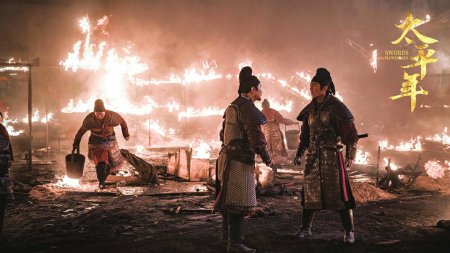
Core Viewpoint - The television series "Tai Ping Nian," set against the backdrop of "Na Tu Gui Song," has premiered and aims to deepen public understanding of the historical context and cultural significance of the Wu-Yue kingdom and its founder, Qian Liu [1][2]. Group 1: Cultural Significance - The series highlights the cultural heritage of Lin'an, showcasing three key cultural sites that embody the essence of Wu-Yue culture [1]. - The Wu-Yue Cultural Museum features exquisite artifacts such as secret color porcelain, reflecting the prosperous life and advanced craftsmanship of the Wu-Yue kingdom [1]. - The Yijincheng Ruins Museum allows visitors to experience the historical significance of the ancient Wu-Yue capital, evoking the grandeur of its past [1]. Group 2: Historical Context - The narrative traces back to the Five Dynasties and Ten Kingdoms period, focusing on Qian Liu's establishment of the Wu-Yue kingdom during a time of chaos [2]. - The last king of Wu-Yue, Qian Hongchu, chose to "Na Tu Gui Song," adhering to the principle of serving the central government and ensuring the welfare of his people, marking a significant transition from regional power to unity under the Song dynasty [2].
秘色越瓯出上林:访慈溪上林湖越窑博物馆
Jing Ji Guan Cha Bao· 2025-11-19 04:00
Core Insights - The article discusses the exploration of archaeological sites related to the Yue Kiln, a significant ancient porcelain production center in China, particularly in the region of Shanglin Lake, Zhejiang Province [1][2][6]. Group 1: Yue Kiln Overview - The Yue Kiln is recognized as one of the most famous ancient celadon kiln systems in China, primarily located in the area of Shanglin Lake, which was part of Mingzhou during the Tang Dynasty [2][3]. - The earliest porcelain in China was produced in the dragon kilns of this region during the Eastern Han period, and the Yue Kiln celadon represented the highest level of porcelain manufacturing until the Song Dynasty, influencing ceramic production in Egypt, Persia, Korea, and Japan [2][3]. Group 2: Archaeological Findings - Significant archaeological investigations have been conducted in the Shanglin Lake area since the 1930s, confirming it as the central production site for Yue Kiln celadon [3][4]. - Major excavations revealed numerous kiln sites, including the discovery of two kilns from the Tang and Song periods, with one Tang kiln measuring 41 meters in length and 3.2 meters in width [4][5]. - The findings from these excavations provide reliable physical evidence for the study of Yue Kiln culture, including its development from inception to decline [6][5]. Group 3: Characteristics of Yue Porcelain - Yue porcelain is characterized by its thin body, uniform glaze, and vibrant green color, with its origins tracing back to late Neolithic glazed pottery [7][9]. - The production techniques evolved over time, with the Tang Dynasty marking the peak of craftsmanship, where products became highly sought after and were considered luxury items alongside gold, silver, and silk [8][9]. Group 4: Historical Significance - The Shanglin Lake area is also recognized as the birthplace of "secret color" porcelain, which was highly praised for its beautiful glaze and exquisite designs during the Tang Dynasty [12][13]. - The term "secret color" refers to a specific glaze formula that produces a unique aesthetic effect, contributing to the prestige of Yue porcelain in the imperial court [12][15].