个人意外险

Search documents
香港大埔火灾直保再保联手理赔
Bei Jing Shang Bao· 2025-11-30 15:43
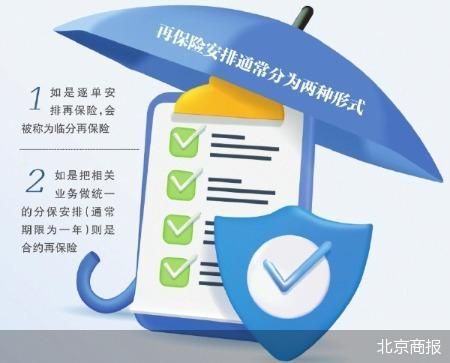
Core Insights - The Hong Kong fire incident at Hong Fu Court has raised significant concerns regarding the insurance industry's risk management and claims handling capabilities, particularly in light of the HKD 2 billion property insurance coverage involved [1][4] - Multiple insurance products, including property insurance, public liability insurance, and personal accident insurance, are in place for the affected building, with a total premium of HKD 337,700 for two years [3][4] - The insurance regulatory body has established a dedicated task force to ensure that insurance companies allocate sufficient resources for claims processing and customer service [4] Insurance Coverage and Claims - The core insurer for the affected property is China Taiping Insurance (Hong Kong), which has provided various insurance products including property all-risk insurance and third-party liability insurance [3][4] - The building's property insurance has a coverage limit of HKD 2 billion, which raises questions about the insurance companies' ability to handle potential large payouts [1][3] - The insurance industry is expected to follow principles of "pay what is due, pay quickly, and reasonable pre-payment" to facilitate claims for affected residents [4] Reinsurance Arrangements - At least three reinsurance companies are involved in providing reinsurance coverage for the affected property, including China Re and Qianhai Re [5][6] - Reinsurance serves as a critical mechanism for risk distribution, allowing primary insurers to transfer part of their risk to other insurers [5][8] - The reinsurance structure typically includes both proportional and excess-of-loss reinsurance arrangements, which help manage large claims effectively [6][7] Risk Management and Financial Stability - The insurance industry relies on reinsurance to enhance its underwriting capacity and financial stability, particularly for high-value insurance policies [8][12] - A hypothetical reinsurance structure for the HKD 2 billion coverage suggests that the primary insurer could retain a self-retention amount of HKD 100 million, with subsequent layers of reinsurance covering additional losses [11][12] - In extreme scenarios, the primary insurer may only need to cover 5% of total losses, with the remaining 95% absorbed by the reinsurance framework [13]


Hamilton Insurance (HG) - 2025 Q2 - Earnings Call Transcript
2025-08-07 14:02
Financial Data and Key Metrics Changes - Hamilton Insurance Group reported net income of $187 million for Q2 2025, representing an annualized return on average equity of 30.2%, compared to $131 million and 23.6% in Q2 2024 [5][19] - Operating income was $162 million, equal to $1.55 per diluted share, with an annualized operating return on average equity of 26.1% [19] - Book value per share increased by 8.3% to a record $25.55 [19][34] Business Line Data and Key Metrics Changes - Gross premiums written increased by 18% in Q2 2025, reaching $1.6 billion compared to $1.3 billion in Q2 2024 [19][20] - Hamilton Global Specialty saw gross premiums written grow by 7%, while Hamilton Select experienced a significant growth of 52% year-over-year [12][23] - The Bermuda segment's gross premiums written grew by 21%, driven by casualty and property reinsurance classes [25][26] Market Data and Key Metrics Changes - The international segment's gross premiums written grew by 13%, with underwriting income of $27 million and a combined ratio of 89.3% [23] - The Bermuda segment's combined ratio increased to 84.3% from 77.4% in the prior year, primarily due to higher loss ratios [26][27] - The overall combined ratio for the group was 86.8%, compared to 84.4% in Q2 2024 [21] Company Strategy and Development Direction - The company is focused on proactive cycle management, targeting attractive underwriting opportunities while reducing exposure in less favorable areas [10][17] - Recent management appointments reflect a commitment to internal talent development and strategic succession planning [6][7] - The company aims to maintain a disciplined underwriting culture to ensure risk-adjusted returns [64][65] Management Comments on Operating Environment and Future Outlook - Management expressed confidence in the company's performance trajectory, citing strong client relationships and a well-diversified platform [17] - The underwriting environment remains attractive, with continued strong underlying rate increases in casualty classes [14][56] - The company remains vigilant on loss reserves, having strengthened certain casualty reserves by $18 million this quarter [15][27] Other Important Information - Total investment income for Q2 2025 was $149 million, up from $96 million in Q2 2024, with significant contributions from the Two Sigma Hamilton Fund [29] - The company repurchased $35 million of shares in Q2 2025, with an additional $15 million repurchased post-quarter [32] Q&A Session Summary Question: Can you provide more color around the reserve increases and the discontinued lines? - Management noted that the $18 million reserve increase was manageable, representing about 0.5% of overall reserves, primarily related to discontinued lines from 2020 and prior [38][39] Question: What did you see in terms of property pricing this quarter? - Management indicated that property pricing remains attractive despite some pressure, particularly in larger accounts, while maintaining discipline in underwriting [44][46] Question: Are you seeing a lot of MGA competition in your Select business? - Management confirmed that while there is some impact from MGAs, they are still seeing a healthy flow of business and are comfortable with their underwriting approach [51][52] Question: How should we think about tax rates going forward? - The effective tax rate remains in the low single digits due to a five-year deferral on the global minimum tax, which starts in 2030 [81][82]