大厦财产险

Search documents
香港火灾:超20亿港元保险谁来赔
3 6 Ke· 2025-12-08 23:56
Core Insights - The Hong Kong Tai Po fire has raised significant concerns regarding insurance claims and the adequacy of coverage for affected residents [1][2][3] - The total insured amount for the property is HKD 2 billion, with various insurance products in place, including property insurance, public liability insurance, and home insurance [4][5][10] - The insurance industry is responding quickly, with multiple companies activating emergency claims procedures to ensure timely support for affected families [11][12] Insurance Coverage and Claims - The insurance coverage for the Tai Po estate includes property insurance with a sum insured of HKD 2 billion, public liability insurance, and home insurance for individual residents [5][10] - As of December 2, Taiping Hong Kong has completed claims for 12 households, totaling HKD 7.272 million, and has committed to expedite claims processing [2][11] - The reinsurance mechanism plays a crucial role in absorbing losses, with primary insurers retaining only a small percentage of the risk [2][8] Market Response and Trends - Following the fire, there has been a notable increase in public interest in disaster prevention knowledge and home insurance, with user engagement on related platforms rising significantly [3][12] - The fire has highlighted the need for improved fire safety measures and insurance coverage in older residential buildings in Hong Kong [12][14] - The incident has prompted discussions about the necessity of enhancing the home insurance market in mainland China, where penetration rates remain low [12][13][14] Regulatory and Industry Developments - The National Financial Regulatory Administration has urged insurance companies to streamline claims processes and provide timely support to disaster-affected residents [2][11] - There is a growing emphasis on developing inclusive home insurance products to increase market penetration and consumer awareness [13][14] - The insurance industry is encouraged to innovate and diversify home insurance offerings to better meet consumer needs and enhance risk management [14][15]

香港大埔火灾直保再保联手理赔
Bei Jing Shang Bao· 2025-11-30 15:43
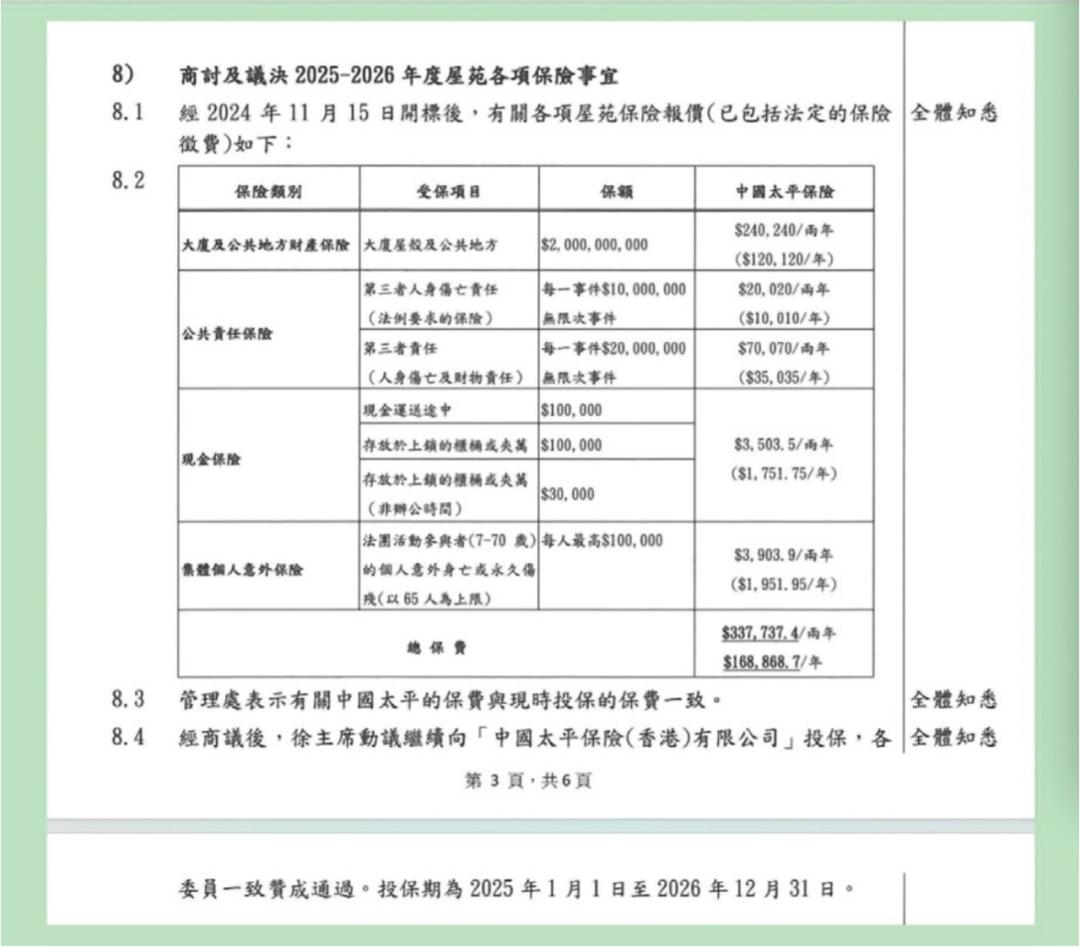
Core Insights - The Hong Kong fire incident at Hong Fu Court has raised significant concerns regarding the insurance industry's risk management and claims handling capabilities, particularly in light of the HKD 2 billion property insurance coverage involved [1][4] - Multiple insurance products, including property insurance, public liability insurance, and personal accident insurance, are in place for the affected building, with a total premium of HKD 337,700 for two years [3][4] - The insurance regulatory body has established a dedicated task force to ensure that insurance companies allocate sufficient resources for claims processing and customer service [4] Insurance Coverage and Claims - The core insurer for the affected property is China Taiping Insurance (Hong Kong), which has provided various insurance products including property all-risk insurance and third-party liability insurance [3][4] - The building's property insurance has a coverage limit of HKD 2 billion, which raises questions about the insurance companies' ability to handle potential large payouts [1][3] - The insurance industry is expected to follow principles of "pay what is due, pay quickly, and reasonable pre-payment" to facilitate claims for affected residents [4] Reinsurance Arrangements - At least three reinsurance companies are involved in providing reinsurance coverage for the affected property, including China Re and Qianhai Re [5][6] - Reinsurance serves as a critical mechanism for risk distribution, allowing primary insurers to transfer part of their risk to other insurers [5][8] - The reinsurance structure typically includes both proportional and excess-of-loss reinsurance arrangements, which help manage large claims effectively [6][7] Risk Management and Financial Stability - The insurance industry relies on reinsurance to enhance its underwriting capacity and financial stability, particularly for high-value insurance policies [8][12] - A hypothetical reinsurance structure for the HKD 2 billion coverage suggests that the primary insurer could retain a self-retention amount of HKD 100 million, with subsequent layers of reinsurance covering additional losses [11][12] - In extreme scenarios, the primary insurer may only need to cover 5% of total losses, with the remaining 95% absorbed by the reinsurance framework [13]