个人贵金属延期业务

Search documents
去杠杆!工行、农行上调个人贵金属延期合约保证金比例
2 1 Shi Ji Jing Ji Bao Dao· 2026-02-26 14:17
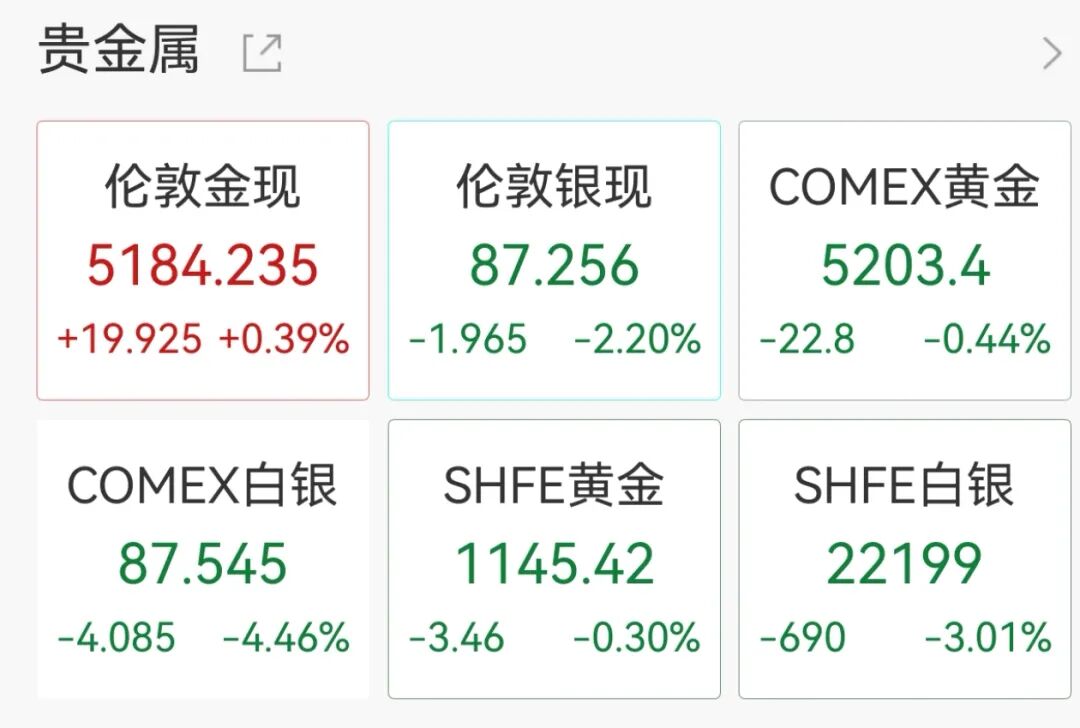
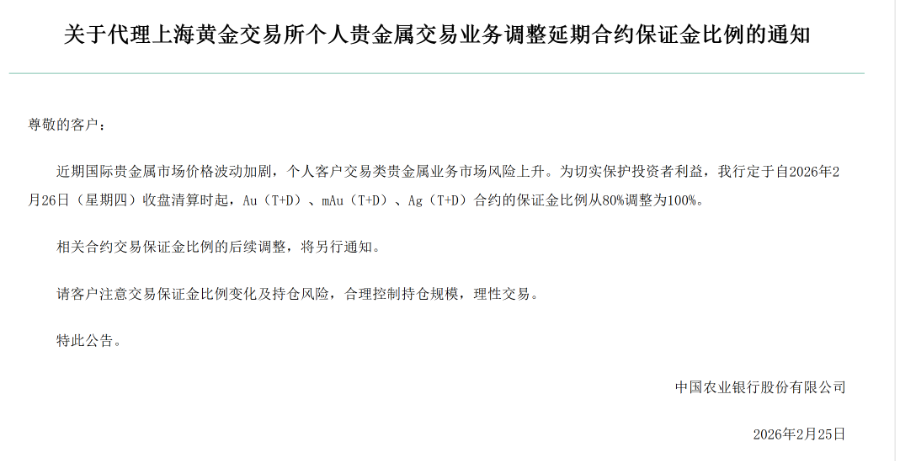
Core Viewpoint - Major Chinese banks, including Industrial and Agricultural Banks, have raised the margin requirement for personal precious metals deferred business from 80% to 100% in response to increased market volatility and rising personal investment interest in precious metals [1][4]. Group 1: Market Conditions - International precious metal prices have been fluctuating at high levels, with London spot gold reaching $5,205.472 per ounce on February 26 [1]. - The domestic futures market for gold and silver also opened significantly higher on the first trading day of the Year of the Horse, indicating a continued rise in market sentiment [1]. Group 2: Bank Actions - Agricultural Bank announced the margin increase effective from February 26, citing heightened market risks associated with personal trading in precious metals [1]. - Industrial Bank followed suit, implementing the same margin adjustment for various gold and silver contracts starting February 27 [4]. Group 3: Contract Types - The contracts affected include Au (T+D), mAu (T+D), Ag (T+D), and others, which represent different types of deferred trading products for gold and silver [7][8]. - The adjustment in margin requirements is expected to reduce leverage in trading, promoting more rational investment behavior among clients [8]. Group 4: Historical Price Trends - Since 2025, precious metal prices, particularly gold, have surged, with a nearly 65% increase in the annual price of London gold [8]. - In 2026, gold prices continued to rise, surpassing $5,500 per ounce, attracting a large number of personal investors and amplifying market risks [8]. Group 5: Industry Response - Prior to the margin increase, several banks had begun to tighten their personal precious metal trading operations, with some banks announcing the closure of related business functions [9]. - For instance, Postal Savings Bank announced the cessation of its personal precious metal business effective January 12, 2026 [9].



上调至100%!金价迅猛上涨,工行、农行紧急出手
2 1 Shi Ji Jing Ji Bao Dao· 2026-02-26 13:55
Core Viewpoint - Major banks in China, including Industrial and Agricultural Banks, have raised the margin requirement for personal precious metals deferred business from 80% to 100% to mitigate risks associated with increased market volatility in precious metals [1][3][5]. Group 1: Market Conditions - The international precious metals market has shown strong performance, with spot gold prices rebounding to over $5,200 per ounce as of February 26, 2026, indicating a continued upward trend [1]. - The price of gold has surged nearly 65% throughout 2025, with prices exceeding $5,500 per ounce in 2026, attracting a significant number of individual investors and amplifying market risks [8]. Group 2: Bank Actions - Agricultural Bank announced on February 25, 2026, that it would increase the margin requirement for various precious metals contracts to 100% starting from the market close on February 26, 2026, citing heightened market risks [3]. - Industrial Bank followed suit, adjusting the margin for personal clients' contracts to 100% effective February 27, 2026, as a proactive measure to protect investors [5]. Group 3: Contract Types - The contracts affected by the margin increase include Au (T+D), mAu (T+D), and Ag (T+D), which represent different types of gold and silver deferred contracts, allowing investors to choose between immediate or deferred delivery [7][8]. - The adjustment in margin requirements effectively reduces the leverage for trading, moving from a leverage of approximately 1.25 times to 1 time, thereby encouraging more rational investment behavior among clients [8]. Group 4: Industry Trends - Prior to the margin increase, several banks had begun to tighten their personal precious metals trading operations, with some banks announcing the closure of related business functionalities for clients without positions or debts [9]. - The tightening of margin requirements and the closure of certain trading functionalities reflect a broader trend among financial institutions to manage risks in a volatile market environment [9].