之江实验室021科学基础模型

Search documents
浙江两会观察:科技创新潮起 如何泛起涟漪?
Xin Lang Cai Jing· 2026-01-17 11:31
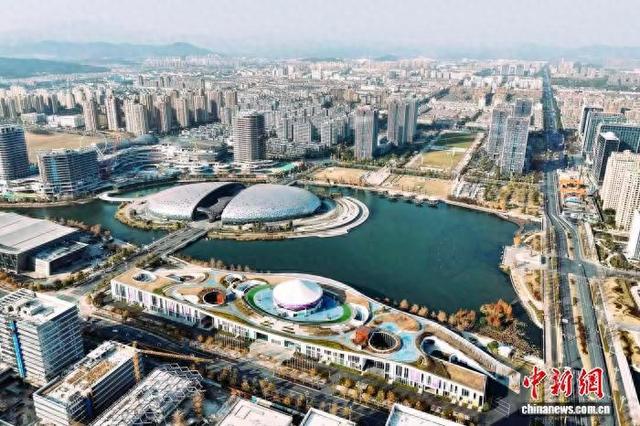
Group 1 - Zhejiang aims to achieve an artificial intelligence core industry revenue of 680 billion yuan by 2025, with a year-on-year growth of over 20% [1] - The province plans to invest over 700 billion yuan in technological innovation, reflecting a year-on-year increase of 5.6% [1] - The government emphasizes innovation as the core productivity to seize new development opportunities amid rapid technological advancements and regional competition [1] Group 2 - Deqing County is becoming a global innovation hub in geographic information, leveraging its strong educational resources and partnerships with international organizations [3] - The integration of geographic information and artificial intelligence is a key focus for Deqing, enhancing its role as a foundational support for AI [3] Group 3 - The establishment of a large-scale public computing platform in Huangyan District marks a significant step in building a competitive ecosystem for computing power [5] - Huangyan is attracting major enterprises to collaborate on developing new strategic industry clusters, particularly in bio-based new materials [5] Group 4 - Zhejiang has seen the addition of over 6,000 high-tech enterprises and 17,600 technology-based SMEs in the past year, indicating a robust growth in innovation [7] - The formation of complementary entities like Alibaba Cloud and Zhijiang Laboratory is strengthening the foundation for AI development in the region [7] Group 5 - Challenges remain, such as low investment in basic research and insufficient corporate participation, prompting calls for a multipronged investment strategy and enhanced support policies [8] - The ongoing innovation efforts in Zhejiang are characterized by a multi-faceted approach, aiming for comprehensive development and modernization [8]

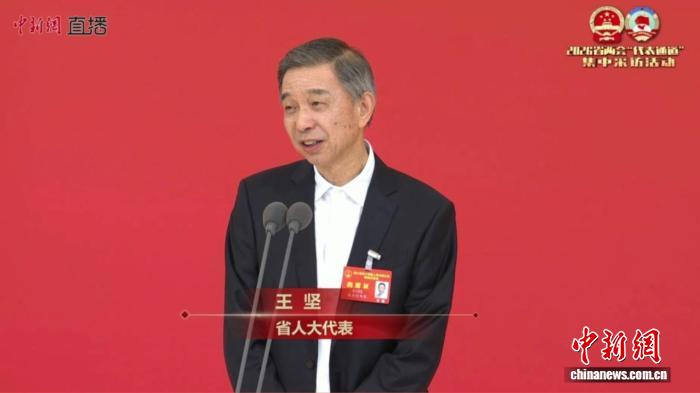
中国工程院院士王坚:AI对未来的影响远远超乎想象
Zhong Guo Xin Wen Wang· 2026-01-16 02:11
Core Viewpoint - The impact of artificial intelligence (AI) on the future is expected to far exceed current imaginations, as stated by Wang Jian, an academician of the Chinese Academy of Engineering and director of the Zhijiang Laboratory [1]. Group 1: Global AI Landscape - The global AI landscape is characterized by a "U.S.-China leadership with tiered distribution," with the U.S. and China firmly in the first tier, followed by the U.K., Japan, South Korea, and Germany in the second tier [2]. - AI is seen as a crucial variable for industrial innovation and transformation, influencing various sectors [2]. Group 2: China's AI Development - In May of the previous year, the Zhijiang Laboratory collaborated with over 20 companies to launch the "Trinity Computing Constellation," marking the beginning of China's "space computing" era, integrating AI with the aerospace industry [2]. - Zhejiang Province aims to establish itself as a "global AI innovation development highland," with this initiative included in the key tasks for the 14th Five-Year Plan [2]. Group 3: Advantages of Zhejiang Province - **Technological First-Mover Advantage**: Companies like Alibaba's Tongyi Qianwen and DeepSeek are leading in the large model field, with significant contributions from the Zhijiang Laboratory in scientific foundational model research [3][5]. - **Innovation Mechanism Advantage**: Hangzhou is positioned as a leader in AI development within Zhejiang, focusing on creating a robust innovation ecosystem through improved infrastructure and policy support [6]. - **Application Scenario Advantage**: The presence of numerous small and medium-sized tech enterprises in Zhejiang allows for a sensitive response to where AI can create value, addressing the issue of having technology without market application [6].