九章注智能义肢手

Search documents
灵巧手的腱绳驱动方案——实现高灵巧、类人操作的关键路径与理想选择
3 6 Ke· 2025-11-21 07:40
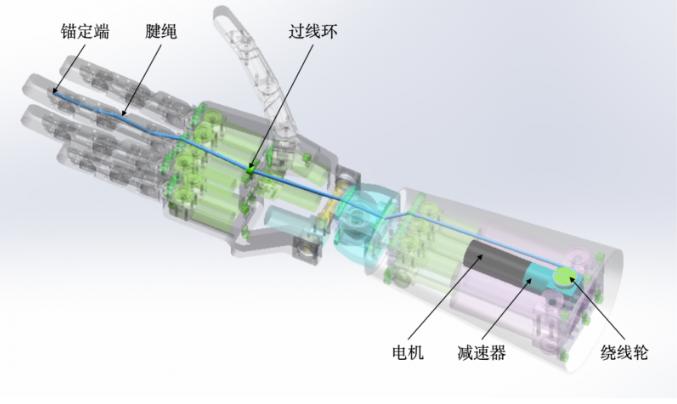
Core Insights - The article analyzes the rise of tendon-driven solutions in the field of dexterous hands for humanoid robots, highlighting their potential and advantages over traditional drive methods [1] Group 1: Technical Requirements and Challenges of Dexterous Hands - Dexterous hands play a crucial role in humanoid robots, enabling interaction with the physical world and performing complex tasks [2] - The design of dexterous hands must meet stringent technical requirements, including high degrees of freedom, lightweight construction, and rapid response times [3][4] Group 2: Advantages of Tendon-Driven Solutions - Tendon-driven solutions offer significant advantages in terms of lightweight design, flexible layout, and biomimetic applications compared to traditional drive methods [5] - The ability to support remote actuation allows for better dynamic performance and energy efficiency, with finger flexion speeds reaching 30 milliseconds and motor response times as low as 18 milliseconds [8][9] - The use of ultra-high molecular weight polyethylene (UHMWPE) fibers enhances the reliability and performance of tendon-driven systems, reducing weight by 30%-40% and improving speed and flexibility [12][14] Group 3: Industry Applications and Case Studies - The Tesla Optimus humanoid robot exemplifies the successful integration of tendon-driven solutions, achieving 22 degrees of freedom and a response time of 0.2 seconds [16][17] - In medical applications, tendon-driven dexterous hands have been validated for precision tasks, such as in the da Vinci surgical system, demonstrating their adaptability and effectiveness [18] - Companies like 九章注 are pushing tendon-driven technology into the market, particularly in the field of smart prosthetics, offering lightweight and high-performance solutions at lower costs [19][20][21]