书本式折叠屏手机

Search documents
下周“科技春晚”CES开幕,英伟达们要向市场证明AI能卖得动
硬AI· 2025-12-30 03:05
作者 | 李 佳 编辑 | 硬 AI 一年一度的消费电子展(CES)即将于下周在拉斯维加斯拉开帷幕,英伟达、三星、联想等科技巨头将面临一场关键考验:向普通消费者证明AI硬件值得买单。 这场年度科技盛会将不再局限于概念展示,而是成为检验AI产品真实市场需求的重要试金石,企业需要向市场证明,AI不仅能"做出来",更能"卖出去"。 1月6日至9日举行的CES展会上, 英伟达首席执行官黄仁勋将展示AI底层技术,而三星、联想、AMD等厂商则将推出大量以AI为核心卖点的消费级产品。 此前, Humane AI Pin和Rabbit R1等AI硬件产品因评测不佳遭遇商业失败,给行业敲响警钟。 本届展会将集中展示AI智能眼镜、人形机器人、可穿戴设备等硬件产品 。主办方美国消费技术协会专门划出整个展厅用于机器人展示,凸显这一品类的重要性。 01 AI眼镜成为焦点之一 智能眼镜将是本届CES的核心焦点之一。 据彭博社报道,展会上预计将涌现大量AI驱动的眼镜产品。Snap和苹果均计划在2026年底前推出各自的智能眼镜产 品,延续由Meta等公司推动的这一品类热度。 尽管Meta和Snap均确认参展,但主要硬件发布预计将来自Xrea ...




Counterpoint:到2028年书本式折叠屏手机销量预计将超过欧洲智能手机总销量的2%
智通财经网· 2025-08-28 02:45
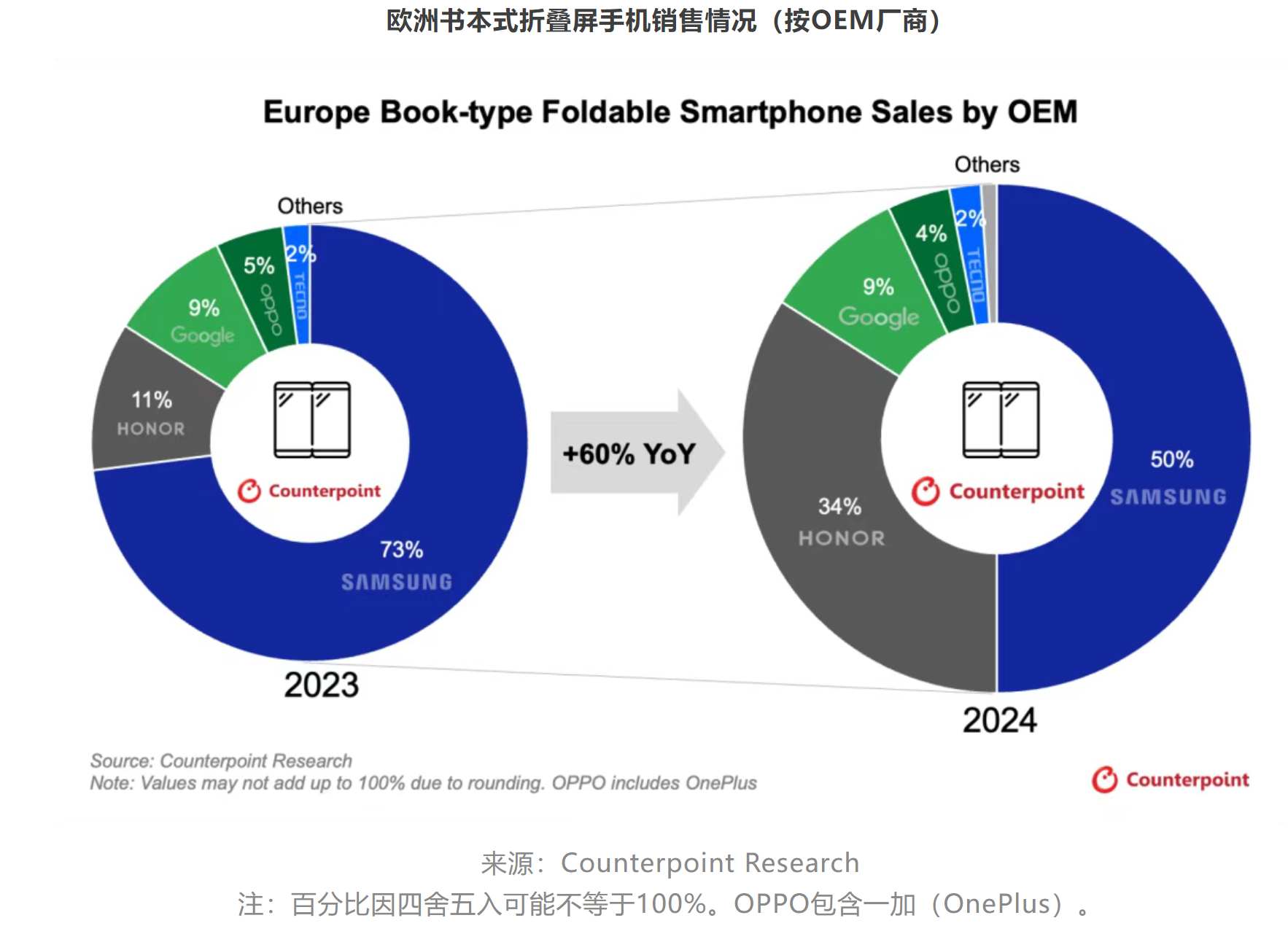
Core Insights - By 2028, book-style foldable smartphone sales are expected to approach 4 million units, accounting for over 2% of total smartphone sales, with a nearly 10% market share in the high-end segment in Europe [1][9] - 2024 is a pivotal year for the European foldable smartphone market, with a projected 37% year-on-year growth in sales, driven primarily by book-style foldable models, which are expected to see a 60% increase [1][9] - The competitive landscape is intensifying, with Samsung's market share dropping from 98% in 2022 to 73% by the end of 2023 due to new entrants like Honor, Google, and others [2][3] Market Dynamics - Honor's Magic V2 has captured 27% of the European book-style foldable smartphone market, and the upcoming Magic V3 is anticipated to further enhance its position [3][6] - Samsung is set to launch the Galaxy Z Fold7 in July 2025, which is its thinnest and lightest foldable smartphone to date, potentially regaining market competitiveness [6][8] - Google and other manufacturers are also ramping up their efforts in the European foldable smartphone market, indicating a new phase of industry growth [7][9] Future Projections - Apple is expected to enter the foldable smartphone market in 2026, which will further intensify competition and potentially accelerate market growth [9] - Despite a projected decline in foldable smartphone sales in the first half of 2025 due to a lack of technological innovation and macroeconomic factors, a rebound is anticipated in the latter half of the year [9][10]