二手旧衣

Search documents
旧衣循环本是好事,为何会成为直播间里的“大牌尾货”?
Guang Zhou Ri Bao· 2025-12-24 10:22
Core Viewpoint - The recent exposure by CCTV's "Financial Investigation" reveals that some live-streaming sales claiming to sell "new sample clothes" and "brand leftovers" are actually selling second-hand clothes without disclosing their true nature, raising concerns about consumer rights and health risks [1][2] Group 1: Industry Practices - Live-streaming shopping has become a major retail channel due to its interactive nature, but many sellers are found to be selling second-hand clothes sourced from community recycling bins, sometimes even from garbage [1] - Sellers often use terms like "slightly dirty" or "minor flaws" to market these second-hand items without mentioning their true condition, which infringes on consumer rights [1] Group 2: Regulatory Concerns - The practice of selling second-hand clothes under the guise of "sample" or "leftover" items has evolved into a gray industrial chain involving collection, sorting, and live-streaming sales, indicating a systemic issue rather than isolated incidents [2] - E-commerce platforms are urged to take responsibility by increasing regulatory measures and banning non-compliant live-streaming channels to prevent them from operating as "black markets" for second-hand clothing [2] Group 3: Need for Standardization - While the sale of second-hand clothing is not inherently negative and can promote resource conservation, the lack of regulations regarding hygiene standards, information disclosure, and transaction norms creates opportunities for unscrupulous sellers [2] - Establishing a traceable and transparent system for second-hand clothing circulation is essential to ensure that these items are used effectively and that live-streaming sales return to honest and healthy business practices [2]
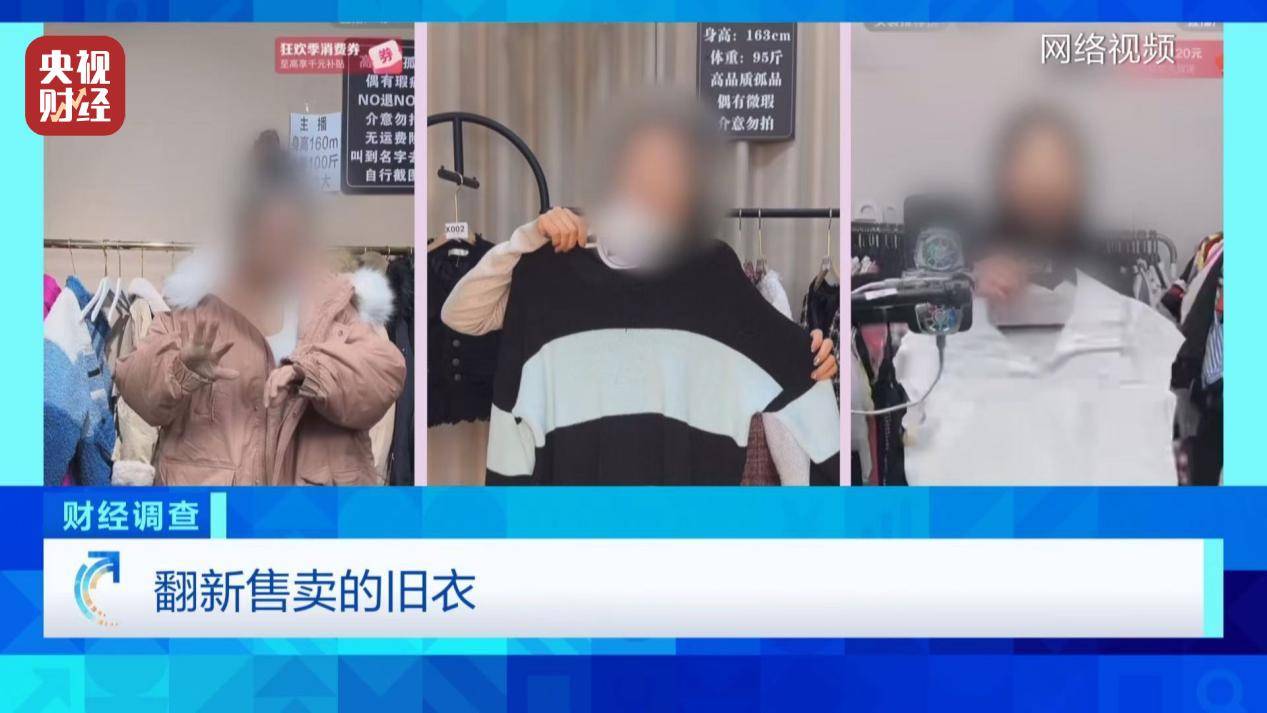
直播间“大牌尾货”竟是回收箱旧衣服!总台《财经调查》曝光旧衣回收产业链内幕→
Sou Hu Cai Jing· 2025-12-21 12:29
Core Viewpoint - The article highlights the deceptive practices of certain live-streaming sellers who market second-hand clothing as "new samples" or "brand excess inventory," often using misleading terms like "slightly dirty" or "slightly flawed" to attract consumers while concealing the true nature of the products [1][3][24]. Group 1: Deceptive Practices - Many live-streaming sellers claim to sell "new sample clothes" or "brand excess inventory," but they are actually selling second-hand clothing at very low prices [3][24]. - Sellers prepare for consumer inquiries by using phrases like "slightly dirty" or "slightly flawed," avoiding any mention of the second-hand nature of the items [5][24]. - A journalist purchased items labeled as "sample inventory" and found them to be clearly used, with visible stains and defects [6][24]. Group 2: Source of Second-Hand Clothing - Investigations revealed that many of these items come from old clothing recycling bins, with some being sourced from garbage stations [11][24]. - Old clothing recycling companies report high demand from live-streaming sellers, with some companies selling dozens of tons of second-hand clothing daily [14][16]. - The clothing is often not cleaned or sanitized before being sold, maximizing profit margins for sellers [23][24]. Group 3: Misleading Marketing Strategies - Sellers often disguise second-hand clothing as new by using new tags and marketing them as "factory excess" or "samples," which allows them to charge higher prices [26][37]. - The article notes that many sellers do not disclose the second-hand status of the clothing, which significantly impacts consumer purchasing behavior [43]. - The practice of refurbishing second-hand clothing to make it appear new is widespread, with sellers relying on clever marketing to sell these items as high-quality products [26][39].