直播带货监管

Search documents
“以详情页为准”不是直播间虚假宣传的挡箭牌
Xin Lang Cai Jing· 2026-02-26 17:40
Group 1 - The tourism consumption market is experiencing growth during the 2026 Spring Festival holiday, with live streaming sales becoming a significant method for booking hotels [1][2] - Consumers have reported discrepancies between the advertised hotel features in live streams and the actual conditions, leading to potential legal implications for businesses [1][3] - Live stream promotions must be truthful and consistent with the details provided on booking pages to avoid misleading consumers and violating consumer protection laws [2][3] Group 2 - Even if live stream content does not constitute a formal "offer," it still holds legal weight if it misleads consumers, particularly if there are inconsistencies with the details page [2][3] - Businesses must ensure that all promotional content is accurate and does not contain misleading information, as this is crucial for maintaining consumer trust and legal compliance [3][5] - Regulatory bodies should enhance supervision of live stream promotions by comparing advertised content with actual conditions and taking action against misleading practices [3][4]
旧衣循环本是好事,为何会成为直播间里的“大牌尾货”?
Guang Zhou Ri Bao· 2025-12-24 10:22
Core Viewpoint - The recent exposure by CCTV's "Financial Investigation" reveals that some live-streaming sales claiming to sell "new sample clothes" and "brand leftovers" are actually selling second-hand clothes without disclosing their true nature, raising concerns about consumer rights and health risks [1][2] Group 1: Industry Practices - Live-streaming shopping has become a major retail channel due to its interactive nature, but many sellers are found to be selling second-hand clothes sourced from community recycling bins, sometimes even from garbage [1] - Sellers often use terms like "slightly dirty" or "minor flaws" to market these second-hand items without mentioning their true condition, which infringes on consumer rights [1] Group 2: Regulatory Concerns - The practice of selling second-hand clothes under the guise of "sample" or "leftover" items has evolved into a gray industrial chain involving collection, sorting, and live-streaming sales, indicating a systemic issue rather than isolated incidents [2] - E-commerce platforms are urged to take responsibility by increasing regulatory measures and banning non-compliant live-streaming channels to prevent them from operating as "black markets" for second-hand clothing [2] Group 3: Need for Standardization - While the sale of second-hand clothing is not inherently negative and can promote resource conservation, the lack of regulations regarding hygiene standards, information disclosure, and transaction norms creates opportunities for unscrupulous sellers [2] - Establishing a traceable and transparent system for second-hand clothing circulation is essential to ensure that these items are used effectively and that live-streaming sales return to honest and healthy business practices [2]
下单3只大公鸡到手竟是小鸡仔,“货不对板”不能只靠消费者叫板
Sou Hu Cai Jing· 2025-10-24 15:10
Core Viewpoint - Recent incidents of "goods not matching the description" in live-streaming sales have raised concerns about consumer trust and the integrity of the e-commerce industry, as businesses engage in deceptive practices to attract buyers [2][3][4] Group 1: Incidents of Deception - Consumers have reported receiving items that significantly differ from what was advertised, such as small chicks instead of large chickens and dead plants instead of healthy trees [3] - The marketing promises of "what you see is what you get" have turned into traps for consumers, leading to financial losses and damaging the reputation of live-streaming e-commerce [3][4] Group 2: Business Practices - Merchants employ deceptive tactics by showcasing high-quality samples while hiding disclaimers about potential discrepancies in the actual products [3] - The use of vague terms like "visual differences are normal" and "specifications must meet standards" allows sellers to evade responsibility for misleading advertising [3] Group 3: Regulatory Response - Regulatory bodies must take proactive measures to address these issues by establishing clear standards for live-streaming sales, including guidelines for sample displays and promotional language [4] - Platforms should enhance their accountability by implementing better technology, such as requiring complete recording of live streams and ensuring traceability of products from sample to delivery [4] Group 4: Consumer Protection - Consumers are encouraged to document their purchases and interactions during live-streaming sessions to protect themselves against fraud [4] - It is essential for consumers to report discrepancies immediately to platforms and regulatory authorities, rather than being deterred by sellers' disclaimers [4]


老陈再次炮轰嘎子,直播卖的手机是假货,官方回应后立马道歉
Xin Lang Cai Jing· 2025-08-27 09:22
Core Viewpoint - The controversy surrounding "Gazi Brother" Xie Mengwei's live-streaming sales of the "GZcoolpad Coolpad X60" phone has sparked widespread attention, particularly due to allegations of false advertising and the subsequent response from the Coolpad official [1][3]. Group 1: Incident Overview - The phone in question, priced at 699 yuan and advertised with specifications of "256G, 8-core processor," could not be found on the Coolpad official website or major e-commerce platforms, raising concerns about its legitimacy [3]. - Xie Mengwei defended his sales, asserting that all products are genuine, but the controversy escalated, prompting further calls for a response from Coolpad to protect consumer rights [5]. - The incident gained traction due to Xie Mengwei's public persona as a former actor and the credibility of "anti-fraud" figure Lao Chen, who has a history of exposing scams [7]. Group 2: Regulatory and Industry Implications - This incident highlights the chaotic state of the live-streaming sales industry, where the influx of celebrities and influencers has led to a lack of regulation and self-discipline, resulting in potential false advertising [9]. - The key issue is that Coolpad must provide a clear response regarding the existence of the phone model; if it does not exist, a public denial is necessary, while if it does, proper channels and evidence should be provided to clarify doubts [11]. - The controversy is expected to increase societal scrutiny on the compliance of celebrity endorsements, emphasizing the need for public figures to uphold social responsibility and transparency in their sales practices [13].

CEO被立案调查?股价大跳水!公司回应:已报警!
Sou Hu Cai Jing· 2025-08-19 14:15
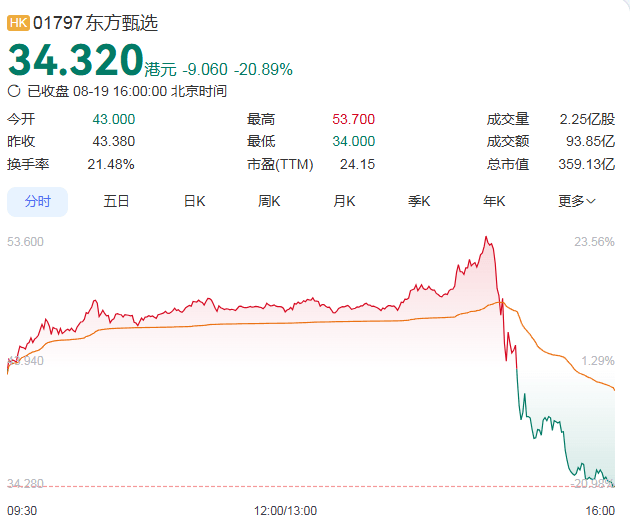
Core Viewpoint - The stock of Dongfang Zhenxuan experienced significant volatility on August 19, with an initial surge of over 23% followed by a sharp decline, closing down 20.89%, resulting in a market capitalization loss exceeding 19 billion HKD [1][3]. Group 1: Stock Performance - The stock reached a high of 43.38 HKD on August 18, marking a 261.5% increase from approximately 12 HKD in early July [7]. - Following the peak, the stock price plummeted, leading to a loss of over 30% for investors who bought at the high point within two hours [1]. Group 2: Market Sentiment and Rumors - The decline in stock price was attributed to several factors, including pressure on company performance, regulatory scrutiny of live streaming, and rumors regarding the investigation of a senior executive [3][5]. - A rumor suggested that Dongfang Zhenxuan would report a net profit decline of over 40% in its upcoming annual report, with dynamic P/E ratios indicating potential losses [3]. Group 3: Company Response - Dongfang Zhenxuan issued a statement refuting rumors about its commission rates and the investigation of its executive, asserting that the average commission rate is below 20% [3]. - The company has initiated legal actions against the spread of false information [3]. Group 4: Business Performance and Strategy - In June, Dongfang Zhenxuan's estimated GMV reached 870 million RMB, a year-on-year increase of 28%, with self-operated product GMV at 350 million RMB, up 15% [7]. - The self-operated product sales accounted for 39% of total GMV, with 60% of these sales coming from shelf e-commerce channels, indicating a shift away from reliance on live streaming [7].
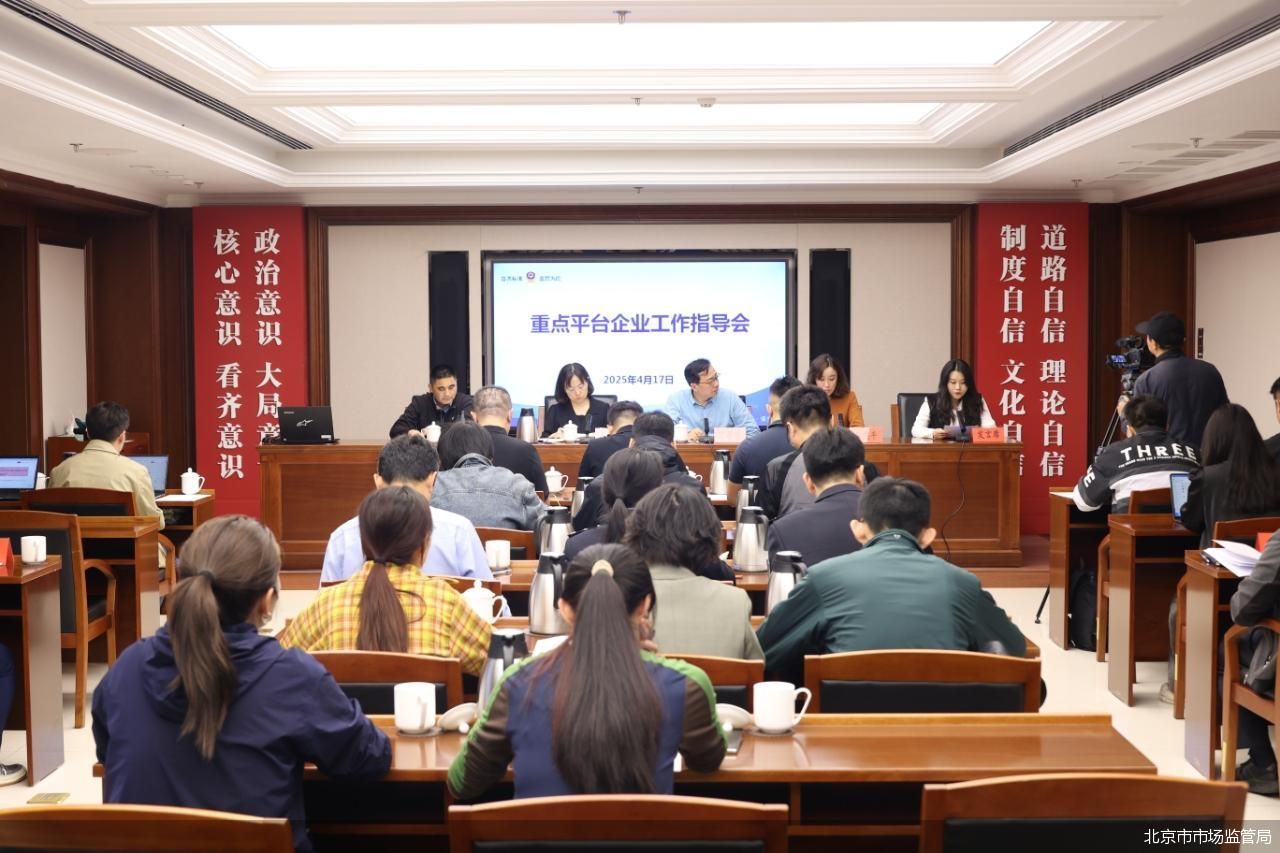
织密直播带货防护网 北京严查以假充真、虚假宣传
Bei Jing Shang Bao· 2025-04-17 13:38
Core Viewpoint - Beijing's market regulatory authority has introduced measures to regulate unreasonable business practices in online sales and live streaming, focusing on five types of illegal activities [1][3]. Group 1: Regulatory Measures - The measures include ten actions such as urging companies to fulfill compliance management responsibilities and strictly investigating five types of illegal activities [3]. - The focus is on combating counterfeit products, false advertising, price fraud, and algorithmic manipulation in online sales and live streaming [3][4]. Group 2: Enforcement Actions - In 2024, a total of 94 cases related to live streaming sales were investigated, addressing issues like false advertising and price fraud to protect consumer rights and ensure fair market competition [4]. - Companies like Douyin and JD have initiated self-inspections and rectifications, with Douyin addressing over 100,000 instances of unauthorized live streaming since November 2024 [4][5]. Group 3: Compliance and Guidance - The regulatory authority will conduct regular consultations and compliance guidance to encourage platform companies to establish compliance management organizations and clarify responsibilities [5]. - Innovative non-on-site supervision will be implemented, allowing access to credit regulatory data and enhancing ongoing guidance services [5].