京东小时购

Search documents
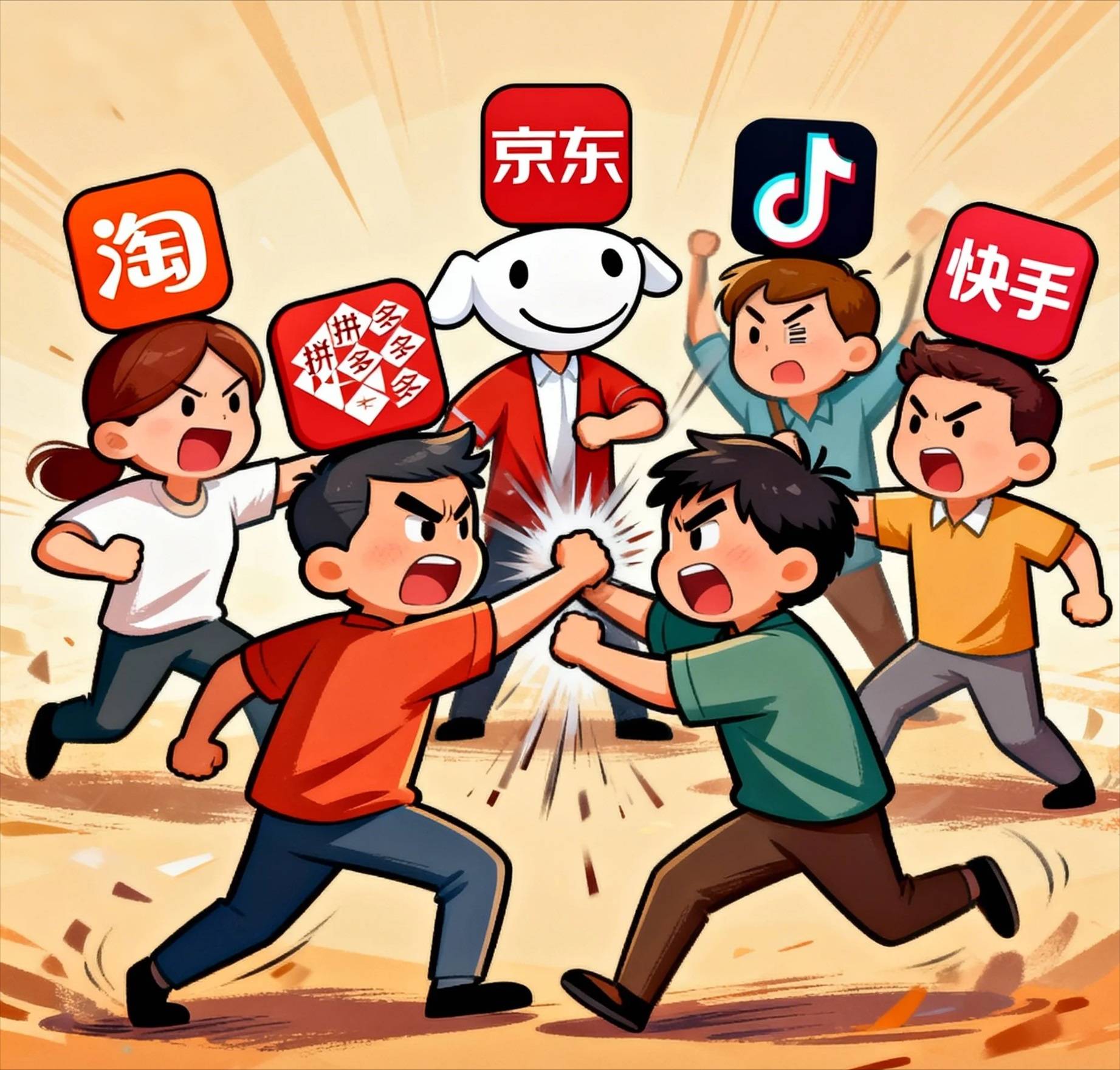
第17届双十一,5大电商平台论剑,规则、流量、战场已彻底改变
Sou Hu Cai Jing· 2025-11-02 04:14
Core Insights - The article discusses the evolution of China's e-commerce industry, particularly focusing on the "Double Eleven" shopping festival, which has transformed from a niche event into the world's largest shopping extravaganza since its inception in 2009 [1][3]. Group 1: Historical Evolution of Double Eleven Strategies - The Double Eleven event can be divided into three main phases from 2015 to 2024, each characterized by distinct features and competitive dynamics [4]. - The first phase (2015-2017) was dominated by Alibaba's Taobao/Tmall and JD.com, with a focus on price competition and traffic acquisition. Sales figures grew from 91.2 billion yuan in 2015 to 168.2 billion yuan in 2017 [7]. - The second phase (2018-2020) saw the entry of content platforms like Douyin and Kuaishou, leading to a more intense competition landscape. Pinduoduo emerged as a significant player with its social group-buying model [8][9]. - The third phase (2021-2024) marked a shift towards refined operations, with platforms focusing on user experience and sustainable growth. Sales peaked at 540.3 billion yuan in 2021, but platforms began emphasizing quality metrics over gross merchandise volume (GMV) [10]. Group 2: Tactical Evolution of Major Platforms - Taobao/Tmall's pricing strategy evolved from "site-wide 50% off" to complex promotional rules, and finally to simplified rules like "official discounts" starting in 2023 [12][44]. - JD.com maintained a straightforward pricing strategy, introducing "official discounts" and "instant sales" while enhancing its logistics capabilities, achieving an average fulfillment time of 18 minutes by 2025 [18][76]. - Pinduoduo's strategy shifted from "lowest price" to "same price for the same item," reflecting a focus on merchant interests and product quality [24][77]. - Douyin e-commerce emphasized content-driven sales, integrating short videos and live streaming to create a seamless shopping experience, with significant sales growth during the Double Eleven period [31][79]. - Kuaishou e-commerce leveraged its "old iron economy" to build strong relationships with users, achieving high repurchase rates through trust-based interactions [37][40]. Group 3: Key Tactical Dimensions - Pricing strategies across platforms transitioned from complex calculations to straightforward discounts, with a notable emphasis on user-friendly promotions [44][46]. - Traffic acquisition methods evolved from traditional advertising to content marketing, with platforms increasingly relying on live streaming and social media to attract users [48][51]. - User operations shifted towards precision marketing, with platforms utilizing data analytics to enhance user engagement and loyalty [55][58]. - Supply chain management became a focal point, with platforms investing in logistics efficiency and real-time delivery capabilities to improve customer experience [62][65].




京东美团对攻腹地,打打更健康?
Guan Cha Zhe Wang· 2025-04-24 13:43
Core Viewpoint - The competition between JD.com and Meituan in the local life service market has escalated from a covert struggle to an open confrontation, significantly impacting the industry dynamics and consumer benefits [1][2][4]. Group 1: Competition Dynamics - The competition primarily focuses on two key areas: user acquisition and rider recruitment, benefiting consumers, riders, and merchants through competitive pricing [1]. - The rivalry has evolved from indirect competition to direct confrontation, with both companies expanding their business boundaries and service offerings over the years [3][4]. - JD.com has launched a "0 commission" strategy and promised social insurance for riders, aiming to disrupt Meituan's established market position [4][5]. Group 2: Strategic Developments - Both companies are enhancing service quality and user experience through their competitive strategies, indicating a significant shift in the local life service industry [2]. - Meituan has accelerated the independence of its "flash purchase" brand, while JD.com has introduced "self-operated express delivery" services, showcasing their commitment to rapid delivery [5]. - The public exchange of statements between the two companies highlights the evolving nature of their competition, which now encompasses industry rules and ethical considerations [5].