人工智能训练芯片

Search documents
英伟达涉版权侵权诉讼,被指从影子图书馆获取 500TB 盗版数据
Huan Qiu Wang Zi Xun· 2026-01-21 03:07
Core Viewpoint - Nvidia is facing a significant copyright class-action lawsuit from multiple authors, accusing the company of intentionally obtaining vast amounts of pirated data from various "shadow libraries" to train its AI models, with the involved data size reaching 500TB and containing millions of copyrighted books [1][3]. Group 1: Legal Allegations - The lawsuit claims that Nvidia used the Books3 dataset, which includes pirated works, for training its AI models, despite Nvidia's defense arguing that this usage falls under "fair use" [3]. - New evidence revealed in the lawsuit indicates that Nvidia's data strategy team sought to acquire millions of pirated materials from the "Anna Archive," a controversial shadow library, and proceeded with the collaboration despite knowing the data's illegal status [3][4]. - The lawsuit has expanded to include claims of contributory and vicarious infringement, asserting that Nvidia facilitated the acquisition of pirated datasets for its clients [4]. Group 2: Company Operations and Market Impact - Nvidia has been a key beneficiary in the AI boom, with its revenue significantly increasing due to the demand for AI training chips and data center services [1]. - The company has actively developed its own AI models, such as NeMo and Retro-48B, which rely on extensive text data for training, raising questions about the legality of its data sourcing methods [1]. - The ongoing legal issues with the "Anna Archive" and other platforms like LibGen, Sci-Hub, and Z-Library have heightened public scrutiny of Nvidia's data acquisition practices [4].



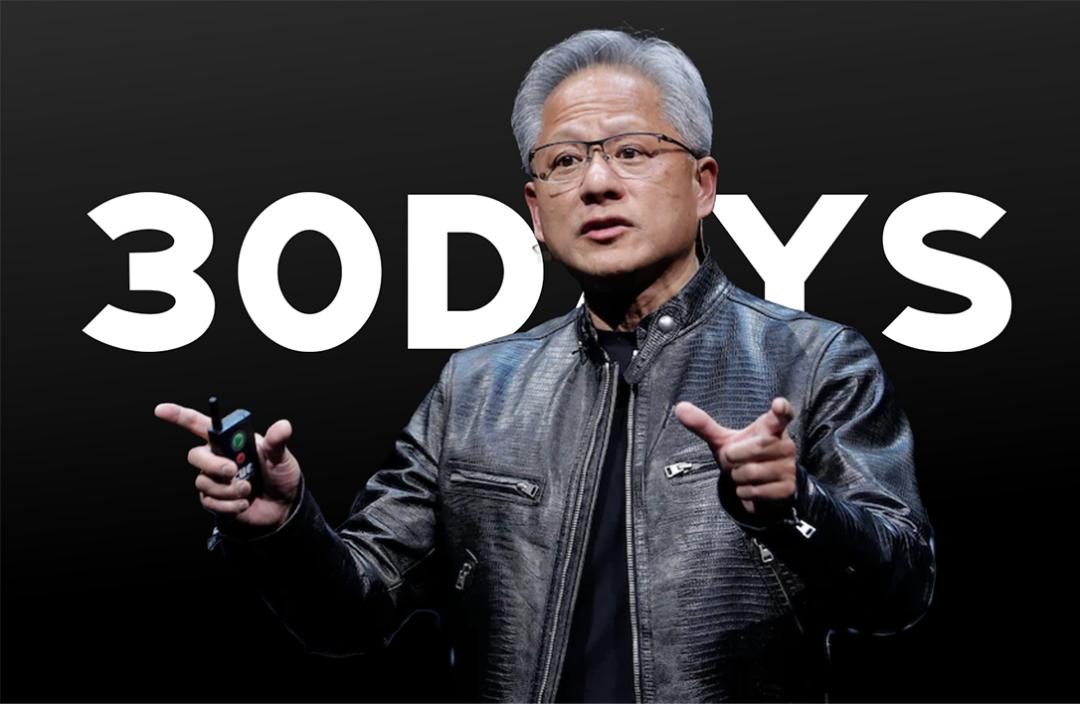
“公司离破产只有30天”,黄仁勋如何激励财富自由的员工?
3 6 Ke· 2025-08-12 09:04
Core Insights - Huang Renxun encourages employees to maintain a sense of urgency, emphasizing that even in times of significant profit, they should act as if the company is on the brink of bankruptcy, which has become a core belief at Nvidia [2][7] - Nvidia has emerged as a leading player in the AI chip market, recently becoming the first publicly traded company to reach a market capitalization of $4 trillion, surpassing tech giants like Apple and Microsoft [2] - A significant portion of Nvidia's employees have become millionaires, with 78% of them reportedly achieving this status, and half of those having a net worth of $25 million [2] Company Culture and Management Style - Nvidia's work culture is unique in Silicon Valley, focusing solely on hard work without the balance of leisure that is often celebrated in the region [3] - Huang Renxun is portrayed as a strong-willed and intense leader, whose management style includes high expectations and a focus on performance, often leading to a demanding work environment [3][9] - Employees report a culture of long hours and high pressure, with many working through the night and facing strict time management demands [2][3] Competitive Landscape - Huang Renxun's leadership has positioned Nvidia as a dominant force in the AI sector, likening his role to that of a supplier during a gold rush, with Nvidia's chips being in high demand [3][4] - The semiconductor industry is characterized by rapid technological changes, requiring constant innovation to avoid obsolescence, which Huang Renxun acknowledges as a significant risk [4][5] Personal Journey and Challenges - Huang Renxun faced numerous challenges, including racial discrimination and early career failures, before achieving success with Nvidia, particularly in the AI space [6][7] - His past failures have shaped his belief that desperation is a key driver of success, leading him to instill a sense of urgency in his employees [7][8] Innovation and Strategy - Huang Renxun's approach to innovation is aggressive, with a focus on continuous development of unique technologies to maintain Nvidia's competitive edge [5][6] - The company has invested heavily in various exploratory products, despite many appearing unlikely to succeed, reflecting a willingness to take risks [6][7] Leadership Philosophy - Huang Renxun's management philosophy is influenced by a sense of paranoia regarding competition, viewing financial success as a temporary safeguard against potential future threats [4][6] - His leadership style combines elements of fear and motivation, creating a culture where employees feel a strong sense of responsibility to meet high expectations [9][11] Operational Efficiency - Huang Renxun has implemented a "light-speed" scheduling strategy aimed at maximizing efficiency and reducing production times, which has become a key aspect of Nvidia's operational approach [14][15] - The company has successfully reduced production cycles significantly, demonstrating a commitment to operational excellence [13][14] Ongoing Pressure and Expectations - Despite Nvidia's current success, Huang Renxun continues to feel immense pressure to innovate and deliver results, maintaining a rigorous work schedule himself [15] - The challenge remains for him to instill this sense of urgency and commitment to excellence throughout the organization as the company navigates its future [15]