
人工肌肉

Search documents
当人造肌肉遇上机器人:牛津大学最新综述揭示组织工程与生物机器人的双向奔赴
机器人大讲堂· 2025-08-16 04:06
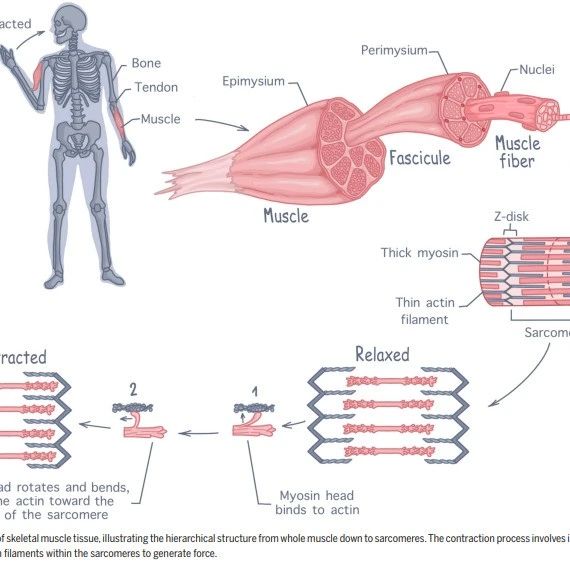
Core Viewpoint - The article discusses the evolution of skeletal muscle tissue engineering from medical needs to a key technology driving the development of biorobotics, highlighting its potential in both medical applications and robotics [1][2]. Group 1: Medical Needs and Challenges - Skeletal muscle constitutes over 40% of body weight and is essential for movement. Loss of more than 15%-20% of muscle can lead to permanent functional loss [4]. - Current treatment options primarily rely on autologous muscle transplantation, which has limitations such as donor site availability, significant surgical trauma, and suboptimal functional recovery [4]. Group 2: Development of Skeletal Muscle Tissue Engineering - Clinical needs have propelled the development of skeletal muscle tissue engineering, aiming to cultivate functional muscle tissue in vitro for repairing large muscle defects [5]. - Researchers discovered broader applications in biorobotics, as engineered muscle offers unique advantages such as high mechanical compliance, energy efficiency, and fine motor control [5]. Group 3: Key Strategies in Muscle Tissue Engineering - The core strategies in skeletal muscle tissue engineering include scaffold design, cell sourcing, external stimulation, and bioreactor technology, all of which are continuously innovating [5]. Group 4: Scaffold and Cell Selection - Scaffolds provide three-dimensional support for cell growth and must meet strict requirements such as biocompatibility, degradation rate matching tissue regeneration, and hardness close to natural muscle (10-20 kPa) [6]. - Various materials are explored, including synthetic polymers like PCL and PLGA, and natural materials like fibrin and collagen. Innovative approaches include using decellularized plant tissues as scaffolds [6]. - In cell selection, satellite cells are the best for differentiation but are difficult to obtain, while mesenchymal stem cells are easier to acquire but have limited differentiation potential [7]. Group 5: Stimulation and Cultivation Techniques - To make engineered muscle functional, it is essential to simulate physiological environments and provide appropriate stimulation signals, including mechanical, electrical, and biochemical stimuli [8]. - Mechanical stimulation is crucial, with optimal substrate hardness (8-11 kPa) and dynamic stretching (35% strain rate) promoting muscle fiber alignment and maturation [8]. - Electrical stimulation mimics motor neuron activation, significantly increasing muscle contraction force by three times through intermittent stimulation [8]. Group 6: Biorobotics and Muscle-Driven Robots - The integration of skeletal muscle tissue engineering with robotics has led to the emergence of biohybrid robots, which utilize engineered muscle tissue as actuators, offering advantages over traditional motors [12]. - These muscle actuators allow for fine control, inherent compliance, and the potential for self-repair and adaptive growth [12]. - Various proof-of-concept muscle-driven robots have been developed, including a notable 18 cm tall biohybrid hand capable of selective finger movement [13]. Group 7: Future Prospects - The future of skeletal muscle tissue engineering is promising, with potential applications in personalized tissue transplantation for muscle loss patients, new soft actuator systems in robotics, and other fields like cultured meat production and drug screening [14]. - This interdisciplinary field combines insights from biology, engineering, and materials science, generating valuable new knowledge and innovations [14].

天奈科技-机器人业务进展交流
2025-04-15 14:30
Summary of Conference Call Company and Industry Overview - The conference call focused on Tianai Technology, a leading company in the field of carbon nanotubes, which are essential components for electronic skin and humanoid robots [1][23]. - The discussion highlighted the applications of carbon nanotubes in various systems of robots, including sensory systems, energy systems, and skin systems [3][4]. Key Points and Arguments Carbon Nanotubes Characteristics - Carbon nanotubes are described as both a new and old material, with unique properties such as high strength, flexibility, and excellent thermal conductivity [2][3]. - They are particularly noted for their ability to form conductive networks, which are crucial for sensors and electronic skin applications [10][11]. Applications in Robotics - The call emphasized the importance of carbon nanotubes in the development of artificial muscles and pressure sensors, which are seen as irreplaceable components in robotics [6][15]. - The electronic skin, which consists of an array of sensors, is a significant area of focus, with applications in temperature, pressure, and gas detection [7][10][27]. - The potential market for humanoid robots is projected to grow significantly, with estimates suggesting sales could reach over 600,000 units by 2030 [19]. Market Dynamics and Collaborations - Tianai Technology is collaborating with universities and enterprises to develop applications for electronic skin and artificial muscles, with ongoing projects and positive results reported [24][25]. - The company is also exploring partnerships with downstream clients in the robotics sector, although specific collaborations were not disclosed [30][37]. Cost Structure and Value Proposition - The cost structure of electronic skin materials was discussed, indicating that carbon nanotubes could account for over 60% of the value in these applications [15][41]. - The pricing for carbon nanotubes is approximately 10,000 RMB per kilogram, with variations based on processing and application [32]. Future Outlook - The conference highlighted the anticipated growth in the robotics industry, particularly in the use of carbon nanotubes for advanced applications such as artificial muscles, which could revolutionize robot movement and functionality [18][49]. - The company expressed confidence in the future of its traditional business and the expansion of its carbon nanotube market, particularly in overseas markets [46][53]. Additional Important Information - The call addressed the technical challenges and engineering solutions required for the effective implementation of carbon nanotube-based sensors in robotics [29]. - The discussion also touched on the competitive landscape, noting that while other companies are exploring similar technologies, Tianai Technology's unique properties of its carbon nanotubes give it a competitive edge [44][45].
