
人民币外汇交易

Search documents
在岸和离岸人民币汇率联动关系的微观研究
Sou Hu Cai Jing· 2025-11-24 02:49
Core Insights - The article discusses the increasing interlinkage between onshore (USD/CNY) and offshore (USD/CNH) RMB markets due to reforms in the RMB exchange rate formation mechanism, highlighting that the offshore market responds faster to information changes while the onshore market exhibits a guiding role [1][2][3]. Market Overview - The onshore RMB market operates under a managed floating exchange rate system primarily serving the needs of the real economy, while the offshore market is more diversified and driven by supply and demand dynamics, mainly involving foreign financial institutions [2]. - The "8·11" exchange rate reform in 2015 marked a significant change in the interlinkage between the two markets, enhancing the influence of the offshore market on the onshore market [3]. Microstructural Analysis - The study utilizes minute-level data from November 9, 2022, to September 24, 2023, to analyze the microstructure of the RMB market, focusing on the lead-lag relationship between onshore and offshore exchange rates [5][6]. - Statistical tests reveal that the onshore market exhibits some degree of price autocorrelation, while the offshore market shows a more efficient pricing mechanism with minimal autocorrelation [7][16]. Information Response Patterns - The offshore RMB market demonstrates a quicker response to new information, achieving market equilibrium within an average of one minute, compared to four minutes for the onshore market [17][18]. - The analysis indicates that the onshore market may have informed traders who react to market changes ahead of time, contributing to its stabilizing role [18][21]. Lead-Lag Relationship - Quantitative models reveal that changes in the offshore exchange rate slightly precede those in the onshore market, indicating a lead-lag relationship where the offshore market influences the onshore market [21][26]. - The impulse response analysis shows that a shock in the offshore market leads to a more significant immediate response in the onshore market compared to the reverse scenario [26]. Factors Influencing Pricing Differences - The study identifies the speed of quote responses and transaction costs as critical factors affecting the pricing differences between the onshore and offshore RMB markets [29][30]. - Scenario analyses demonstrate that delays in execution and higher transaction fees significantly reduce the profitability of trading strategies based on the lead-lag relationship [30][32]. Recommendations for Market Development - The article suggests enhancing the automation level of market makers in the onshore market to improve responsiveness and reduce the information response speed gap between the two markets [33]. - It also recommends optimizing transaction fee structures to encourage liquidity provision in the onshore market and promoting the steady development of the offshore market to enhance its domestic attributes [34].

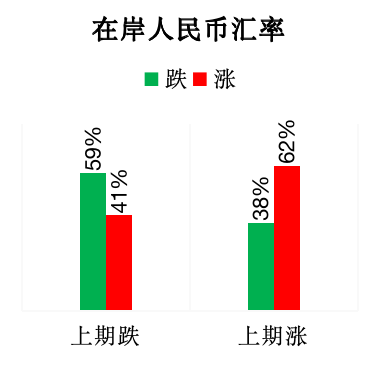
中国香港是全球第四大外汇交易中心,日本第五,那前三名是谁呢?
Sou Hu Cai Jing· 2025-10-02 11:31
Core Insights - Hong Kong has solidified its position as the fourth largest foreign exchange trading center globally, with an average daily trading volume increasing from $694.4 billion in April 2022 to $883.1 billion in April 2025, representing a growth of 27.2% [1][3] Foreign Exchange Trading Data - The average daily trading volume in Hong Kong reached $883.1 billion, confirming its status as a major international financial hub [3] - The average daily trading volume of Renminbi (RMB) in Hong Kong surged from $191.2 billion to $315.1 billion, marking a significant increase of 64.8% [3] - The trading volume of offshore RMB interest rate derivatives rose from $14.7 billion to $24.5 billion, reflecting a growth of 67.1% [3] Global Ranking of Forex Trading Centers - The top three foreign exchange trading centers are London, New York, and Singapore, with average daily trading volumes of $4,745.4 billion, $2,334.7 billion, and $1,485.3 billion respectively [6][8] - London is recognized for its deep market liquidity and serves as a natural bridge for trading between Asia and North America [6] - New York plays a crucial role as the global clearing center for USD transactions, which is essential for the global financial system [8] - Singapore benefits from its strategic location and efficient regulatory environment, serving the vast Asia-Pacific market [8] Unique Position of Hong Kong - Hong Kong's unique advantage lies in its role as the largest offshore RMB business hub, which enhances its competitive edge in the global financial landscape [3][12] - The city has transformed from a traditional forex market into a vital liquidity pool and risk management center for RMB, differentiating itself from other major forex trading centers [3][12] - Hong Kong's integration into the national financial opening strategy ensures its irreplaceable position in the global financial framework [5]
国际结算银行调查结果显示:香港继续是全球第四大外汇中心
Xin Hua Wang· 2025-09-30 22:39
Core Insights - The International Bank for Settlements has released a survey indicating that Hong Kong remains the fourth largest foreign exchange center globally and the largest offshore renminbi business hub [1] Foreign Exchange Market - The average daily trading volume of foreign exchange in Hong Kong increased by 27.2%, rising from $694.4 billion in April 2022 to $883.1 billion in April 2025 [1] - Foreign exchange swap contracts are the most actively traded instruments, accounting for 64% of the average daily trading volume, which amounts to $563.7 billion [1] Offshore Renminbi Market - Hong Kong maintains its position as the largest offshore renminbi foreign exchange and over-the-counter interest rate derivatives center [1] - The average daily trading volume of renminbi foreign exchange transactions surged by 64.8%, increasing from $191.2 billion in April 2022 to $315.1 billion in April 2025 [1] - The average daily trading volume of renminbi over-the-counter interest rate derivatives also rose by 67.1%, from $14.7 billion in April 2022 to $24.5 billion in April 2025 [1] Over-the-Counter Interest Rate Derivatives - The average daily trading volume of over-the-counter interest rate derivatives in Hong Kong reached $84.1 billion in April 2025 [1] - The most actively traded over-the-counter interest rate derivatives in the Hong Kong market are denominated in US dollars, renminbi, and Australian dollars [1]
香港外汇交易平均每日成交金额增至8831亿美元
智通财经网· 2025-09-30 13:32
Core Insights - The International Bank for Settlements reported that Hong Kong remains the fourth largest foreign exchange center globally and the largest offshore RMB business hub as of September 30, 2023 [1] Foreign Exchange Market - Hong Kong's average daily foreign exchange trading volume increased by 27.2% from $694.4 billion in April 2022 to $883.1 billion in April 2025 [1] - The growth in foreign exchange trading was primarily driven by increases in foreign exchange swaps (+33.0% or $139.8 billion), spot transactions (+28.7% or $38.5 billion), and OTC options (+165.4% or $31.4 billion) [1] - Foreign exchange swaps are the most actively traded instruments, accounting for 64% ($563.7 billion) of the average daily trading volume [1] Offshore RMB Market - Hong Kong maintains its position as the largest offshore RMB foreign exchange and OTC interest rate derivatives center [1] - The average daily trading volume of RMB foreign exchange increased by 64.8% from $191.2 billion in April 2022 to $315.1 billion in April 2025 [1] - The average daily trading volume of RMB OTC interest rate derivatives also rose by 67.1% from $14.7 billion in April 2022 to $24.5 billion in April 2025 [1] OTC Interest Rate Derivatives - As of April 2025, the average daily trading volume of OTC interest rate derivatives in Hong Kong reached $84.1 billion, with USD, RMB, and AUD being the most actively traded currencies in this market [1]
上半年我国境内人民币外汇市场交易量总计达21万亿美元
Xin Hua Wang· 2025-08-12 06:24
Core Insights - The total trading volume of the domestic RMB foreign exchange market reached 21 trillion USD in the first half of the year [1] Group 1 - The Deputy Director and spokesperson of the State Administration of Foreign Exchange, Li Bin, announced the trading volume during a press conference on July 22 [1]