外汇

Search documents
市场主流观点汇总-20260331
Guo Tou Qi Huo· 2026-03-31 13:07
Report Overview - The report aims to objectively reflect the research views of futures and securities companies on various commodity varieties, track hot varieties, analyze market investment sentiment, and summarize investment driving logic [1] Market Data Commodities - Methanol closed at 3296.00 with a weekly increase of 5.24%;焦煤 closed at 1219.00 with a 4.10% increase; PTA closed at 6876.00 with a 3.40% increase; copper closed at 95930.00 with a 1.26% increase; palm oil closed at 9768.00 with a 0.51% increase; rebar closed at 3124.00 with a 0.03% increase. Aluminum closed at 23935.00 with a -0.35% decrease; iron ore closed at 812.00 with a -0.43% decrease; corn closed at 2369.00 with a -0.75% decrease; silver closed at 17489.00 with a -0.77% decrease; glass closed at 1041.00 with a -1.23% decrease; ethylene glycol closed at 5279.00 with a -1.38% decrease; live pigs closed at 9965.00 with a -2.50% decrease; soybean meal closed at 2937.00 with a -3.04% decrease; gold closed at 998.66 with a -4.16% decrease; crude oil closed at 740.80 with a -4.24% decrease; PVC closed at 5615.00 with a -4.43% decrease; polysilicon closed at 35680.00 with a -5.52% decrease [2] A-shares - CSI 500 closed at 7737.61 with a -0.29% decrease; SSE 300 closed at 4502.57 with a -1.41% decrease; SSE 50 closed at 2837.31 with a -1.61% decrease [2] Overseas Stocks - FTSE 100 closed at 9967.35 with a -1.29% decrease; France CAC40 closed at 7701.95 with a 0.47% increase; Nikkei 225 closed at 53373.07 with a 0.49% increase; Hang Seng Index closed at 24951.88; S&P 500 closed at 6368.85 with a -2.12% decrease; Nasdaq Index closed at 20948.36 with a -3.23% decrease [2] Bonds - China's 5-year treasury bond yield was 1.56 with a 0.67bp increase; 10-year treasury bond yield was 1.82 with a 0.39bp increase; 2-year treasury bond yield was 1.31 with a -0.28bp decrease [2] Foreign Exchange - US Dollar Index closed at 100.17 with a 0.67% increase; US Dollar mid-price was 6.91 with a 0.35% increase; Euro to US Dollar was 1.15 with a -0.50% decrease [2] Commodity Views Macro-financial Sector Stock Index Futures - Strategy views: Among 7 institutions, 1 is bullish, 0 is bearish, and 6 expect a sideways trend. Bullish logic: 1-2 month industrial enterprise profits increased by 15.2% year-on-year, high-tech manufacturing profits grew by 58.7%, policies are releasing signals for stable growth, and stock index valuations are at a low historical level. Bearish logic: Uncertainty in the Middle East, rising Fed rate hike expectations, decreased trading volume, and potential weak terminal demand [3] Treasury Bond Futures - Strategy views: Among 7 institutions, 0 is bullish, 2 is bearish, and 5 expect a sideways trend. Bullish logic: Safe-haven sentiment supports bonds, loose liquidity, and policy support. Bearish logic: Strong economic resilience, rising inflation expectations, and reduced short-term rate cut expectations [3] Energy Sector Crude Oil - Strategy views: Among 7 institutions, 4 are bullish, 1 is bearish, and 2 expect a sideways trend. Bullish logic: Military confrontation between Iran and the US, disrupted shipping in the Strait of Hormuz, slow inventory reconstruction, and supply-demand imbalance. Bearish logic: Release of strategic reserves, increased Russian oil supply, OPEC+ production increase plan, and potential for a ceasefire [4] Agricultural Products Sector Soybean Meal - Strategy views: Among 7 institutions, 2 are bullish, 2 are bearish, and 3 expect a sideways trend. Bullish logic: High US soybean export inspections, rising fertilizer prices, slow Brazilian soybean arrivals, and increased feed demand. Bearish logic: Increasing soybean arrivals in April, faster Brazilian soybean harvest, expected increase in new-season soybean planting area, and long-term supply surplus [4] Non-ferrous Metals Sector Aluminum - Strategy views: Among 7 institutions, 5 are bullish, 0 is bearish, and 2 expect a sideways trend. Bullish logic: Attacks on aluminum plants in Bahrain and UAE, strong LME spot premium, rising domestic downstream processing enterprise operating rates, and a strong technical rebound. Bearish logic: Global inflation, potential recession trading, high domestic aluminum inventories, and low aluminum rod processing fees [5] Chemical Sector Methanol - Strategy views: Among 7 institutions, 6 are bullish, 0 is bearish, and 1 expects a sideways trend. Bullish logic: Decreased Iranian methanol plant operating rates, improved downstream enterprise profits, increased downstream olefin demand, and accelerated inventory reduction. Bearish logic: Uncertainty in the conflict and potential price corrections [5] Precious Metals Gold - Strategy views: Among 7 institutions, 1 is bullish, 1 is bearish, and 5 expect a sideways trend. Bullish logic: Geopolitical risks, high oil prices, and potential capital inflows. Bearish logic: Reduced market liquidity, unclear Fed rate cut path, strong US Dollar, and gold sales by some countries [6] Black Sector Coking Coal - Strategy views: Among 7 institutions, 2 are bullish, 0 is bearish, and 5 expect a sideways trend. Bullish logic: Rising energy prices, increased blast furnace operating rates, increased downstream inventory replenishment, and a favorable supply-demand pattern. Bearish logic: High domestic coking coal production, high Mongolian coal imports, and intense futures market competition [6]
大类资产运行周报(20260323-20260327):中东局势波谲云诡权益资产承压运行-20260330
Guo Tou Qi Huo· 2026-03-30 11:38
Group 1: Report's Industry Investment Rating - No relevant information provided Group 2: Core Viewpoints of the Report - From March 23 to March 27, the Middle - East situation continued to affect the prices of major asset classes. Globally, the US dollar index rose weekly, stocks and bonds continued to decline, and commodities showed relatively strong performance. In China, stocks and commodities declined, while the bond market fluctuated. Overall, in dollar terms, commodities > bonds > stocks globally, and bonds > commodities > stocks in China. The Middle - East situation remains highly uncertain and will continue to impact major asset prices in the short term [3][6][16] Group 3: Summary by Related Catalog 1. Global Major Asset Performance 1.1 Global Stock Market Overview - Most major global stock markets declined in the week from March 23 to March 27. US stocks had the largest decline, and emerging markets underperformed developed markets. The VIX index rose weekly. For specific regions, in the Asia - Pacific market, the MSCI Asia - Pacific region dropped 1.52%, and the South Korean Composite Index fell 5.92%. In the European market, the ASCI Europe rose 0.12%. In the American market, the MSCI US declined 2.11%. In other markets, the Tel - Aviv 125 Index fell 5.22% [8][9][10] 1.2 Global Bond Market Overview - In the week of March 23 - 27, the yield of 10 - year US Treasury bonds rose 5BP to 4.44%. The bond market declined weekly, with the performance order globally being credit bonds > high - yield bonds > government bonds. The global bond index fell 0.49%, the global government bond index dropped 0.58%, and the global credit bond index decreased 0.38% [12] 1.3 Global Foreign Exchange Market Overview - From March 23 to March 27, the market's risk - aversion sentiment continued, and the US dollar index rose weekly, with a 0.67% increase. Most major non - US currencies declined against the US dollar, and the RMB exchange rate fluctuated weakly [12] 1.4 Global Commodity Market Overview - Geopolitical factors supported the weekly increase in international oil prices. Most prices of major international precious metals, non - ferrous metals, and agricultural products rose. The CRB spot index: comprehensive rose 1.41%, Brent crude oil increased 1.80%, and WTI crude oil rose 3.15% [14][15] 2. Domestic Major Asset Performance 2.1 Domestic Stock Market Overview - Investor sentiment remained cautious. Major A - share broad - based indices generally declined, and the average daily trading volume of the two markets decreased compared to the previous week. The CSI 500 index was more resilient. The basic chemicals and non - ferrous metals sectors rose, while the non - banking and computer sectors performed poorly. The Shanghai Composite Index fell 1.09% [18][19] 2.2 Domestic Bond Market Overview - From March 23 to March 27, the central bank's open - market operations had a net injection of 281.9 billion yuan. The capital market was relatively stable, and the bond market fluctuated slightly stronger. Overall, government bonds > corporate bonds > credit bonds. The ChinaBond - Total Wealth (Aggregate) Index rose 0.09% [20][21] 2.3 Domestic Commodity Market Overview - The domestic commodity market declined weekly. Among major commodity sectors, the chemical and non - ferrous sectors had the largest increases, while precious metals performed poorly. The Nanhua Commodity Index fell 0.25% [22][23] 3. Outlook for Major Asset Prices - Overall, the Middle - East situation remains highly uncertain and will continue to have a certain impact on major asset prices in the short term. It is necessary to closely monitor its changes [27]
大摩闭门会-跨资产对话-能源冲击下的外汇市场应对策略
2026-03-30 05:15
Summary of Key Points from Conference Call Industry Overview - The discussion revolves around the foreign exchange market's response to energy shocks, particularly focusing on the implications of rising oil prices on various currencies and the overall market dynamics [1][2]. Core Insights and Arguments - If oil prices rise to $150, demand destruction is expected, leading to a stronger US dollar, with EUR/USD projected to drop to 1.13. The Swedish Krona (SEK) and British Pound (GBP) are anticipated to be the weakest among G10 currencies [1][2]. - The Swiss Franc (CHF) is identified as the preferred safe-haven currency, while the Norwegian Krone (NOK) is expected to perform well due to its oil export status. The Japanese Yen (JPY) is projected to strengthen slightly despite trade condition pressures [1][2]. - Emerging market (EM) currencies are expected to show significant differentiation, with the Polish Zloty (PLN), Hungarian Forint (HUF), Mexican Peso (MXN), and South African Rand (ZAR) facing the most depreciation pressure. Conversely, currencies like the Brazilian Real (BRL), Colombian Peso (COP), and Malaysian Ringgit (MYR) are expected to perform best due to their ties to energy [1][2][3]. - Interest rate differentials are becoming less influential on exchange rates, with risk premiums taking precedence. The European Central Bank's (ECB) hawkish pricing can only partially offset the negative impacts of oil prices and trade conditions [1][5]. Additional Important Insights - The current market pricing indicates a calm situation, with limited net long positions in the US dollar. The best hedging strategy for G10 currencies is to hold short positions in EUR/CHF, while in emerging markets, it is recommended to go long on USD/ZAR and USD/BRL [1][4]. - In scenarios of rising oil prices leading to supply constraints, the weakest currencies are expected to be those in Europe, particularly PLN and HUF, which are highly sensitive to the euro's performance [2][3]. - The overall sentiment among investors is cautious, with many avoiding significant risk due to uncertainties stemming from geopolitical tensions. There is a slight net long position in the US dollar, but it is not substantial. The market is pricing in a belief that tensions will not escalate to a point where oil prices reach $150 [7].
海外宏观及大类资产周度报告:国泰君安期货·君研海外-20260329
Guo Tai Jun An Qi Huo· 2026-03-29 11:57
1. Report Industry Investment Rating There is no information about the report industry investment rating in the provided content. 2. Core Viewpoints of the Report - The current main asset volatility is too restrained, and the stock and bond markets are under - priced. There are short - term bearish warnings for the equity market, bond market, and valuation - type metals, which have been fully realized in the market last week [12]. - Although the selling sentiment has slightly eased based on the hope of peace talks, the geopolitical situation is still deteriorating, and the risk of supply disruption in the Strait of Hormuz is increasing non - linearly over time. The key to judging macro - risks is whether the logistics in the strait can be restarted [12]. - Gold initially has certain "cost - effectiveness" as its relative valuation has declined while volatility remains high. The gold - silver ratio is in an upward repair channel [16][19]. - In April, there will be a real rebound in CPI data. The inflation expectation is currently under - priced, and there will be a real inflation shock in April and May [20][21]. - When the oil price is above $100 per barrel, the 2 - year inflation expectation tends to be significantly higher than the linear regression level, and the transmission of the 2 - year inflation expectation to the 2 - year US Treasury yield is more significant [23][26]. 3. Summary According to Relevant Catalogs 3.1. Week - to - Week Performance of Major Assets and Market High - Frequency Data 3.1.1. Fixed Income - **Overseas Fixed - Income Weekly Performance**: The yields of various - term US Treasuries and major developed country bonds have changed. For example, the 10 - year US Treasury yield reached 4.43% on March 27, 2026, with a weekly change of 4.82bp; the 10 - year German bond yield was 3.09% with a weekly change of 5.1bp [44][45]. - **US Treasury Yield Curve and Credit Spreads**: Track the changes in the US Treasury yield curve over 1, 3, and 6 months, as well as the long - short spreads of US Treasury yields [52]. - **Relative Strength of Credit Bonds with Different Ratings and Eurozone Bond Yields**: Analyze the relative strength of high - yield and Aaa - rated credit bonds, and the spreads of Eurozone government bonds [61]. - **US Treasury Issuance and Primary - Secondary Market Supply - Demand Indicators**: Include the issuance of US short - term Treasury bills, medium - and long - term Treasuries, and the bid/subscription ratio of 2, 10, and 30 - year US Treasuries [70][74]. 3.1.2. Exchange Rate Market - **Weekly Performance of Major Exchange Rates**: The US dollar index was 100.1510 on March 27, 2026, with a weekly change of 0.51%. The euro, yen, and other currencies also had corresponding changes [79][81]. - **Yield Spreads between Major Country Treasury Bonds and US Treasuries**: Analyze the 10 - year yield spreads between the US and G7 countries, and the 2 - year yield spreads between the US and Germany [82]. - **Evolution of China's Monetary Policy Framework**: The inter - bank 7 - day reverse repurchase serves as the "policy rate", and the Standing Lending Facility (SLF) and excess reserve ratio form the "interest rate corridor" [91]. - **Monthly Indicators of the RMB Exchange Rate**: Include China's central bank gold and foreign exchange reserves, and China's import and export year - on - year data [96]. - **High - Frequency Indicators of the RMB Exchange Rate**: Such as the yield spreads between Chinese and US 10 - year and 3 - month Treasury bonds, and the DR007 and Hibor 7 - day interest rates [104]. 3.1.3. Commodities - **Weekly Performance of Major Commodities**: Brent crude oil reached $113 on March 27, 2026, with a weekly change of 3.61%; London gold spot was $4494, with a weekly change of 0.04% [122][124]. - **Price Ratios of Major Commodities and Relative Strength of Industrial Chains**: Analyze the gold - silver ratio, gold - copper ratio, and the relative strength of the energy - chemical and ferrous metal industrial chains [125]. - **Macro - Commodity High - Frequency Data**: Include OPEC+ crude oil production quotas, US energy department crude oil production, and global crude oil and copper inventories [139][142]. 3.1.4. Overseas Equities - **Weekly Performance of Global Major Indexes and US Stock Sectors**: The S&P 500 index was 6368.85 on March 27, 2026, with a weekly change of - 2.12%. The S&P energy index had a weekly increase of 6.22%, while the S&P communication index had a weekly decrease of 7.17% [147][152]. - **Weekly Performance, Valuation, and Earnings Tracking of US Stock Styles**: The US large - cap growth style had a weekly decline of 3.76%, and the US small - cap value style had a weekly increase of 0.46% [153][155]. - **Tracking of Best PE and EPS of US Stock Sectors**: Compare the current and pre - 1Q Best PE and EPS coordinates of 11 US stock sectors [158]. - **Earnings Cycle Positioning - Quarterly EPS Year - on - Year Trends of Major Indexes**: Analyze the EPS year - on - year trends of the S&P 500, Nasdaq, and other indexes [163]. - **Volatility and Risk Sentiment Indicators**: Include the Chicago S&P Volatility VIX Index and the ICE Bond Volatility MOVE Index [170]. - **Tracking of US Stock Market Factors**: Track the total return performance of US stock market factors YTW (Year - to - Date) [179]. 3.1.5. Cryptocurrencies - **BTC, ETH, and Related Derivative Assets**: Track the Bitcoin futures main contract, non - commercial net positions, and the performance of cryptocurrency - related stocks [181][182]. 3.1.6. Post - YCC Era of the BOJ - **High - Frequency Data Tracking of the Yen Carry Trade System**: Include the net amount of Japanese investors' purchases of overseas bonds and stocks, the USDJPY 1 - year exchange - rate hedging cost, and the yen 3 - month volatility [189][191]. 3.2. Weekly Key Macroeconomic Logic Tracking and FICC Views - **Weekly Overseas Macroeconomic Highlights**: In the fifth week, there is hope for peace talks, but the real risks are still accumulating. The probability of a cease - fire between the US and Iran in April has dropped to 38%. The Strait of Hormuz is still under substantial blockade, and the risk of supply disruption is increasing [11]. - **FICC Asset Views**: - **US Dollar**: In the short term, it is expected to fluctuate strongly with the oil price and risk sentiment, with support at 99.0 and an upper target of 104.5. In the long term, it is expected to fluctuate in a wide range, with an annual range of 96 - 108, and an upward risk [42]. - **Non - US Exchange Rates**: Most currencies in the G10 and Asian currency groups are undervalued against the US dollar. In the long term, attention should be paid to the change in geopolitical pricing [42]. - **10 - Year US Treasury Yield**: The short - term view is bearish, with a target of 4.45% reached. After considering the support at 4.35%, it is expected to remain strong. In the long term, the central rate of the 10 - year US Treasury is expected to be around 4.20%, with support at 3.95 - 4.00 and an upper target of 4.65% [42]. - **2 - Year US Treasury Yield**: The short - term view is bearish. The 10 - 2 spread may face resistance at around 55bp, with a preliminary target of 30bp. In the long term, the support is around 3.20%, and the upper target is 3.68% [42]. - **London Gold Spot**: In the short term, it can be speculated for a rebound under high volatility, but a trend increase requires time to digest the high volatility. In the medium term, it is expected to fluctuate in a range, with buying cost - effectiveness [42]. - **Gold - Silver Ratio**: It is in an upward repair channel [42]. 3.3. Macroeconomic Data Hologram and Fundamental High - Frequency Data - **Real - Time Economic Momentum**: Include the Fed's nominal and real real - time GDP models, and the economic surprise indexes of the US, Europe, and China [199][203]. - **Financial Conditions**: Analyze the central bank's balance sheet and the financial conditions index, including the Fed's balance sheet and the G4 central banks' balance sheets as a percentage of GDP [207]. - **Fiscal Policy**: Include the US federal government's fiscal expenditure and revenue items, and the government's debt - to - GDP ratio [214][219]. - **Employment Market**: Track the US employment market on a weekly and monthly basis, including non - farm payrolls, household surveys, and ADP data [222]. - **Inflation Indicators**: Analyze the breakdown of US inflation data, core drivers, and inflation expectations [229]. - **Consumption Demand**: Track US consumption data on a weekly and monthly basis, including retail sales, consumer confidence, and housing mortgage applications [237][242]. - **Cycle Positioning**: Track industrial, manufacturing, and inventory cycle indicators, such as the LEI leading indicator, ISM PMI, and manufacturing new orders [259]. - **Credit Cycle**: Track the US credit situation, including SLOOS corporate credit surveys and high - yield corporate credit spreads [272]. - **Transportation and Logistics**: Track logistics data between China, Asia, Europe, and the US, including shipping volumes and port freight data [278][281][284]. - **Real Estate Market**: Analyze the US real estate equity market, credit spreads, and commercial real estate, including real estate indexes, mortgage rates, and commercial real estate loan delinquency rates [296][300]. - **Eurozone**: Analyze the Eurozone's macro - overview, cycle positioning, and relative strength, including deficit rates, inflation, and consumer confidence [305][313][322].
综合晨报:美国有意停火一个月以与伊朗讨论15点协议-20260325
Dong Zheng Qi Huo· 2026-03-25 00:57
1. Report Industry Investment Ratings - No information provided in the given content. 2. Core Views of the Report - The possibility of the end of the US - Iran war has significantly increased, leading to a weakening of the US dollar index, a rebound in A - shares, and a general rise in various assets. The market's risk preference is in a state of shock. For commodities, different sectors have different trends and influencing factors, such as steel prices being affected by cost and demand, and copper prices being affected by macro and fundamental factors [1][2][3]. 3. Summary According to Relevant Catalogs 3.1 Financial News and Comments 3.1.1 Macro Strategy (Foreign Exchange Futures - US Dollar Index) - The US intends to propose a one - month cease - fire to discuss a 15 - point agreement with Iran. The possibility of the end of the US - Iran war has significantly increased, and the US dollar index is expected to weaken in the short term [1][12][15]. 3.1.2 Macro Strategy (Stock Index Futures) - A - shares had a volume - shrinking rebound due to the easing of the US - Iran situation. If the navigation of the Strait of Hormuz can be restored through negotiation, the stagflation trade may reverse, and equity opportunities will emerge. Currently, due to high uncertainty, it is recommended to wait and add positions on dips [2][17][18]. 3.1.3 Macro Strategy (Treasury Bond Futures) - The central bank conducted 17.5 billion yuan of 7 - day reverse repurchase operations and will conduct 500 billion yuan of MLF operations. The market has carried out TACO trading, with various assets generally rising. It is necessary to closely monitor the war situation and take a wait - and - see approach [3][19][20]. 3.2 Commodity News and Comments 3.2.1 Black Metal (Rebar/Hot - Rolled Coil) - Mexico and South Africa have made anti - dumping rulings on Chinese steel products. Steel prices are oscillating. The lack of clear fundamentals and the influence of Trump's statements and the Middle East situation have led to market fluctuations. The short - term price increase is mainly driven by cost, and the upside space is limited [4][22][26]. 3.2.2 Black Metal (Coking Coal/Coke) - The power coal market in Shaanxi is strong. The coking coal spot market has a good trading atmosphere, with prices rising. In the short term, the international oil price and downstream replenishment support the coking coal price, but in the long term, the lack of terminal demand and sufficient supply may suppress the price [27][28][29]. 3.2.3 Agricultural Products (Cotton) - US and Vietnamese textile and clothing imports and exports have different trends. The domestic textile industry is in good condition, with sufficient orders. However, there are concerns about import yarn, policy tools, planting area, and the macro - economic situation. Zhengzhou cotton is expected to oscillate in the short term and may adjust downward from April to May [31][33][34]. 3.2.4 Agricultural Products (Corn) - The inventory of corn in the four northern ports has increased, and the sales progress of the grassroots has recovered. The supply is increasing, and the downstream demand has rigid support. The policy provides a bottom - support for the corn price. Corn is expected to maintain a high - level oscillation [35][37][38]. 3.2.5 Non - ferrous Metals (Lithium Carbonate) - Dazhong Mining plans to invest in a lithium salt project. The lithium export ban in Zimbabwe has not been lifted as expected. The supply of lithium ore is tight, and the demand for new energy vehicles is expected to improve. It is recommended to pay attention to the opportunity of buying on dips after a correction [39][40][41]. 3.2.6 Non - ferrous Metals (Platinum) - The prices of platinum and palladium rebounded slightly. The market follows macro - fluctuations. The supply is relatively rigid, and the demand has some support. It is recommended to pay attention to the opportunity of platinum's oversold rebound, use options, and pay attention to the opportunity of long platinum and short palladium [41][42][43]. 3.2.7 Non - ferrous Metals (Lead) - The lead price is oscillating at a low level. The LME inventory and domestic social inventory are decreasing. The terminal consumption is facing the off - season. It is recommended to pay attention to the opportunity of buying on dips in the medium - term [44][45]. 3.2.8 Non - ferrous Metals (Zinc) - The zinc price is oscillating at a low level. The LME inventory and domestic social inventory are decreasing. The zinc price has long - term technical support. It is recommended to wait for the price to stabilize and the volatility to decline, and then pay attention to the opportunity of buying on dips in the medium - term [46][47]. 3.2.9 Non - ferrous Metals (Copper) - Atalaya's copper production in the first quarter is slightly lower than planned. The macro - factors are complex and changeable, and the fundamentals show internal - external differentiation. The copper price is expected to oscillate widely, and it is recommended to wait and see in the short - term and pay attention to the internal - external positive arbitrage [48][51]. 3.2.10 Non - ferrous Metals (Tin) - The LME tin is at a discount. The domestic warehouse receipts are decreasing, and the spot is at a premium. The supply and demand are both weak, and the tin price is oscillating widely due to the influence of the US - Israel - Iran conflict [52][54]. 3.2.11 Energy Chemicals (Liquefied Petroleum Gas) - The domestic LPG spot price is stable, with some low - price areas having a supplementary increase. The market is affected by the news of the US - Iran negotiation. It is necessary to pay attention to the risk of price fluctuations [55]. 3.2.12 Energy Chemicals (LLDPE) - The inventory of polyethylene social sample warehouses is decreasing. The downstream enterprises maintain rigid procurement, and the supply has a gap. It is recommended to take a bullish - oscillating view [56][57][58]. 3.2.13 Energy Chemicals (Asphalt) - The inventory of asphalt refineries is decreasing, and the social inventory is increasing. The asphalt price is affected by the oil price and the geopolitical situation. It is expected to oscillate at a high level [58][59]. 3.2.14 Shipping Index (Container Freight Rate) - The US - Iran situation has a impact on the oil price and the container freight rate. The near - month and far - month contracts have different logics. It is recommended to maintain a bullish - oscillating view and pay attention to the US - Iran situation [60][61].
流动性冲击再现,美元指数走强
Dong Zheng Qi Huo· 2026-03-15 08:14
1. Report Industry Investment Rating - The rating for the US dollar is "fluctuating" [6] 2. Core View of the Report - The ongoing US - Iran situation continues to pressure market risk appetite, leading to a decline in global stock markets and an increase in bond yields. The dollar index is strengthening, and non - US currencies are mostly depreciating. The supply disruption is bringing stagflation pressure to the global economy, and the short - term tightening expectation of monetary policy is causing a double - kill situation in the stock and bond markets. The situation in the Middle East will continue to dominate market trends [11] 3. Summary by Relevant Catalogs 3.1 Global Market Overview This Week - Market risk appetite has decreased, most stock markets have fallen, and most bond yields have risen. The US bond yield has reached 4.28%. The dollar index has risen 1.39% to 100.4, non - US currencies have mostly depreciated, the gold price has dropped 2.9% to $5019 per ounce, the VIX index has slightly dropped to 27, the spot commodity index has closed up, and Brent crude oil has risen 9.8% to $103.6 per barrel [2][9] 3.2 Market Trading Logic and Asset Performance 3.2.1 Stock Market - Global stock markets have mostly declined. The S&P 500 has fallen 1.6%, the Shanghai Composite Index has fallen 0.7%, the Eurozone stock market, emerging market stock markets, the Nikkei 225 Index, and the Hang Seng Index have all declined. The US - Iran situation, inflation pressure, and the dilemma of the Fed's monetary policy have suppressed market risk appetite. The situation in the Middle East will continue to dominate market trends, and the Chinese stock market will fluctuate [10][11][13] 3.2.2 Bond Market - Global bond yields have mostly risen. The 10 - year US bond yield has reached 4.28%. The Middle East situation has led to rising oil prices, a decrease in the Fed's interest - rate cut expectation, and an increase in the US bond yield. The risk of stagflation is negative for the bond market. The Chinese 10 - year bond yield has slightly risen to 1.83%, and the bond market is in a weak and volatile state in the short term [14][18][21] 3.2.3 Foreign Exchange Market - The dollar index has risen 1.39% to 100.4, and non - US currencies have mostly depreciated. Offshore RMB has depreciated 0.05%, the euro has depreciated 1.77%, the pound has depreciated 1.38%, the yen has depreciated 1.24%, the Swiss franc has depreciated 1.95%, and the New Zealand dollar and the rand have fallen by more than 2%. The Australian dollar, Korean won, peso, Canadian dollar, real, Thai baht, etc. have all depreciated [24][26] 3.2.4 Commodity Market - Spot gold has dropped 2.9% to $5019 per ounce, and its short - term trend is volatile. Brent crude oil has risen 9.8% to $103.6 per barrel, and the commodity spot index has closed up. The supply risk of crude oil and chemical products has increased, and the oil price remains strong [27][28] 3.3 Hotspot Tracking - The US - Iran war has once again triggered a liquidity shock. The situation is highly uncertain, and market volatility will remain high. Whether the US can control Kharg Island is a major variable in the war [29][32] 3.4 Next Week's Important Event Reminders - Monday: China's February retail sales and industrial added - value data - Tuesday: Reserve Bank of Australia interest - rate meeting decision - Wednesday: US February PPI, Bank of Canada interest - rate meeting decision - Thursday: Fed, ECB, and Bank of England interest - rate meetings - Friday: China's March LPR [34]
ATFX拉美团队骑行破界:以健康动能锻造金融信任永动机
Xin Lang Cai Jing· 2026-03-13 10:32
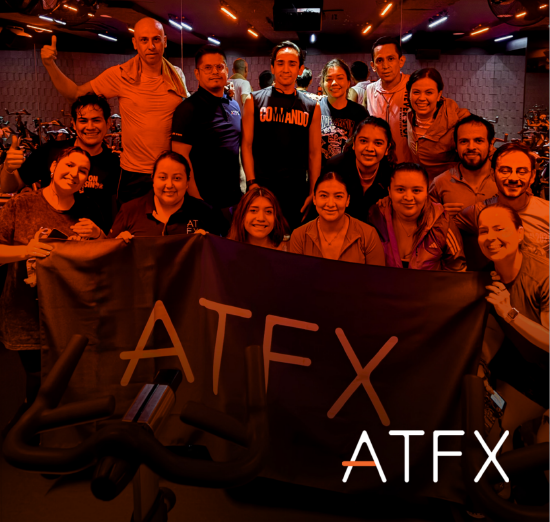
Core Insights - ATFX emphasizes the importance of a cohesive and resilient team as the core competitive advantage in the financial market, rather than relying solely on technology or products [1][7] - The company believes that team-building activities, such as the recent indoor cycling event in Mexico City, foster a strong team culture that translates into better client service and satisfaction [1][8] Team Cohesion and Client Service - The cohesion within the ATFX team enhances their ability to respond quickly and accurately to complex client needs, ultimately improving the overall client experience [3][12] - A vibrant and engaged workforce contributes positively to brand communication, allowing for a more effective interaction with clients [3][12] Value Proposition for Clients - ATFX aims to provide clients with a stable service experience, characterized by quick responses and timely problem resolution, minimizing client concerns [5][14] - The company focuses on delivering professional solutions by leveraging a high-performing team that can quickly analyze trends and optimize strategies in a changing market [5][15] - ATFX positions itself as a reliable long-term partner, maintaining a commitment to client value even amidst market fluctuations [5][16] Trust and Responsibility - The company believes that a trustworthy financial platform must not only possess professional capabilities but also prioritize the well-being of its employees, fostering a culture of sincerity and responsibility [6][17] - ATFX asserts that while the global currency market operates continuously, its service and accountability must also be consistently available, reinforcing the importance of a strong, cohesive team as the foundation of trust [6][17]


贵金属早报-20260312
Yong An Qi Huo· 2026-03-12 02:07
Group 1: Price Performance - London Gold's latest price is $5182.40, with a change of -$27.30 [1] - London Silver's latest price is $86.23, with a change of -$2.30 [1] - London Platinum's latest price is $2223.00, with a change of $91.00 [1] - London Palladium's latest price is $1676.00, with a change of $26.00 [1] - WTI Crude's latest price is $87.25, with a change of $3.80 [1] - LME Copper's latest price is $13043.50, with a change of -$32.50 [1] - The latest value of the US Dollar Index is 98.94, with no change [1] - The latest exchange rate of Euro to US Dollar is 1.16, with no change [1] - The latest exchange rate of British Pound to US Dollar is 1.34, with no change [1] - The latest exchange rate of US Dollar to Japanese Yen is 158.06, with no change [1] - The latest value of the US 10 - year TIPS is 1.82, with no change [1] Group 2: Trading Data - COMEX Silver's latest inventory is 10716.45, with a change of -23.91 [2] - SHFE Silver's latest inventory is 251.86, with a change of -7.32 [2] - Gold ETF's latest holding is 1077.28, with a change of 3.71 [2] - Silver ETF's latest holding is 15539.06, with a change of -115.51 [2] - SGE Silver's latest inventory is 458.19, with no change in inventory and a change of -1.00 in deferred - fee payment direction [2] - SGE Gold's deferred - fee payment direction latest value is 2, with no change [2]
大类资产运行周报(20260302-20260306):中东局势持续紧张,大宗商品周度上涨-20260309
Guo Tou Qi Huo· 2026-03-09 12:06
1. Report Industry Investment Rating No information provided in the given content. 2. Core Viewpoints of the Report - From March 2nd to March 6th, the global and domestic major asset performance showed a pattern of stocks and bonds declining while commodities rising, with commodities > bonds > stocks. The Middle - East situation remained tense, and the US February non - farm payrolls were negative, falling short of expectations. The dollar index rose weekly. The short - term impact of the Middle - East situation on major asset prices may continue [2][3][6]. 3. Summary by Relevant Catalogs 3.1 Global Major Asset Overall Performance: Stocks and Bonds Decline, Commodities Rise - **Global Stocks**: Global major stock markets generally declined. European stocks had the largest decline, and emerging markets underperformed developed markets. The VIX index rose significantly. For example, MSCI Europe fell 7.34% weekly [8][12]. - **Global Bonds**: The yield of 10 - year US Treasury bonds rose by 18BP to 4.15% weekly. The bond market declined, and high - yield bonds > credit bonds > government bonds globally [14]. - **Global Foreign Exchange**: Affected by liquidity concerns, the dollar index rose 1.34% weekly, and major non - US currencies depreciated against the dollar, with the RMB exchange rate falling [15]. - **Global Commodity Market**: Geopolitical factors drove up international crude oil prices. International gold and silver prices fell significantly, major non - ferrous metals prices fluctuated, and agricultural product prices generally rose. For instance, Brent crude oil rose 27.47% weekly [17][18]. 3.2 Domestic Major Asset Performance: Stocks Decline, Bonds Perform Strongly, Commodities Rise - **Domestic Stocks**: A - share major broad - based indexes generally declined, but the average daily trading volume of the two markets increased. Large - cap blue - chips were relatively resistant to decline. The petroleum and petrochemical, and coal sectors led the gains, while the media and non - ferrous sectors performed poorly. The Shanghai Composite Index fell 0.93% weekly [22]. - **Domestic Bonds**: The central bank's open - market operations had a net withdrawal of 14,474 billion yuan, and the capital market was relatively loose. The bond market performed strongly, with government bonds > credit bonds > corporate bonds [23]. - **Domestic Commodity Market**: The domestic commodity market rose weekly. The energy and chemical sectors led the gains, while the precious metal sector performed poorly. The Nanhua Commodity Index rose 6.43% weekly [25][26]. 3.3 Major Asset Price Outlook - Middle - East major oil - producing countries have announced production cuts, and the Middle - East situation has had a real impact on crude oil production. The short - term impact on major asset prices may continue [28].
乱世买黄金?真有事仍是“现金为王”
日经中文网· 2026-03-06 02:58
Core Viewpoint - Gold is typically bought during times of global risk, but it often experiences short-term declines when crises such as wars or financial shocks actually occur. The recent escalation of the situation in Iran has led to a stronger dollar, overshadowing gold's traditional role as a safe haven [2][7]. Group 1: Gold Price Movements - Following the U.S. and Israel's attacks on Iran, gold prices initially rose to approximately $5,400 per ounce on March 2, but fell to $4,995 on March 3, breaking the psychological barrier of $5,000. By March 4, the price was $5,100, reflecting a 3% decline from before the conflict began [4]. - The decline in gold prices has also affected silver, with the London silver spot price dropping to $77 on March 3, a 13% decrease from the previous day [5]. Group 2: Investor Behavior - Market analysts suggest that speculative funds that bought gold in anticipation of military action began to sell off their positions to realize profits once the attacks were confirmed [5]. - Investors often sell gold during actual crises to cover losses in other assets, a pattern observed during past crises such as the 2008 Lehman Brothers collapse and the COVID-19 pandemic [7]. Group 3: Market Trends and Economic Indicators - Since the escalation of the Iran situation, there has been an increase in the sell-off of nearly all major financial assets, except for resources like oil. The yield on the 10-year U.S. Treasury bond rose to 4.1%, up from 3.9% the previous week, indicating a decline in bond prices [7]. - European government bond yields have also increased, and there is ongoing uncertainty in the energy and risk asset markets until the situation in Iran stabilizes [8]. Group 4: Currency Dynamics - Investors are withdrawing funds from precious metals, stocks, and bonds, favoring cash assets, particularly the dollar, which is seen as a safe haven during times of uncertainty [9]. - The dollar has appreciated against nearly all major currencies, with a 1.3% increase in the nominal effective exchange rate as of March 4, making it the strongest among 25 major currencies [11]. Group 5: Future Outlook for Gold - The future of gold largely depends on the developments in the Iran situation. Analysts note that gold typically has an inverse relationship with interest rates and the dollar, suggesting short-term selling risks. However, if geopolitical tensions persist, gold may again be viewed as a safe haven asset [12].